


For a country with slogans like “pura vida” and “sin ingredientes artificiales,” Costa Rica isn’t an easy place to find organic produce, hempseeds or gluten free flours. In fact, the average Costa Rican citizen consumes more than six pounds of pesticides in food every year, and more than 20 percent of the population is obese.
Ana Victoria Granera Varela, proprietor of the Moravia based “eco-store” Mundo Verde, has joined a growing number Costa Ricans offering organic food and a corresponding education on more healthy eating in Costa Rica. “The situation for Ticos right now is that they are realizing that their nutrition has become very bad, so now they are making a conscious movement,” Varela says.
She’s right. Although the market for healthy goods in Costa Rica isn’t quite as strong as the U.S. market, it has been growing since the 1990s and is expected to continue.
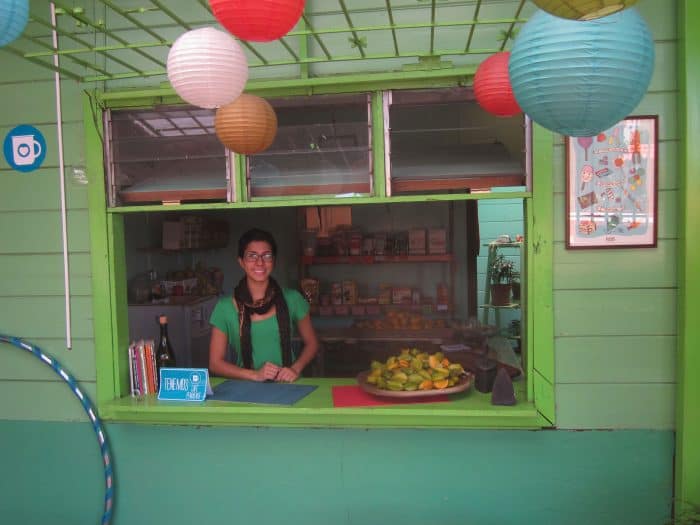
Having lived in San Francisco, Varela got the inspiration for Mundo Verde when she went to a nearby town called Sebastopol, where local, organic agriculture was popular. “I went to a Whole Foods Market and loved it, and I thought that there wasn’t anything as diverse in Costa Rica with local and organic foods. From there I started to look for local producers. I found Feria Verde (in Barrio Aranjuez) and Feria Treque (in Barrio Carmen) as well, and Mundo Verde came as a result.”
Having been open for around seven months, the store attracts health junkies who want gluten free flours and super-foods like chia seeds, as well as people looking for local, organic chocolates or jams. In addition to the take-home products, Varela offers fresh organic smoothies, and her family’s artisan bakery is across the street.
While certain health foods are available at supermarkets like Automercado, the majority of these products are imported from other countries. Varela mentioned that in addition to supporting local farmers and small businesses, local products often “don’t have as many chemicals; they’re free of a huge amount of preservatives.”
People in Costa Rica seeking local options take advantage of the farmers markets and make sure to stock up on locally grown vegetables and other products, but these usually take place just once a week. A craving for healthy food on a Tuesday is tough to satisfy.
Varela pointed out that other health food stores do exist around San José, including Ecomercado in San Pedro, Iriria Tienda Verde in Aranjuez, El Mercadito de San Rafael in Escazú, and Minisuper Verde in Rohmoser, and others. She says she’s glad to have the competition if it means everybody gets to eat better food. “I see them as support for others, support in between everyone.”
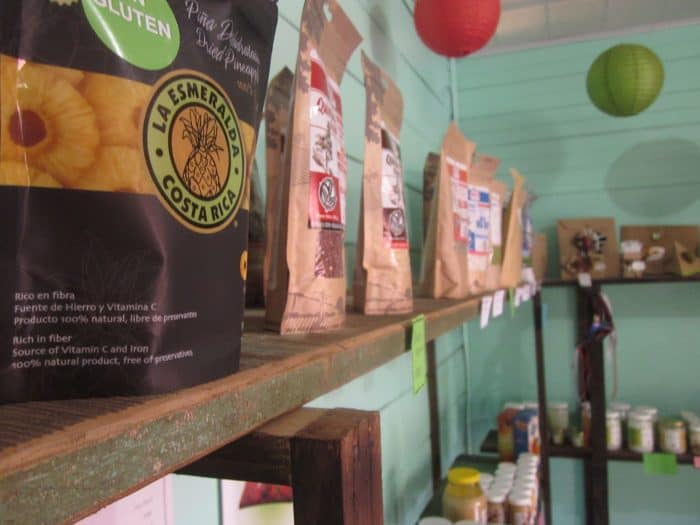
Varela recognizes that healthy food is often expensive food, and admits that most of her customers are middle-to-upper-class. But she wonders if it really has to be that way. While many companies break into the health foods and organic markets to capitalize on the growing number of interested consumers, as evidenced by Wall Street’s takeover of organic companies in the U.S., Varela says her aim is different.
Like most businesses, Mundo Verde hopes to expand and create new locations around the country. However, Varela’s plans to turn the back area of the store into an educational space. She envisions workshops on urban and organic agriculture taking place, as well as yoga, tai chi and other alternative therapies taking place in the space.
More than three-quarters of the U.S. natural foods market is controlled by large retail chains, which hasn’t been ideal for local farmers and small businesses. With the future of the Costa Rican natural foods market still being mapped out, stores like Mundo Verde are a good thing. They can see that profits are distributed more equitably than in the U.S., while selling delicious and healthy food to anyone willing to pay for it.





