

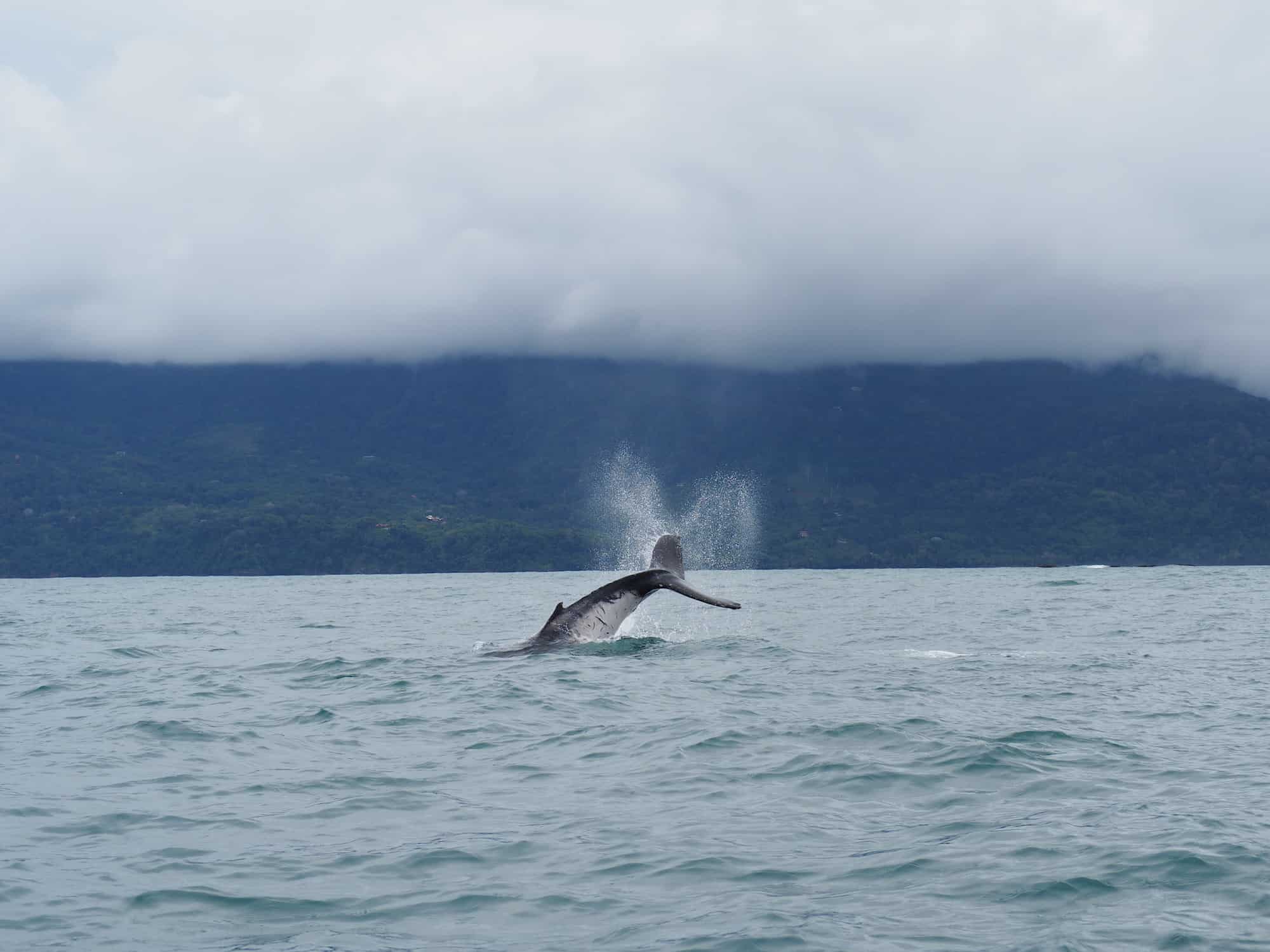
Humpback whales from the North Pacific are about to begin arriving off Costa Rica’s Pacific coast, but this season opens under one of the strongest El Niño events in decades. Researchers and tour operators across the region are warning that warmer water could mean fewer whales or a later arrival.
Costa Rica is one of the few places visited by two separate humpback populations. According to the International Whaling Commission, whales that feed off the northwestern coast of the United States travel to Costa Rica’s tropical Pacific waters from December to March to mate, give birth and nurse their calves. A southern population that feeds near the Antarctic Peninsula and southern Chile visits from July to mid-November.
The southern season that just ended had already raised concerns. In August, guides with Priscilla Tours in the Golfo Dulce reported fewer humpbacks than in past years. One guide described a morning when only one of roughly 30 to 40 boats saw a whale and said it had happened twice this season.
A captain with more than 12 years of experience said the whales now spend longer periods farther out rather than staying inside the gulf, and linked the change to warmer water. The guides also reported partial or total bleaching on some corals.
Their observations are anecdotal, and no figures quantifying a decline have been published. A McGill University-led study, which used satellite tracking data from 2009 to 2016 on 42 humpbacks tagged off Costa Rica, Panama and Ecuador, found that the whales combine local conditions such as sea temperature and food availability with long-term memory of their Antarctic feeding grounds to time their migration.
According to one account of the findings, the whales began leaving earlier in years when sea surface temperatures peaked early, particularly El Niño years, and in Costa Rica warmer water coincided with lower chlorophyll and earlier departures. That account noted the study does not prove warming caused this year’s reported drop in sightings.
The northern whales face their own pressures. The U.S. National Oceanic and Atmospheric Administration estimates a better than 79% chance that El Niño will remain strong to very strong through the January to March 2027 period. A recent University of Hawaii study of North Pacific humpbacks during the 2014 to 2016 marine heat wave found that whales facing food shortages cut their activity to save energy. That helped them survive but did not sustain early-stage pregnancies.
Similar concerns are coming from Mexico. Astrid Frisch Jordán, head of the whale conservation group ECOBAC in Bahía de Banderas, said early this month that the high sea temperatures would probably reduce the number of whales or delay their arrival, adding that warm water usually means fewer whales. The season there is expected to begin in the first half of December.
The main viewing areas remain the southern Pacific coast, including Dominical, Uvita, Bahía Drake, Isla del Caño and the Golfo Dulce, along with Manuel Antonio, Quepos, Jacó and parts of the Gulf of Nicoya in the central Pacific, and the Golfo de Papagayo, Tamarindo, El Coco and Sámara in the north.
Under rules from SINAC and the Environment Ministry, boats must keep at least 200 meters (656 feet) from the whales and carry a whale-watching permit. Whether this season follows the pattern seen in warm years should become clear in the coming weeks, as the first northern whales reach Costa Rican waters.





