

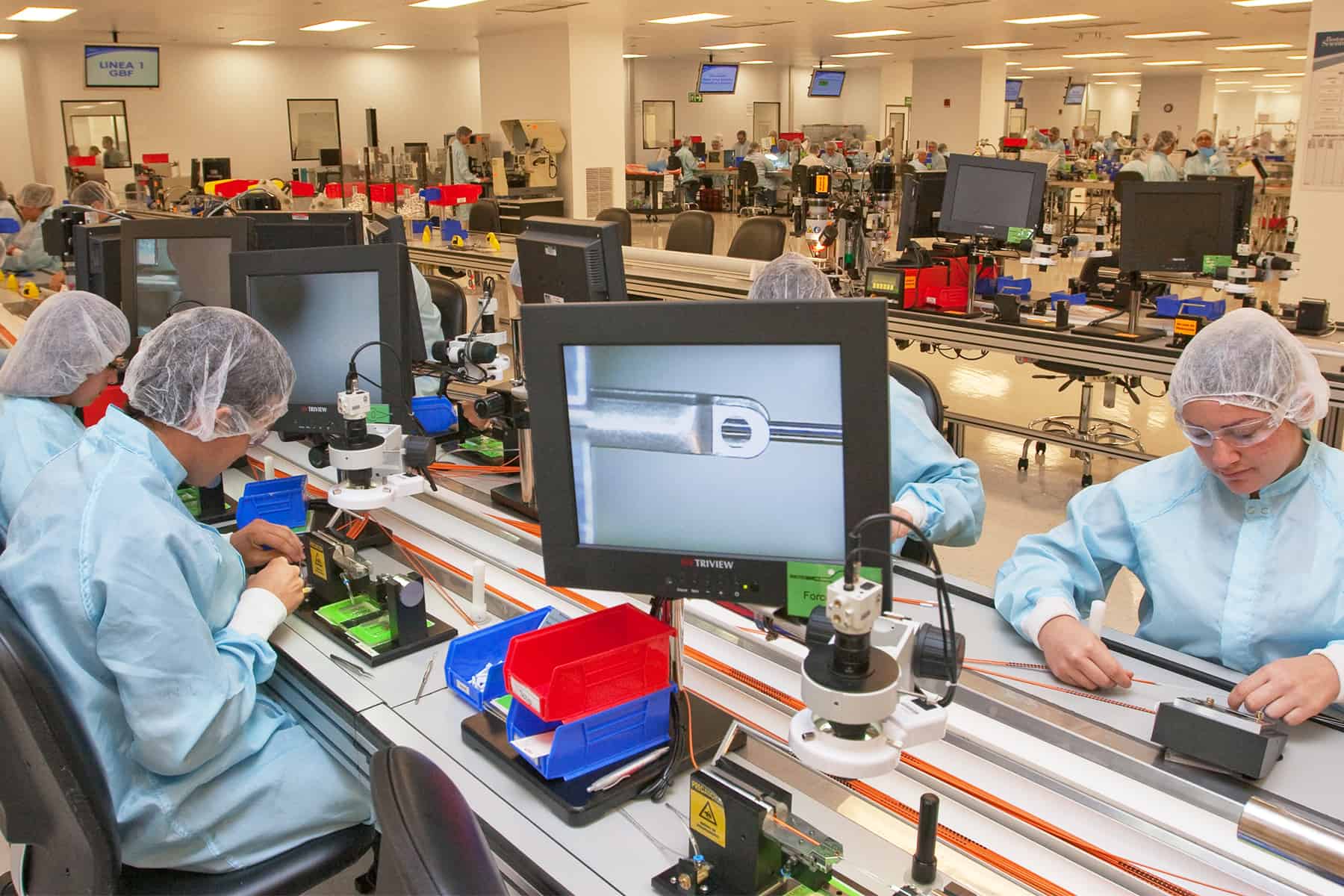
Production in Costa Rica’s free zones, the export parks that host most of the country’s multinational employers, grew just 0.6% year-on-year in September, according to the Central Bank of Costa Rica (BCCR). That is 13.6 percentage points slower than in September 2025, when the sector was riding a surge in medical-device exports.
Employment in the regime is also slipping. The Central Bank’s three-month moving average put free-zone jobs at 195,410 in August 2026, down from 197,101 a year earlier, a loss of 1,691 positions.
The Central Bank now projects free-zone output will expand about 3% in 2026, compared with a preliminary 12.7% in 2025. The rest of the economy, known as the definitive regime, grew 3.3% in September and accounted for 96% of national growth, according to the bank’s monthly economic activity index (IMAE).
The slowdown has revived a long-running dispute over the strong colón. The weighted average dollar price on the Monex exchange market fell from 503.02 colones on Nov. 6, 2025, to 449.58 colones on the same date this year, a drop of 10.6%. Exporters and multinationals earn in dollars but pay salaries and local costs in colones, so each dollar they bring in now covers less of their payroll. The dollar hit a record low of 446 colones this week.
According to minutes of the Central Bank board’s Oct. 23 session, Henry Vargas, the bank’s division manager for data and statistical analysis, told directors that the 2025 export spike had to normalize and that international uncertainty is the main drag on the sector. He cited a U.S. Commerce Department study of possible new tariffs. Vargas said the exchange rate did not rank among the leading factors that companies named in a regional business survey the bank conducted with other central banks in October and November 2025, in which about 70% of firms said international uncertainty affected them deeply, though he acknowledged that business chambers do raise it.
Board member Jorge Guardia questioned why the exchange rate did not appear among the factors, noting that outside reports frequently point to it, according to the minutes. Central Bank President Róger Madrigal said job reductions in the sector are tied mainly to decisions by parent companies rather than directly to the exchange rate, while allowing that profit margins may have narrowed even where output has not.
Vargas also told the board that the closures of operations by Intel and Qorvo had been fully completed by September. The bank has attributed part of the year-on-year slowdown to that base effect, along with the exceptional medical-implement exports of 2025. September did bring the first month-to-month acceleration in free-zone output after 12 consecutive months of deceleration.
Business groups dispute the bank’s reading and the free-zone association Azofras has said the colón’s appreciation pressures operations and could weigh on company decisions to stay, expand or keep staff. Sergio Capón, president of the Costa Rican Chamber of Industries, has said it is unreasonable to separate multinationals’ decisions from the exchange-rate trend.
The debate comes after free zones lost jobs for the first time in seven years, and as several companies have scaled back hiring plans, including a call center that cut its Costa Rica job pledge over competition from Asia. Analysts have also warned that office vacancy could climb as multinationals cut jobs.
The Central Bank has bought more than $1.2 billion on the exchange market this year to slow the colón’s rise, and Madrigal has said the market has an excess supply of dollars.vFree zones employ close to 200,000 people and are one of Costa Rica’s largest sources of dollars, so a sustained slowdown would reach well beyond the export parks themselves. Whether the sector’s first monthly uptick in a year marks a turning point or a pause will become clearer as the Central Bank releases its October and November figures.





