
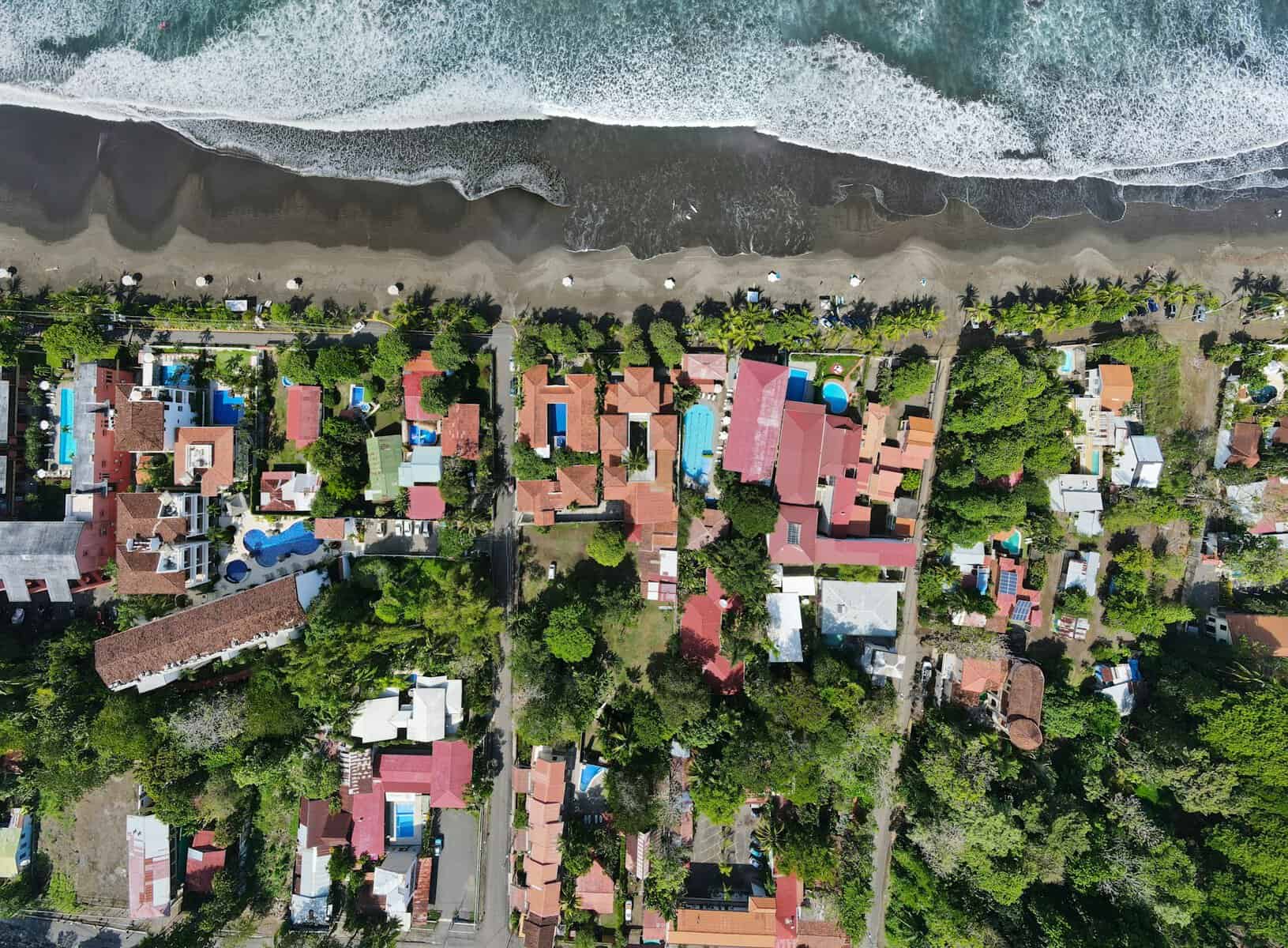
For decades, Jacó’s economy has revolved around the beach. Surfing, hotels, restaurants, nightlife and weekend visitors from San José helped turn the Central Pacific town into one of Costa Rica’s best-known tourist destinations. Tourism is still central to Jacó, but something else is happening. More people are living there year-round, residential construction is growing, and national chains are investing in businesses meant to serve customers every day rather than relying only on tourists during weekends and high season.
McDonald’s is preparing to open a restaurant along Avenida Amapola on Route 34 near the Costa Nera shopping center. The company has already held two job fairs in Jacó as it recruits workers for the new location. As of September 20, the restaurant had been announced but its opening date had not been made public.
Fresh Market has already opened at Plaza Comercial Costa Nera, marking part of the supermarket chain’s push beyond the Greater Metropolitan Area. The company’s own store directory now lists the Jacó location as operating seven days a week. KFC, meanwhile, is not new to Jacó, but the chain recently moved its existing restaurant to a larger location closer to the highway. KFC said the new restaurant involved an investment of about $500,000 and was designed to better serve residents, tourists and people traveling through the Central Pacific. The operation employs about 25 people.
Coffee and bakery chain Mocapan has also chosen Jacó for its first location outside the Greater Metropolitan Area (GMA). The company invested about $200,000 in its Costa Nera restaurant, creating 16 jobs. Little Caesars is another national chain already operating in the same commercial area.
Taken individually, a hamburger restaurant, supermarket or coffee shop does not change a town. Together, however, the investments point toward something larger: companies increasingly see Jacó as a place with enough permanent customers to support businesses throughout the year. Residential construction helps explain why.
Garabito, the area that includes Jacó, recorded 106,875 square meters, or about 1.15 million square feet, of new residential construction in 2024, according to Costa Rica’s National Institute of Statistics and Census (INEC). That was the second-highest total of any municipality in the country, behind only Santa Cruz in Guanacaste.
The population has also risen sharply. Garabito had 17,229 residents in the 2011 census. By the government’s 2022 population estimate, that number had climbed to 26,672, an increase of roughly 55% in just over a decade. Jacó’s location gives it an advantage that many other Costa Rican beach communities do not have.
It is close enough to San José and the Central Valley for residents to travel back and forth regularly, particularly people who work remotely or only need to be in the capital several days a week. It also offers supermarkets, banks, restaurants, medical services, schools and other basic services that are harder to find in some smaller beach communities.
That combination has helped create a different type of real estate market. Jacó still attracts foreign buyers, vacation-home owners and investors looking for short-term rental properties, but developers are increasingly building apartments and condominiums aimed at people who expect to spend much more of the year at the coast.
INEC’s construction figures provide some of the clearest evidence that the trend extends beyond tourism. While residential construction nationally declined in 2024, Garabito remained one of Costa Rica’s largest markets for new housing. The change does not mean Jacó is about to stop being a tourist town. Visitors remain essential to hotels, restaurants, tour operators, surf businesses and nightlife.
Instead, Jacó appears to be developing two economies at the same time: the traditional tourism economy and a growing residential economy built around people who actually live there. That shift creates opportunities, but it also places more pressure on infrastructure and public services.
Garabito ranked last among Costa Rica’s 82 municipalities in the 2025 National Competitiveness Index, with security identified as a major factor holding the area back. The same report warned nationally that weaknesses in security, infrastructure and workforce skills could limit economic growth.
Jacó will therefore have to keep pace with its own expansion as more residents mean greater demand for water, roads, health care, education, public transportation, policing and reliable internet, while rapid development brings the risk of congestion and poorly planned growth.
For now, however, the commercial signs are difficult to miss. McDonald’s is preparing to open. Fresh Market is operating and KFC has invested in a larger restaurant. Mocapan has chosen Jacó for its first move outside the Central Valley. Those companies are not abandoning tourists, but they are betting that Jacó now has enough people who stay after the weekend is over.