

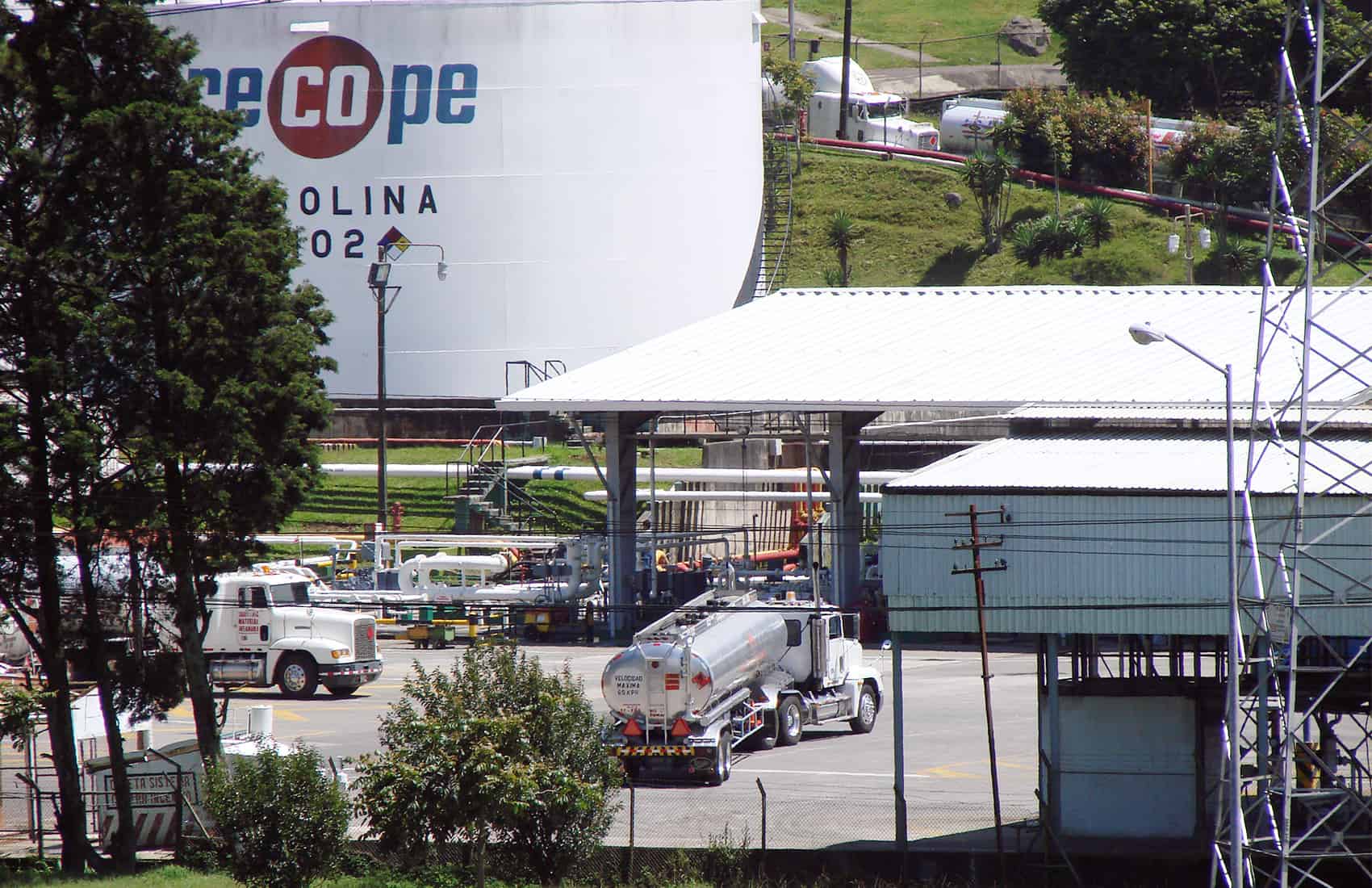
Saudi Arabia has not exported crude oil through its Red Sea ports since Saturday, after drone attacks damaged its East-West pipeline, according to maritime intelligence data. The disruption adds new uncertainty for Costa Rica, which imports all of the fuel it consumes. The halt follows months of restrictions on shipping through the Strait of Hormuz. Chevron chief executive Mike Wirth warned that the global mechanisms used to ease the fuel crisis have been exhausted.
International oil prices rose yesterday amid the attacks on Saudi infrastructure and continuing uncertainty over Hormuz. For Costa Rica, the connection to world markets is direct. The Regulatory Authority for Public Services (Aresep) sets fuel prices each month based on import costs reported by the state refiner Recope.
Aresep has said that factors outside Costa Rica, including armed conflicts and weather, affect the international price of oil. Those factors in turn affect the price of gasoline, diesel and cooking gas in Costa Rica. September’s adjustment already pushed some prices higher. Aresep approved an increase of ₡82 per liter for diesel, raising it from ₡606 to ₡688, about $1.53 per liter ($5.79 per gallon).
Super gasoline rose ₡22 to ₡726, about $1.62 per liter ($6.11 per gallon). Regular gasoline was the exception, falling ₡51 to ₡707, about $1.57 per liter ($5.95 per gallon). The price of an 11.3-kilogram (25-pound) cooking gas cylinder rose ₡82 to ₡7,071, about $15.73.
That adjustment was calculated from shipments made between Aug. 17 and Sept. 10, before the latest disruption to Saudi exports. Recope had previously pointed to tensions in the Middle East, higher seasonal demand and lower inventories of refined products as drivers of its costs.
Higher energy costs come as the government faces a constrained fiscal outlook. In its Medium-Term Fiscal Framework 2026–2031, updated Sept. 1, the Finance Ministry projected under its base scenario that tax revenue will grow more slowly than the economy. It also projected that public debt will remain above 60% of gross domestic product.
The ministry is now headed by former president Rodrigo Chaves, who also serves as Minister of the Presidency. It projects that the tax burden will fall from 12.8% of GDP in 2025 to 12.6% this year and keep declining to 11.7% by 2031.
The government also faces heavy debt payments over the coming decade. Finance Ministry data as of May show that 72% of the ₡32.4 trillion the ministry has borrowed, about ₡23.4 trillion or $52.1 billion, comes due between 2027 and 2036. The same data show that 34% of the ministry’s financing depends on movements in the exchange rate.
That exposure links the fuel market to the colón. In April, former Central Bank president Rodrigo Cubero said rising oil prices could act as an external force capable of breaking the dollar’s downward trend and pushing the colón toward depreciation. The Central Bank’s reference exchange rate stood at ₡444.46 to buy and ₡449.49 to sell on Wednesday.
Aresep’s next monthly adjustment will be based on the import costs Recope reports for its upcoming shipments.





