
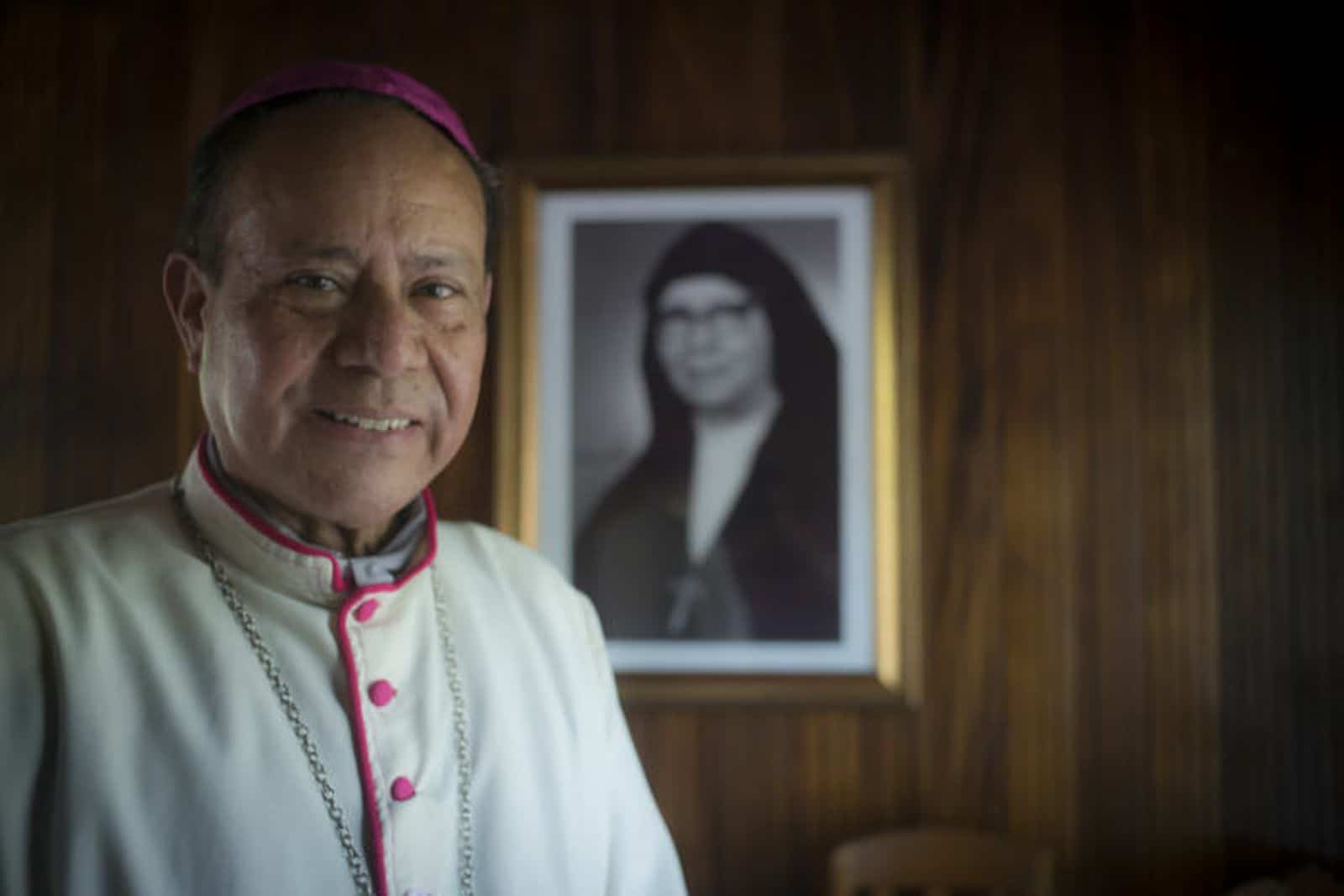
Catholic Bishop Abelardo Mata, a critic of Nicaraguan President Daniel Ortega, said he is in good condition in an interview broadcast Wednesday by the government, which released him days earlier following his arrest over alleged corruption. Mata, 80, was detained on June 29 for questioning about the origin of his properties, which Nicaragua’s Interior Ministry said did not correspond “with his status as a priest.” Authorities officially announced his release on July 4.
“Thank you, I’m fine,” Mata said in an interview at his home with state-run Channel 6 that was circulated by pro-government media. The interview made no mention of the bishop’s detention. Mata appeared to be in good health, while the United Nations and the Inter-American Commission on Human Rights had previously requested information about his whereabouts.
“Prayer helps a lot,” Mata said after the journalist repeatedly remarked that he appeared to have “a lot of vitality.” The United States denounced what it called “religious repression by the dictatorship” of Ortega and his wife and co-president, Rosario Murillo, over the case. Opposition groups accuse the two leaders of persecuting the Catholic Church, which the government blames for supporting the 2018 protests that left more than 300 people dead and for promoting what authorities describe as a Washington-backed coup attempt.
Mata was one of the most influential figures in Nicaraguan Catholicism over the past three decades and was known for criticizing the government, according to Nicaraguan media outlets operating in exile. In the interview, Mata also said that a brother and a niece visit him at his residence, although he prefers “silence, study and prayer.”
In recent years, the Ortega-Murillo government has intensified its crackdown on critics, stripping some of their nationality and expelling them from the country. Those affected have included politicians, business leaders, journalists, intellectuals, human rights activists and members of the clergy. In some cases, the government has also confiscated their property.
The government’s campaign against its opponents has been accompanied by a constitutional reform that is expected to be put to a vote in early September and would exclude opposition parties from elections.