

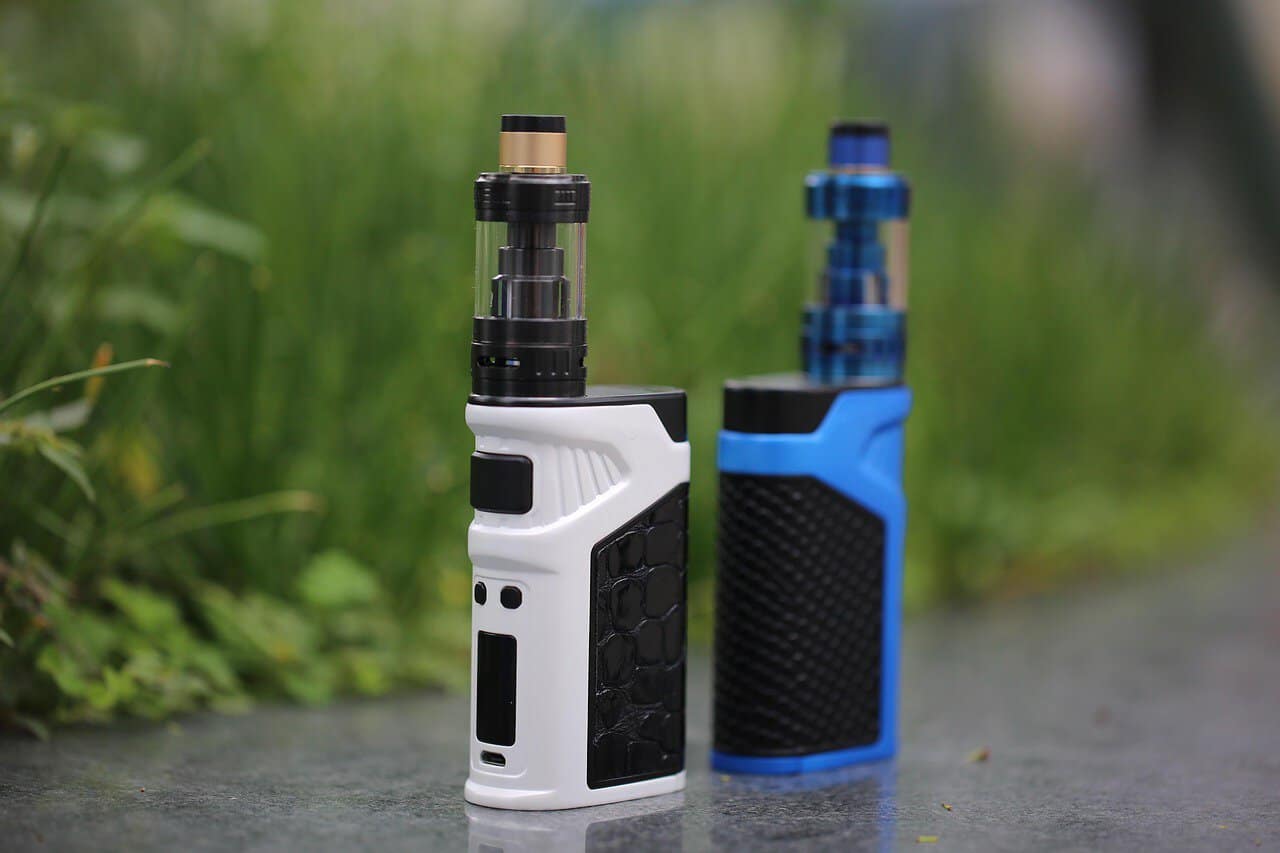
Today was the day flavored vape liquids were supposed to disappear from shelves in Costa Rica. They haven’t, and they won’t for another year. The date wasn’t imaginary. The regulation was published in La Gaceta in February and gave the industry six months to comply, which set the clock to run out today. Coverage from that period is still easy to find, and it all points to August 6. What most of it doesn’t mention is that the government moved the deadline on July 7, to August 6, 2027.
The change came through executive decree 45853-S, signed by President Laura Fernández and Health Minister Alexander Sánchez. It moved the date and nothing else. Every restriction in the regulation survives intact, including the flavor limits, the nicotine cap, the advertising ban and the labeling and laboratory requirements. The Health Ministry has been explicit that the extension softens none of it. You can read our earlier report on the one-year delay to Costa Rica’s vape regulation.
So what governs you today is what governed you last week. You still cannot vape inside restaurants, bars, hotels, shopping centers, casinos, nightclubs, workplaces, schools or health facilities, under the public-space rules already in force. Liquids containing synthetic nicotine or cannabinoids remain prohibited outright. But buying a mango or dessert-flavored liquid is legal, and it stays legal through the rest of this year and most of next.
What arrives in August 2027 is a much tighter market. Manufacturers and importers will be limited to 16 approved flavoring compounds, all of them tobacco. Fruit, candy, dessert and spice flavors disappear, along with anything else designed to make the product pleasant to taste. The reasoning is straightforward: flavor is what makes a first puff tolerable, and a first puff is what starts the habit.
Two numbers do most of the work. Nicotine in vape liquid will be capped at 20 milligrams per milliliter, and any bottle containing nicotine will be capped at 10 milliliters, roughly a third of a fluid ounce. Both limits target the same problem. A high-strength liquid in a large container lets someone absorb a great deal of nicotine without ever pausing to buy more, and pausing to buy more is where people notice how much they are using.
Packaging changes too. Illustrations of food, fruit, desserts or toys will be banned, as will images of athletes, artists, influencers, cartoon characters and fictional figures. Advertising, promotion and sponsorship go entirely, including on websites, apps and social media. Remote and online sales will be restricted where a seller cannot properly verify the buyer’s age.
The Health Ministry says it needs the extra year to be able to enforce any of this. Officials pointed to unfinished technical instruments, administrative procedures that still need defining, coordination between the agencies responsible for watching the market, and staff who need training. The ministry is also buying an inductively coupled plasma spectrometer, an instrument that detects metals and other substances at very low concentrations. Without one, a rule about what a liquid contains is a rule nobody can actually check.
The delay drew criticism from opposite directions. Nydia Amador, president of the National Anti-Tobacco Network, said the resulting bureaucracy benefits only the tobacco and nicotine industry while the health of children waits. The Costa Rican Chamber of Commerce supported the postponement, arguing that starting on the original date would have created a window in which approved products could not be sold legally, opening space for the illegal market to grow.
Behind the argument sit figures from the Institute on Alcoholism and Drug Dependence, which has found that one in ten people aged 12 to 17 in Costa Rica has used a vape, with the average user starting at 13. Health authorities have also warned that the damage is not confined to the lungs, and that younger adults who smoke or vape face sharply higher heart attack risk. A separate bill filed in the Legislative Assembly would go considerably further and ban vaping products altogether.
The rules themselves are written, signed and no longer in dispute. What the extra year decides is whether they arrive with the means to enforce them, or arrive on paper alone.





