
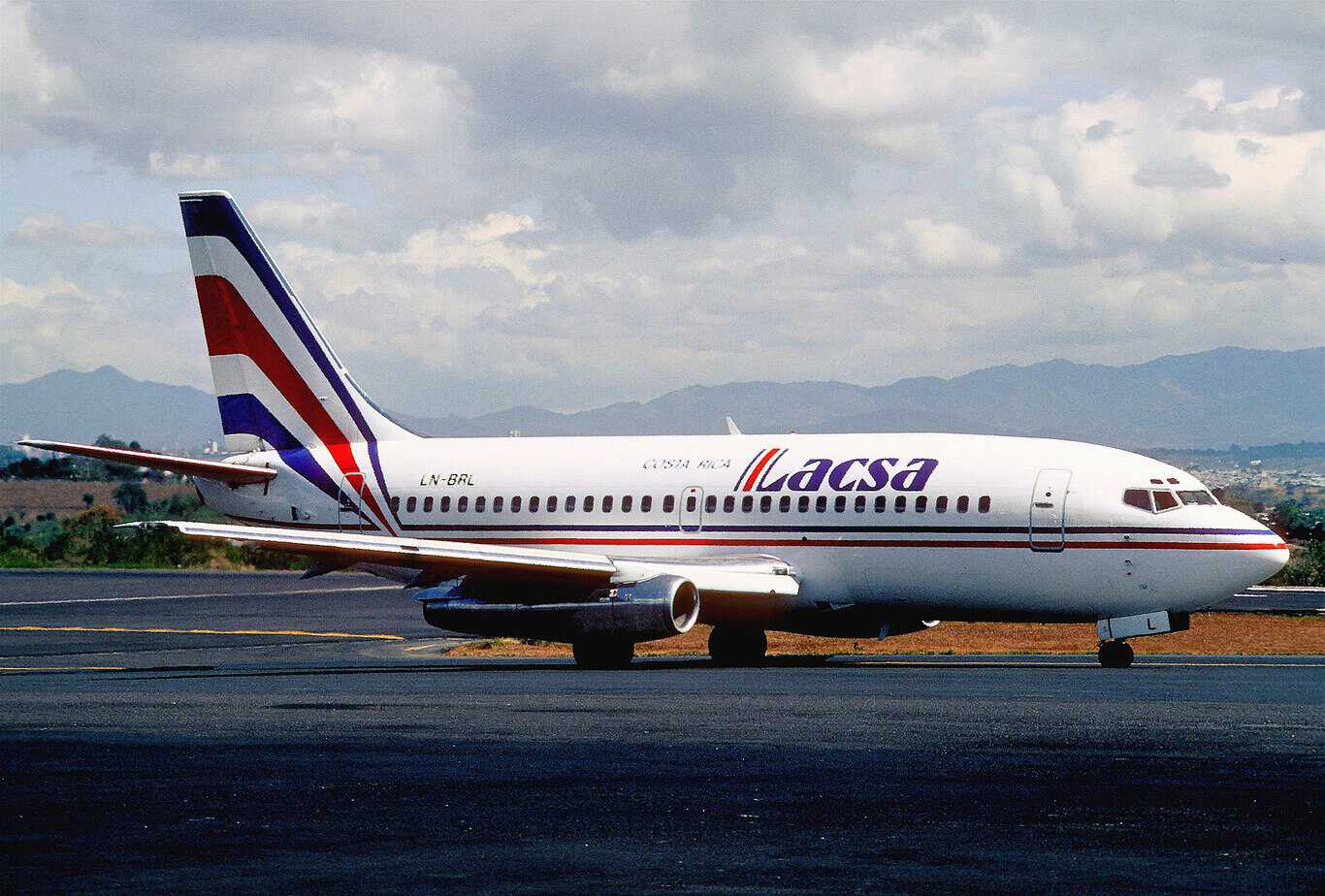
Flying from Miami to Costa Rica in the 1990s could mean a hot meal, repeated rounds of complimentary drinks and a seat only a few rows from an onboard smoking section. The line separating smoking from nonsmoking passengers was usually little more than a row number. Cabin air, of course, did not follow the seat map.
For travelers who remember flying LACSA between Miami and San José, the experience bears little resemblance to the same journey today. The flight lasted roughly three hours, but it was treated as a full international service rather than a short trip where nearly every extra came with a separate charge. The price was also different.
A published round-trip LACSA fare from Miami to San José in 1996 was $455. Adjusted using the U.S. Consumer Price Index, that would equal approximately $970 in June 2026. Recent fares on the route can sometimes be found in the low $300s, depending on the travel dates and how early the ticket is purchased. That makes the inflation-adjusted 1996 fare roughly three times a low promotional fare today.
It is not a perfect comparison. The older ticket generally included food, drinks and services that modern airlines may charge for separately. Today’s lowest fares may exclude checked baggage, advance seat selection and other benefits once included in the ticket price. The published fare also did not tell the whole story in the 1990s.
Airline consolidators and specialized travel agencies negotiated discounted fares that were not always available directly to the public. Businesses such as Tico Travel worked within that system, selling LACSA tickets to travelers and other agencies at prices below the airline’s published rate. It was a relationship-driven business conducted largely over the telephone. Agencies depended on negotiated contracts, access to discounted inventory and the ability to sell enough tickets on a relatively small margin.
That model did not disappear completely, but it became less important as airlines began selling directly through their own websites and online travel platforms made fares easier to compare. More sophisticated pricing systems also allowed airlines to adjust ticket prices continuously according to demand, competition and the number of seats remaining.
LACSA, whose full name was Líneas Aéreas Costarricenses S.A., was Costa Rica’s national airline and one of the country’s most visible international brands. Two aircraft became closely associated with its operations during the period. The Boeing 727-200 joined LACSA’s fleet around 1980 and became a familiar sight at Juan Santamaría International Airport and destinations including Miami. Its three rear-mounted engines and distinctive T-shaped tail made it one of the most recognizable passenger jets of its generation.
LACSA received its first Airbus A320 in December 1990, becoming the first Central American airline to operate the aircraft. The modern twin-engine jet represented a major fleet upgrade and appeared regularly at Miami International Airport during the decade. Passengers flying the route in the 1990s could encounter either aircraft as LACSA gradually moved away from the older Boeing jets and expanded its use of the A320.
Meal and beverage service on a flight of that length was not unusual at the time. Many international airlines still treated economy passengers to hot food, complimentary alcoholic beverages and a level of cabin service now more commonly associated with longer flights or premium fares.
Smoking was also still permitted on many international services during part of the decade, even though the United States had already prohibited it on most domestic flights. A broad U.S. ban covering international flights to and from the country did not take effect until 2000.
Behind the familiar Costa Rican colors, however, LACSA was already undergoing a major transformation. Economic problems during the early 1990s left the airline facing the prospect of a sale or closure. In 1992, El Salvador’s Grupo TACA acquired 86% of the company.
LACSA retained its Costa Rican identity for several more years, but its operations were gradually integrated with other Central American airlines controlled by TACA. Beginning in 1998, the participating carriers increasingly operated under a common TACA identity. TACA later merged with Avianca. The combined airlines began using the Avianca name as a single commercial brand in 2013, and LACSA’s corporate name was formally changed to Avianca Costa Rica in 2017.
Avianca, whose Costa Rican operation traces directly back to LACSA, continues to fly between Miami and San José. American Airlines also operates nonstop service on the route. Other airlines compete through connecting itineraries, giving passengers far more booking combinations than were readily available during LACSA’s peak years.
The greater choice has helped push down basic fares, particularly when inflation is taken into account. It has also changed what passengers receive for the price. What disappeared was not only the smoking section or the complimentary meal. An entire way of selling and experiencing air travel faded with it: paper tickets, telephone bookings, negotiated consolidator fares and a national airline whose aircraft carried Costa Rica’s name across the Americas.
For those who flew the route, the memories remain unusually specific: the roar of a Boeing 727, a hot meal arriving shortly after takeoff, another drink offered before landing and cigarette smoke drifting forward from the rows behind. It was an imperfect experience by modern standards, especially for anyone seated near the smoking section. But it belonged to a distinctive period in Costa Rica’s aviation history, when flying LACSA was part of the trip rather than simply the way to get there.