

Costa Rican Red Cross rescuers working in Venezuela located a man alive beneath the rubble of a collapsed condominium building Sunday, giving a rare sign of hope as the death toll from last week’s devastating earthquakes climbed toward 1,500.
The survivor was found in Playa Grande, in the hard-hit state of La Guaira, after Costa Rican rescuers heard signs of life while searching through the wreckage. Costa Rican Red Cross officials said the man was trapped in the lowest underground level of a destroyed building, apparently inside a security booth in the parking area.
As of the latest field reports Sunday night, rescue teams had confirmed auditory contact with him and were working on a complex extraction. The man was described as conscious, alert and stable after being trapped since the earthquakes struck on June 24.
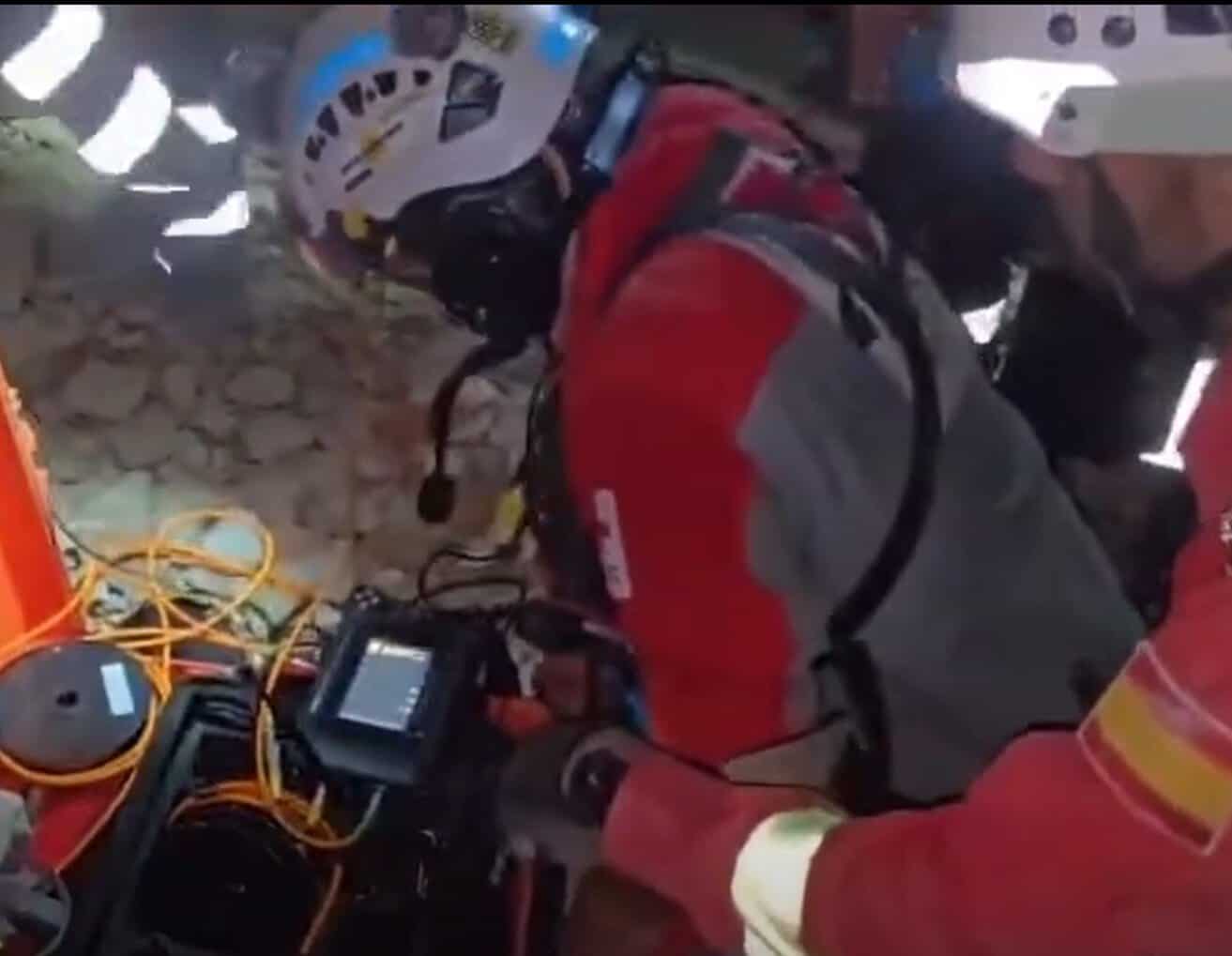
Wagner Leiva, the Costa Rican Red Cross emergency response director leading operations in Venezuela, said the team realized someone was alive while working in another section of the collapsed structure. Rescuers then used acoustic detection equipment to confirm the survivor was responding.
The operation was expected to take hours because of the instability of the wreckage. Costa Rican officials said teams from Venezuela, Mexico, Colombia and the United States were also involved in the rescue effort, with crews trying to avoid additional collapses while reaching the trapped man.
Video shared overnight showed the tense work around the site, where rescuers were operating in confined spaces and unstable debris. The Costa Rican Red Cross said the location and condition of the building made the extraction especially dangerous.
The rescue effort comes as Costa Rica expands its humanitarian mission in Venezuela. The government sent a second contingent Saturday with 48 search-and-rescue specialists from the Costa Rican Fire Department’s Urban Search and Rescue team, along with 12 tonnes of technical equipment and supplies.
That deployment followed an earlier mission that arrived June 26 with 17 Costa Rican rescuers and 3.5 tonnes of non-perishable food. Sixteen of those rescuers were from the Costa Rican Red Cross, with experience in collapsed-structure rescue, search and location, emergency care, medical support and logistics.
The mission is being coordinated by Costa Rica’s National Commission for Risk Prevention and Emergency Response, known as the CNE, under instructions from President Laura Fernández. The government said the goal is to reinforce search, rescue and humanitarian assistance in areas damaged by the earthquakes.
The Costa Rican deployment is part of a much larger international response. Venezuela has received rescue teams, supplies and technical assistance from countries across Latin America and beyond as crews continue searching collapsed buildings in La Guaira and around Caracas.
The earthquakes, recorded at magnitudes 7.2 and 7.5, struck northern Venezuela on June 24, leaving widespread destruction in coastal and urban areas. La Guaira, north of Caracas, has been among the hardest-hit zones, with collapsed buildings, displaced families and rescue teams still moving through debris days after the disaster.
Venezuelan authorities reported at least 1,450 deaths, more than 3,100 injuries and more than 12,000 displaced people by Sunday. Reuters reported that nearly 50,000 people were listed as unaccounted for on an opposition-promoted registry, while official figures on missing or trapped people remained lower. All figures remain preliminary and could change as crews reach more damaged areas.
The search has entered a critical phase. Rescue specialists often describe the first 72 hours after a collapse as the most important window for finding survivors alive, though rescues can still happen later when victims have access to air pockets or limited space.
For Costa Rica, the mission marks one of the most visible overseas disaster-response deployments in recent years. It also places Costa Rican emergency crews inside one of the region’s largest humanitarian operations, working alongside international teams in conditions that remain dangerous and unpredictable.
Even as the overall toll rises, the discovery of a survivor by the Costa Rican team has become a focal point of the mission. Officials said the operation would continue as long as conditions allowed and rescuers could maintain contact.





