

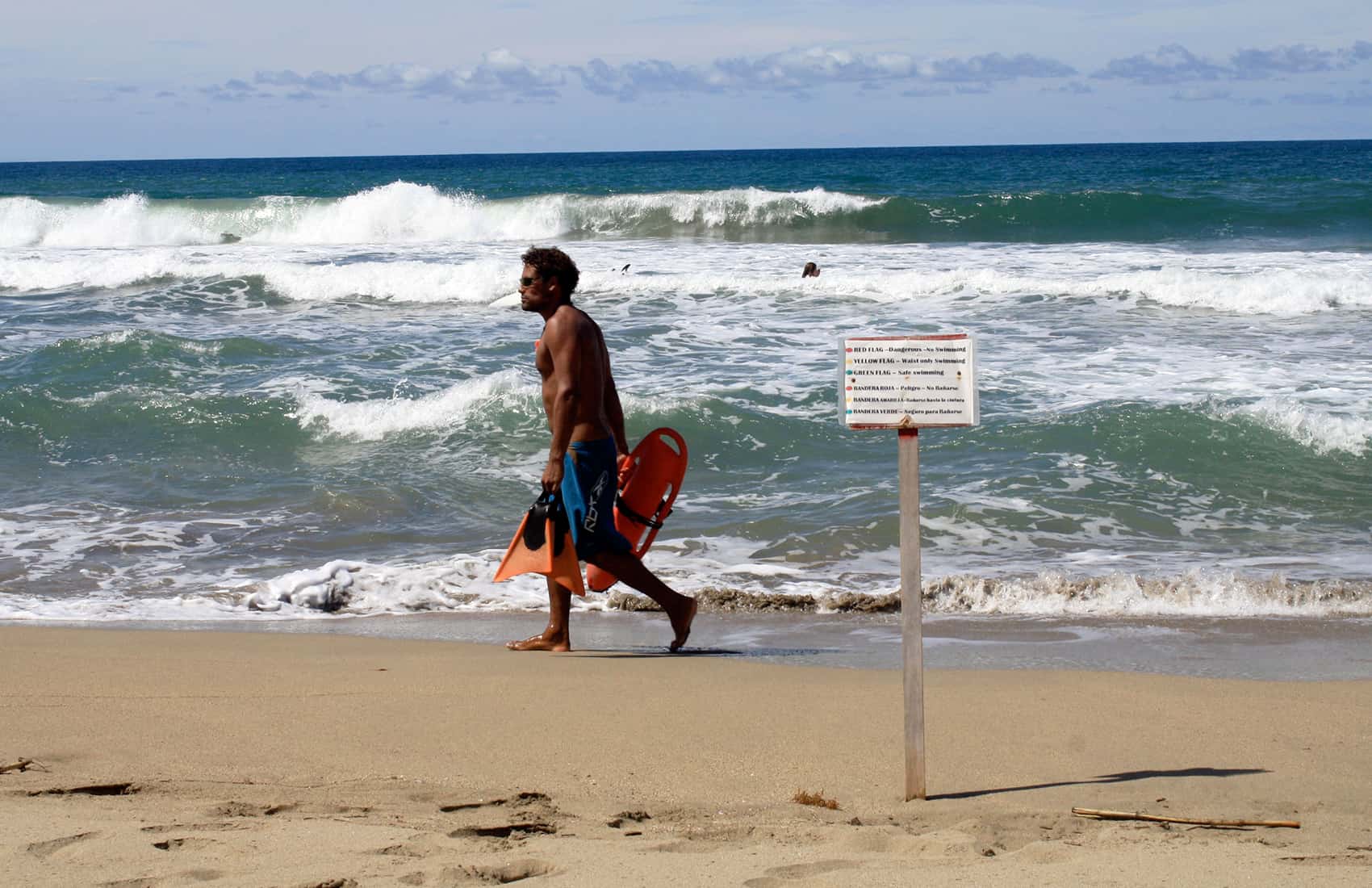
Those heading to Costa Rica’s Caribbean coast this week are being urged to use caution as higher surf, rip currents and a pair of tropical waves create more dangerous conditions for swimmers and small boats.
The Caribbean coast could see waves reaching up to 3.5 meters, or about 11.5 feet, between Tomorrow and Thursday, according to forecasts. The strongest conditions are expected from around midday tomorrow through Wednesday, with a gradual decrease beginning Friday.
The increase is being linked to stronger trade winds over the Caribbean Sea and the influence of tropical waves moving through the region. The National Meteorological Institute expects tropical wave No. 15 to affect Costa Rica tomorrow, followed by tropical wave No. 16 between Thursday and Friday.
The National Emergency Commission declared a green alert for the entire country Monday because of the expected increase in rainfall, winds and unstable weather during the week. A green alert is preventive, but it allows local emergency committees to monitor conditions and prepare for possible incidents.
For any going to the beach, the main concern on the Caribbean side is not only the size of the waves, but the way the sea may behave near the shore. Higher surf can create strong rip currents, especially along open beaches and near river mouths, estuaries and irregular breaks. These currents can pull swimmers away from the beach quickly, even when the water does not look especially rough from shore.
Beachgoers in Limón, Cahuita, Puerto Viejo, Cocles, Punta Uva, Manzanillo and other Caribbean towns should check local conditions before entering the water. Always avoid swimming alone, avoid entering the sea at unguarded beaches, and keep children close at all times. Anyone caught in a rip current should avoid trying to swim directly against it, float if tired, and signal for help.
The warning also applies to small and medium-sized boats. Ocean specialists said choppy seas could make navigation difficult, particularly at river mouths, estuaries and in open water. Fishing, snorkeling, diving, kayaking and small-boat tours may be affected if operators determine conditions are unsafe.
The Pacific coast is expected to see more typical conditions, though some areas could still see stronger surf. Forecasts cited by MIO-Cimar point to average waves of 1.2 to 1.5 meters, or about 4 to 5 feet, across much of the Pacific, with maximums near 1.8 meters, or about 6 feet. From Punta Guiones north toward La Cruz, conditions may be more variable, with maximums possibly reaching 2.8 meters, or about 9 feet, between Tuesday and Friday.
Anyone with beach plans this week should treat the forecast as a planning issue, not a reason to panic. Beaches are not closed, but conditions can change quickly. The safest approach is to ask hotels, lifeguards, or local authorities before entering the water, and to avoid the sea when waves are breaking hard or when red flags are posted.
Authorities are expected to continue monitoring the tropical waves and coastal conditions through the week





