

El Salvador’s tourism growth is moving faster than the country’s own official targets. After years of being seen internationally through the lens of violence and insecurity, El Salvador has turned tourism into one of its main economic strategies. The shift has been rapid. In 2019, the country received about 1.7 million international visitors. By 2023, that figure had risen to more than 3.4 million. In 2025, El Salvador reached 4.1 million international visitors, the highest annual total in its history.
The government’s 2026 target is 4.2 million international visitors. Early numbers suggest that goal may be reached ahead of schedule. From January through April, El Salvador received 1.7 million international visitors, a 35% increase compared with the same period in 2025. April alone brought 473,000 visitors, also up 36% year over year.
Semana Santa added another boost. El Salvador received 195,000 international visitors during the holiday period, 35% above the government’s projection. The performance reinforced what tourism officials have been arguing for several years: the country is no longer trying to reenter the regional tourism market. It is trying to lead it.
The medium-term goal is 5 million international visitors by 2030. The government has also projected 27 million accumulated tourists between 2025 and 2030, a level that would reshape El Salvador’s place in Central American tourism.
Tourism has become a larger piece of the national economy. The sector has grown from about 6.4% of GDP five years ago to roughly 14%, according to figures cited by tourism and investment officials. Revenue targets are also climbing, with officials projecting tourism income above $4 billion as hotel, restaurant, construction and transportation activity expands.
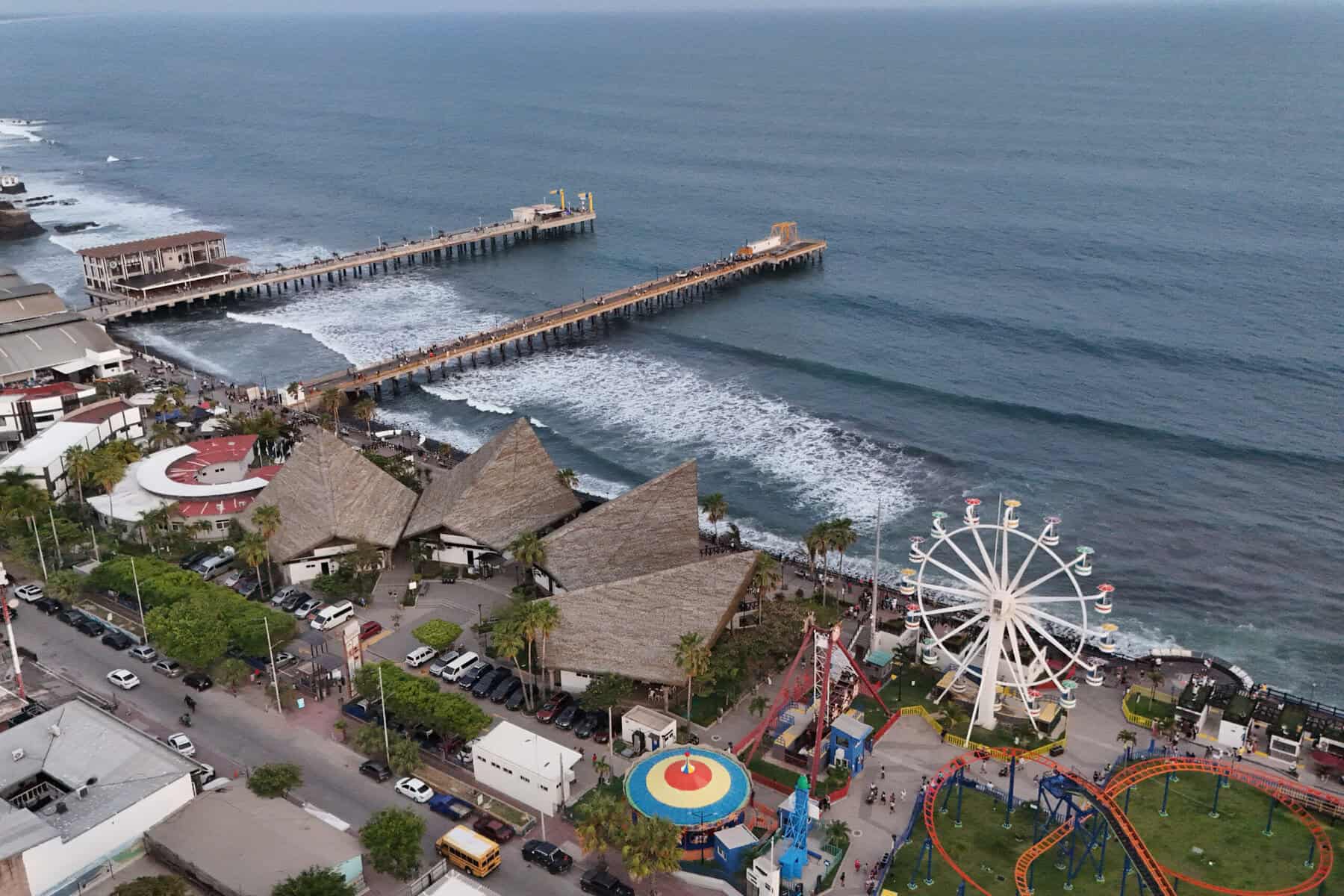
Surf City remains the country’s best-known tourism initiative. The La Libertad coast, led by El Tunco, El Zonte and Punta Roca, has been promoted as one of the strongest surf destinations in the Americas. Punta Roca is again on the World Surf League Championship Tour calendar in 2026, keeping El Salvador in the international surf circuit.
The government has also moved ahead with plans tied to Surf City II, aimed at extending tourism development beyond the already established La Libertad corridor. In 2025, El Salvador hosted major surfing events and golf tournaments as part of its broader sports tourism push.
Security remains the main factor behind the change in El Salvador’s image. The country’s homicide rate has fallen sharply under President Nayib Bukele’s security strategy, allowing the government to market El Salvador as one of the safest destinations in the region. The United States upgraded El Salvador’s travel advisory to Level 1 in 2025, its lowest-risk category for American travelers.
That security policy remains controversial because it is tied to a prolonged state of emergency, mass arrests and criticism from human rights organizations. For tourism, however, the change has clearly altered how many travelers view the country.
El Salvador will also receive a major promotional platform this year when it hosts World Tourism Day 2026 on September 27. The event, organized through UN Tourism, will bring international attention to the country’s tourism model, digital strategy and investment pitch.
The country is also promoting more than surf and security. Its tourism strategy includes the Joya de Cerén archaeological site, the Ruta de las Flores, volcano tourism, whale-watching on the Pacific coast, coffee country, colonial towns and San Salvador’s growing restaurant and arts scene.
The capital has become a larger part of the tourism offer, helped by public space projects, new restaurants, cultural events and a stronger focus on the historic center. For visitors who once treated San Salvador mostly as a stopover, the city is now being marketed as part of the trip.
El Salvador’s dollarized economy gives it another advantage with North American travelers by removing currency exchange concerns. Bitcoin legal tender status has also created a separate niche, especially around El Zonte, where the Bitcoin Beach project continues to attract crypto-focused visitors and digital nomads.
Air connectivity will be central to the next stage. Tourism officials are working with the airport authority to attract new routes, increase seat capacity and improve access from North American cities. More flights will be needed if the country is serious about handling 5 million annual visitors by 2030.
Investment policy is another part of the plan. El Salvador has promoted tax incentives, permitting support and public-private coordination for tourism infrastructure projects. The government is seeking hotel developers, tour operators, transportation companies and tourism technology firms to help build the capacity needed for continued growth.
The numbers show how quickly El Salvador’s tourism image has changed. A country that was largely outside the mainstream tourism conversation a decade ago is now posting record arrivals, hosting international events and setting targets that no longer look unrealistic.
The challenge now is capacity. El Salvador has demand, attention and momentum. To meet its 2030 goals, it will need enough hotels, flights, trained workers, roads, public services and environmental safeguards to keep pace with the growth it has created.





