

Costa Rican scientists have detected the Jingmen tick virus in the country for the first time, the earliest confirmed presence of the pathogen anywhere in Central America.
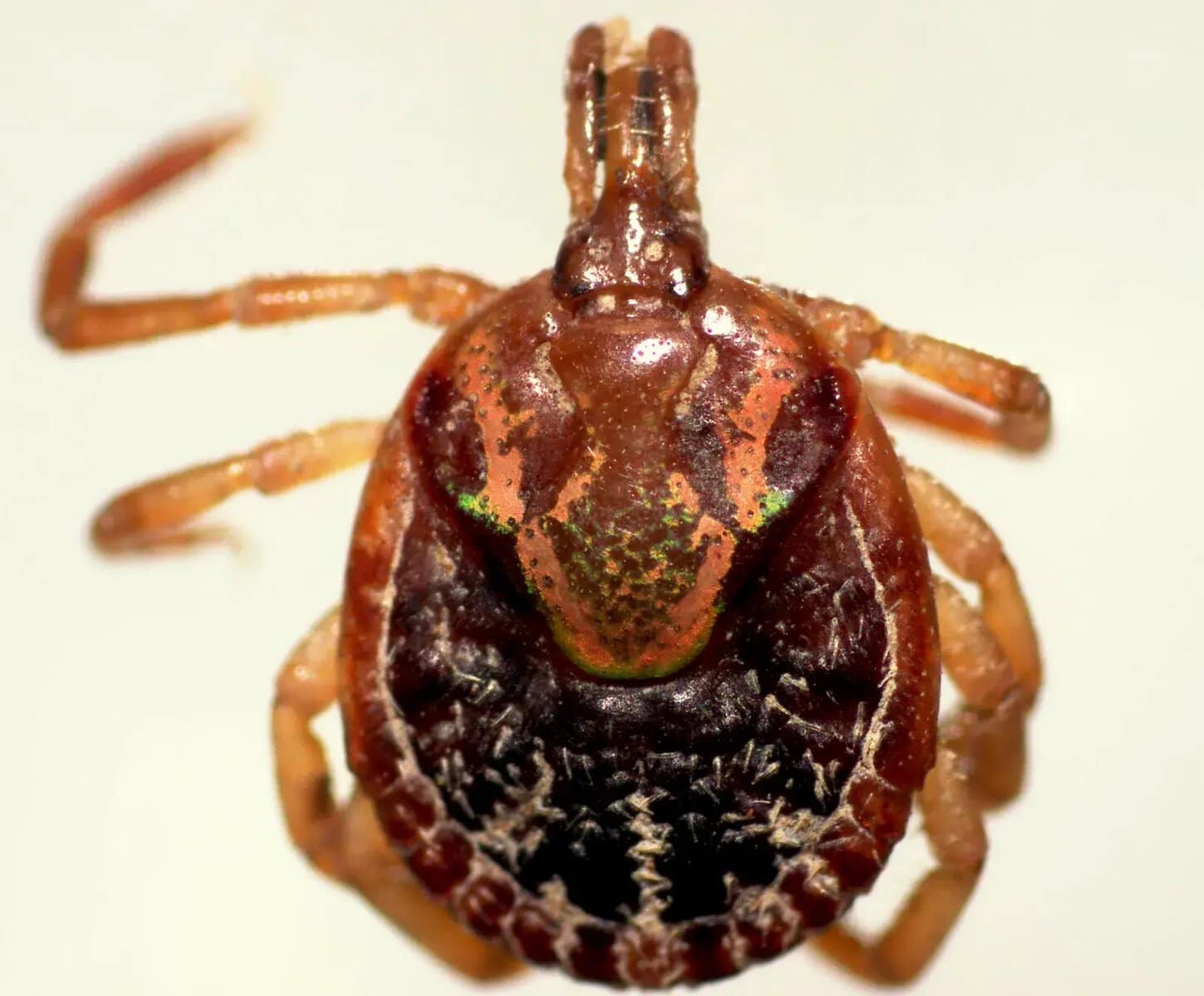
The finding, led by researchers at the University of Costa Rica (UCR) and published in the peer-reviewed journal Microbiology Spectrum in June 2026, identified the virus in Amblyomma mixtum ticks collected from horses on the Caribbean side in La Siberia.
First described in China in 2014, the Jingmen tick virus, or JMTV, belongs to a group of segmented flaviviruses that has drawn growing scientific attention because some members are considered emerging pathogens capable of infecting people. It has since been reported across Asia, Europe, Africa and the Americas, and within Latin America it has turned up in Mexico, Colombia, Brazil, the French Antilles, and Trinidad and Tobago. Until now, no virus of any kind had been documented in ticks in Central America.
Dr. Tatiana Murillo Corrales, a virologist at UCR who led the discovery, described the result as a first regional record. She said the project began because no one in Central America was studying viruses in ticks, and that existing knowledge was limited to some of the bacteria ticks are known to carry.
The study was carried out with Dr. Adriana Troyo, a medical entomologist at UCR and the project coordinator, alongside scientists from UCR’s Center for Research in Tropical Diseases (CIET), the parasitology laboratory of the National University’s School of Veterinary Medicine (UNA), the Gorgas Memorial Institute for Health Studies in Panama, and the Institut Pasteur in France.
Importantly, the detection does not amount to a disease outbreak. There is no confirmed evidence of human infection with the virus in Costa Rica, and researchers say they do not yet know whether the strain found here can cause illness in people at all. Related viruses in the same group have been associated with human illness elsewhere — a 2019 report in The New England Journal of Medicine linked several of them to symptoms ranging from a skin lesion at the bite site to fever, swollen lymph nodes, headache and general malaise — but Murillo stressed that it remains unknown whether the Costa Rican strain behaves the same way or differently.
The value of the finding, she said, lies in surveillance. What is not known cannot be monitored, diagnosed or treated, and the detection now allows authorities and scientists to begin tracking the virus, launch further studies and respond faster should human or animal cases ever appear. As part of the project, the team also developed a PCR test — the only current means of screening for the virus, since no dedicated diagnostic exists.
The detection itself produced an unexpected pattern. Between October 2023 and May 2024, the team collected 97 tick samples in La Siberia using two methods: ticks drawn from the vegetation of grazing pastures, and ticks taken directly from horses feeding in those same fields. The virus appeared only in the ticks feeding on the horses, and not in those gathered from the surrounding vegetation, despite both coming from the same location.
The reason is not known. Because the study did not test the horses’ blood, researchers cannot say whether the animals were infected or whether the virus caused them any harm; they can only suggest that horses may play some role in the virus’s transmission cycle, a question left for future work. The team also sampled ticks in Ciudad Colón, Heredia, Monte de la Cruz and Vara Blanca, where no virus was found.
Genetic analysis added a further wrinkle. The variant identified in Costa Rica is slightly distinct from those described elsewhere, though it shares an evolutionary ancestor with detections across Latin America and the Caribbean and falls within the same lineage as viruses found in Europe and Western Asia, including some recovered from humans.
That pattern led the team to propose that the virus may have entered the Americas through two separate introductions. The genetic material was reconstructed using viral metagenomics and next-generation sequencing, with processing carried out at the Institut Pasteur in France.
The tick at the center of the study, Amblyomma mixtum, is among the species that most frequently bite humans in Central America and feeds on an unusually wide range of hosts, from wildlife and livestock to people. Dr. Luis Enrique Chaves González, a medical entomologist at UCR and part of the research team, noted that a tick becomes an effective carrier only when a series of biological conditions align, and that not every tick is a competent vector for a given pathogen. Even so, the versatility of Amblyomma mixtum means those conditions can line up more easily than with more selective species.
For now, the practical guidance for residents and visitors spending time in pastures or vegetated areas is straightforward: wear protective clothing, keep long trousers tucked into socks or boots, and check the body and clothing for ticks after outdoor activity. For animals, veterinarians can recommend tick-control products suited to each species.
Researchers say the next step is to study more ticks, more wild and domestic animals, and people who work closely with those animals, to understand how the virus moves and whether it can reach humans. As Murillo put it, the detection lets Costa Rica get ahead of whatever may emerge.





