

Costa Rica’s clean electricity reputation is becoming part of a new technology pitch: power artificial intelligence with renewable energy. Our country generated 98.6 percent of its electricity from renewable sources in 2025, using hydropower, geothermal, wind, biomass and solar, according to ICE data verified by LSQA. ICE also says the national grid is expected to add 600 megawatts of new generating capacity by 2030.
That record gives Costa Rica something many countries want but few can offer at scale: a power grid that can help technology companies lower the carbon footprint of data centers, cloud services and AI computing. It also creates a new policy dilemma. AI data centers need huge amounts of electricity and, depending on the cooling system, large amounts of water. For a country that sells itself on sustainability, the question is no longer only how clean the grid is. It is how much new demand the grid and watersheds can absorb.
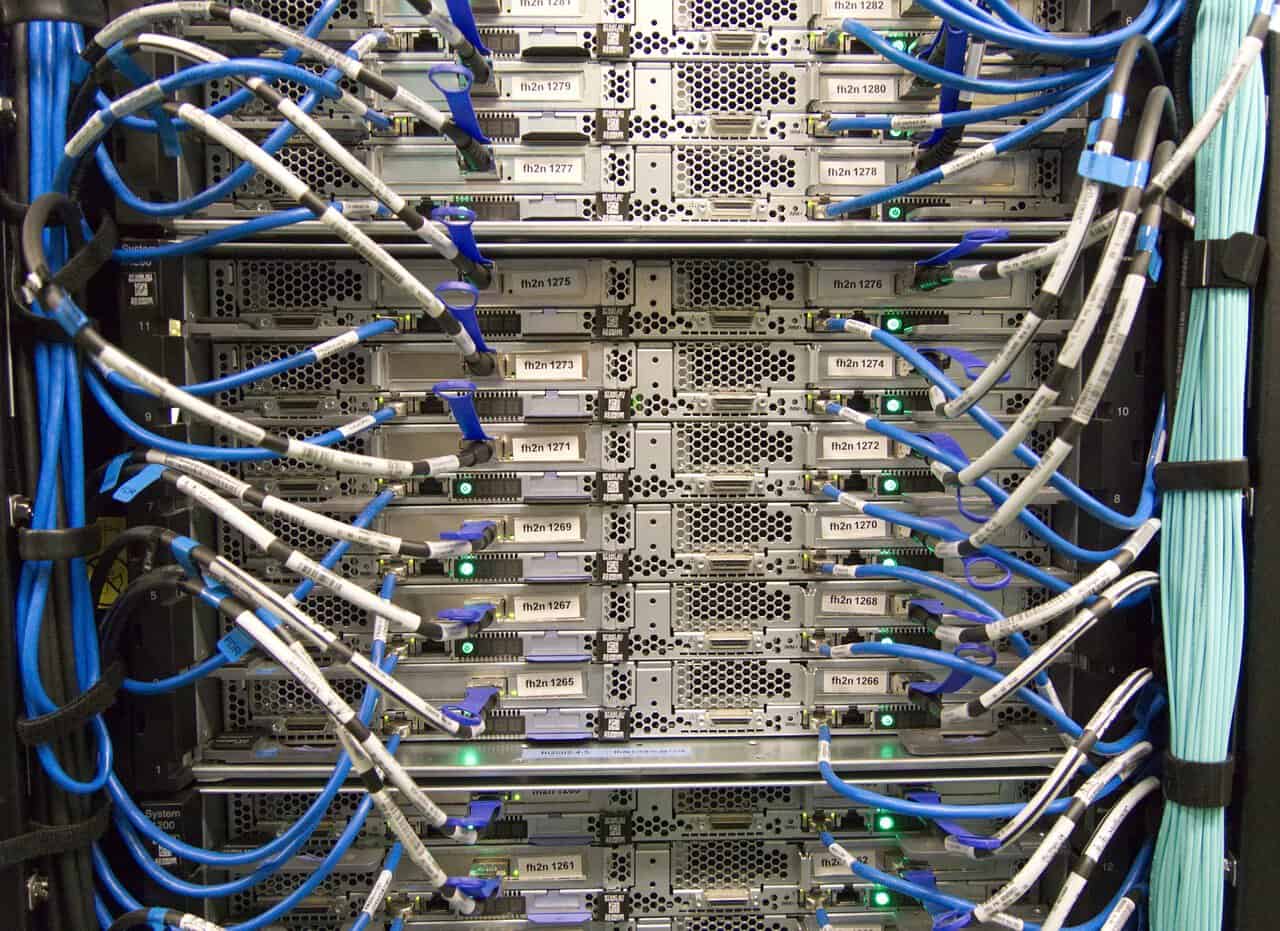
Costa Rica’s data center market remains modest. Industry tracker Baxtel lists four facilities in our country, operated by three providers, with about 20 megawatts of total power capacity. The largest listed facility is SC Zeus in San José at 13 megawatts. Navégalo, another local operator, opened a San José facility designed for 5 megawatts in its first phase and scalable to 15 megawatts.
But the direction of travel is clear. Navégalo now markets enterprise AI infrastructure in Costa Rica, including private AI environments, analytics and automation services. Digerati Technologies says it has taken a 25 percent stake in In Pursuit, a developer promoting solar-powered green data centers in Costa Rica and Latin America, with a stated target of 600 megawatts of AI compute capacity by 2030.
Hyperscale developers have also looked at the country. Layer 9 Data Centers said in 2023 it was evaluating Costa Rica, Uruguay and Panama for a second project tied to an unnamed hyperscale client. At that time, the company said no major hyperscale operator had facilities in Costa Rica, Panama or Uruguay.
The attraction is easy to understand. Costa Rica is politically stable, has a skilled workforce, sits between North and South America, and runs one of the cleanest electricity systems in the region. For tech companies under pressure to reduce emissions from AI infrastructure, that combination is valuable.
The risk is that Costa Rica’s green grid is not immune to climate stress. In 2024, renewable coverage of national electricity demand dropped to 86.8 percent, the lowest level since ICE began publishing the indicator in 2015. Hydroelectric plants still covered 64.7 percent of demand, but thermal generation using bunker fuel rose sharply, and Costa Rica had to buy electricity from the regional market.
That drought year exposed the weak point in Costa Rica’s electric model. Hydropower is clean when reservoirs are full. It is less reliable when rainfall fails. In May 2024, Costa Rica announced an electricity rationing plan after the worst drought in five decades left reservoir levels critical and strained hydroelectric generation.
AI could make that balancing act harder. The International Energy Agency reported that global electricity demand from data centers grew 17 percent in 2025, while AI-focused data centers grew 50 percent. It projects global data-center electricity use will roughly double from 485 terawatt-hours in 2025 to 950 terawatt-hours by 2030.
Large AI facilities are not ordinary industrial users. A hyperscale data center can require 100 to 300 megawatts, comparable to the consumption of a medium-sized city. An AI cluster can consume as much power as tens of thousands of homes.
Water is the second pressure point. Data centers use water directly for cooling and indirectly through the power plants that supply them. The Environmental and Energy Study Institute reports that larger data centers can consume up to 5 million gallons of water per day, comparable to the use of a town of 10,000 to 50,000 people.
Even individual AI use carries a resource cost, though estimates vary by model, location and cooling system. Researchers at the University of California, Riverside estimated that 20 to 50 ChatGPT queries could consume roughly half a liter of fresh water through data center cooling and related electricity generation.
That matters in Costa Rica because water is already a public and contested resource. Surface and groundwater are public goods under Costa Rican law, and private use depends on state authorization through concessions. A recent University of Costa Rica analysis warned about water concentration and the legal mechanisms that allow private actors to use public water resources.
Costa Rica is not the first country to face this tension. In Chile, Google agreed to restart plans for a $200 million data center in Santiago after environmental concerns over the city’s aquifer and a court ruling that required the company to account for climate change impacts. The new proposal is expected to use air-cooled technology.
Across Latin America, data center expansion has triggered questions over who benefits when local communities provide the electricity, water and land while the computing power serves clients elsewhere. A regional investigation by CLIP described the pattern as a form of “digital extractivism,” especially where water-stressed communities face opaque decisions about large technology projects.
Costa Rica still has time to avoid that path. The country has a stronger environmental brand, a public electricity system, and an energy planning tradition that gives it more control than many neighbors. But that control only matters if large data centers are treated as major infrastructure projects, not ordinary business investments.
That means requiring public disclosure of expected electricity demand, water use, cooling systems, backup power, emissions impacts and local benefits before major projects move ahead. It also means matching any large AI data center growth with new generation, grid upgrades and watershed protections.
Costa Rica’s clean grid is a major asset. The AI boom could turn it into an economic advantage. But our country’s green reputation will depend on the rules it sets now. Clean electricity is not the same thing as a clean outcome.





