
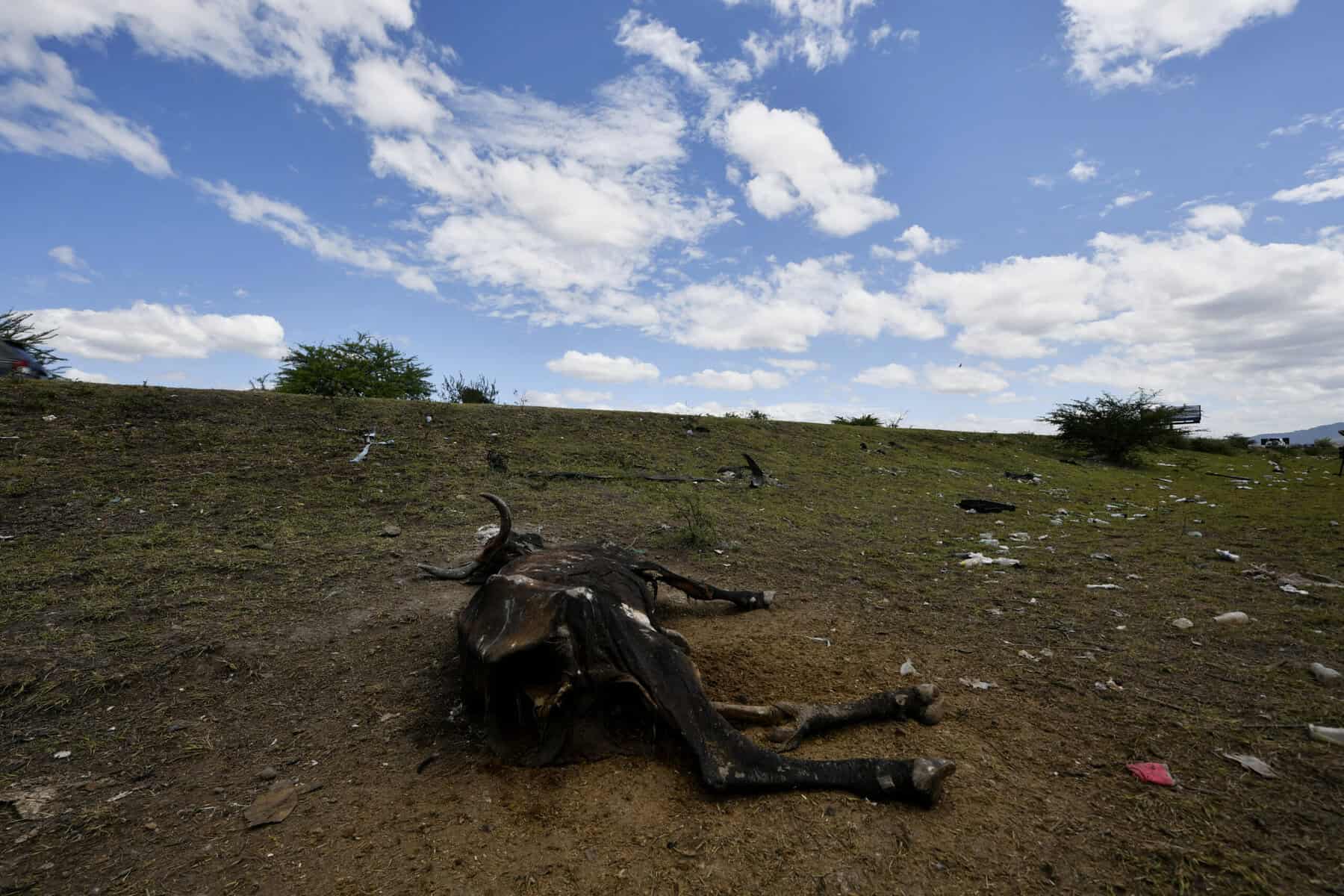
Animals are dropping dead amid the worst drought in living memory for many Central Americans, who are dealing with the unforgiving effects of the powerful El Nino weather pattern. “Sometimes I break down in tears. Sometimes you eat, sometimes you don’t,” said Lidia Ochoa in San Lorenzo, southern Honduras.
The same scene is playing out across the Central American Dry Corridor, which includes parts of Honduras, Guatemala, El Salvador, Nicaragua and Costa Rica. More than 10 million people live here, and 80 percent of small-scale producers in the corridor are poor, United Nations figures show.
Extreme weather events are common in this part of the world, but this year’s El Nino — expected to be the strongest since comparable records began four decades ago — has bewildered locals. “We had never seen anything like this,” said 76-year-old Ochoa. At this time of year, corn should be growing abundantly on the plot belonging to fellow resident Francisco Molina. But the field lies barren, surrounded by livestock carcasses decaying under the boiling heat. The same disaster is unfolding in El Salvador.
Maria de la Paz Portillo manages an increasingly thirsty water tank that supplies the northeastern El Matazano community, where temperatures have reached a record-breaking 42C. “This is the first year that we’ve seen this shortage and this need for water,” the 31-year-old said.
Harvests lost
El Nino raises surface temperatures in the central and eastern equatorial Pacific Ocean and causes global changes in winds and rainfall as well as erratic weather conditions. Farmers, no longer able to depend on excess crops to feed themselves, are cutting down on how much they eat.
Governments have declared national emergencies but are facing accusations of neglecting affected communities, with many depending on NGOs for help. “All the corn harvests are going to be lost,” said Indigenous leader Elvira Pasa from a remote village in the municipality of Cunen, northern Guatemala.
Pasa’s country suffers serious child malnutrition problems that are being exacerbated by the drought.
Outrageously expensive
He says some villagers are already buying corn at prices 50 percent higher than normal. Back in Honduras, the same predicament troubles Ochoa. “We eat with just one tortilla and then we don’t eat again because everything is outrageously expensive,” she said.
El Matazano’s tank used to supply around 50 families and fill a pond where locals raised tilapia, a freshwater fish, to sell and to eat. But the latter project has been abandoned and the water is being saved for other, more pressing needs. “It’s affecting us because… we’re not eating tilapia, and also financially because it was a source of livelihood,” said 32-year-old resident Maria del Carmen Portillo.
Sixteen million people across Latin America could face food shortages due to El Nino, said Lena Savelli, regional director of the UN World Food Programme. The climate phenomenon is predicted to peak at the end of the year, but experts say the consequences will stretch far into 2027.
Skin and bone
The drought is also killing off malnourished livestock, and some San Lorenzo farmers are rushing to sell their cattle before they perish. The Honduran village has seen around 100 cows die in recent months, their skeletons littering the parched fields as farmers milk the scrawny creatures that remain.
Since conditions intensified in June, Darwin Cruz has had to sell two of his dairy cows, while another one died. The three cows left produce just a quarter of their usual output. That marks a heavy blow to a small producer like him, with his wife and two daughters dependent on his dwindling income.
Cruz doesn’t know what to do if the rain doesn’t come. The less-than-ideal solution, he says, is to “sell my little cows.” El Matanzo resident Vilma Ortiz is trying to adapt by producing crops that require less water. The 53-year-old is growing chili peppers, which she believes are “braver” than her usual choice of tomato plants in the face of drought.
Indigenous leader Pasa meanwhile cannot escape the anxiety seeping from the cracked ground in Guatemala. “The truth is, I’m starting to get scared because we don’t know what we’re going to live on,” he said.