

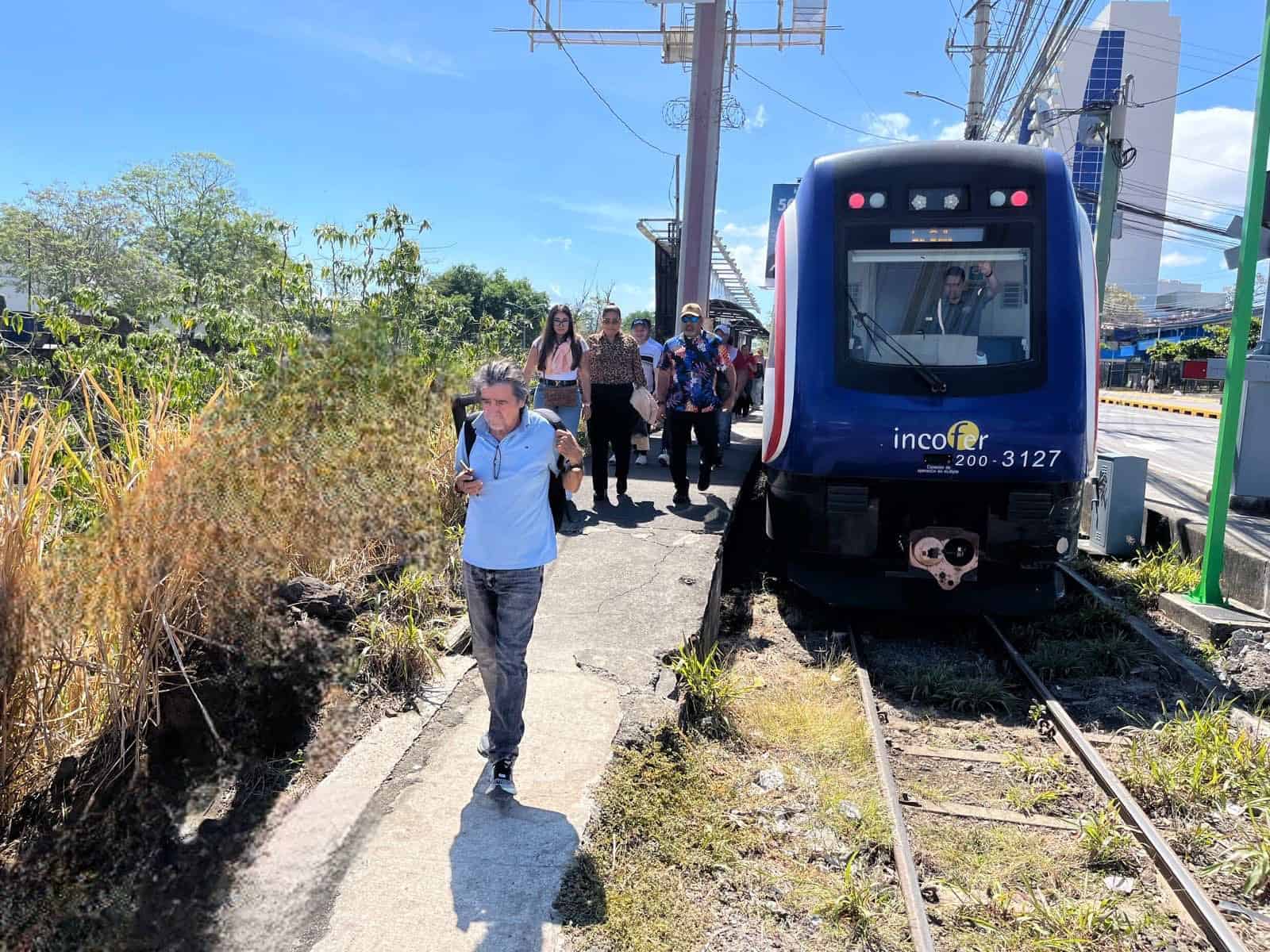
Costa Rica’s long-planned electric train project could begin operating in the Greater Metropolitan Area in about five years, giving the Central Valley a new public transportation option between Paraíso de Cartago, San José and Alajuela. INCOFER projects the system could enter service in 2031, with some initial stages possibly ready in 2030 if the process moves forward without major delays.
The project, known as Tibi, would cover 51 kilometers of double-track railway. One line would run from Paraíso de Cartago to San José, while the other would connect San José with downtown Alajuela, passing through the country’s most populated urban corridor. The plan includes 30 stations, two new terminals, 28 electric train units and several upgraded crossings.
The timeline became clearer after the Legislative Assembly approved $800 million in financing for the project this week. The vote passed unanimously with the support of 56 lawmakers present, clearing one of the biggest political hurdles for a project that has been discussed in Costa Rica for years.
The financing package includes support from the Central American Bank for Economic Integration, the European Investment Bank and the Green Climate Fund. The EIB portion is $250 million, while the CABEI package totals $550 million, with Green Climate Fund support included in that structure.
For residents of the Central Valley, the project is being presented as a long-term answer to daily traffic between Cartago, San José, Heredia and Alajuela. Those cities form the core of Costa Rica’s metropolitan area, where congestion has become one of the most common complaints for workers, students and commuters. The system is expected to offer service every 10 minutes and could carry more than 100,000 passengers per day once fully operating.
The first construction priority would be the Alajuela-San José section, followed later by the San José-Cartago-Paraíso line. INCOFER expects the tender process to move forward during the second half of 2026, with an award possible in 2027 and design and construction starting in 2028.
The project still faces several technical and administrative steps before trains can run. INCOFER has identified about 145 expropriations, though that number could change as the project design is refined. The agency also expects utility relocation work along the rail corridor, including posts, cables and other public service infrastructure.
Officials have also promised that fares will be “socially acceptable,” although the final price has not been set. Current feasibility estimates place the average fare at about $2.01, with shorter trips costing less and longer trips costing more. Any final fare would still have to go through ARESEP, the public services regulator.
INCOFER says the structure of the project should help keep passenger fares lower because the state will cover the design, construction and purchase of the trains through the financing package. In that model, users would mainly pay for operation and maintenance rather than the full capital cost of the system.
The planned electric train would replace old railway infrastructure along parts of the corridor. INCOFER says existing rails would be fully replaced, noting that some tracks have been in use for decades. The goal is to create a safer, more reliable system than the current diesel-powered passenger service, which operates with limited frequencies and capacity.
The project remains years away from opening, and its schedule will depend on bidding, expropriations, construction and regulatory approvals. But after the legislative vote, Costa Rica’s electric train has moved from a recurring campaign promise into a funded infrastructure project with a target date, a defined route and a clear impact on daily life in the Central Valley.





