

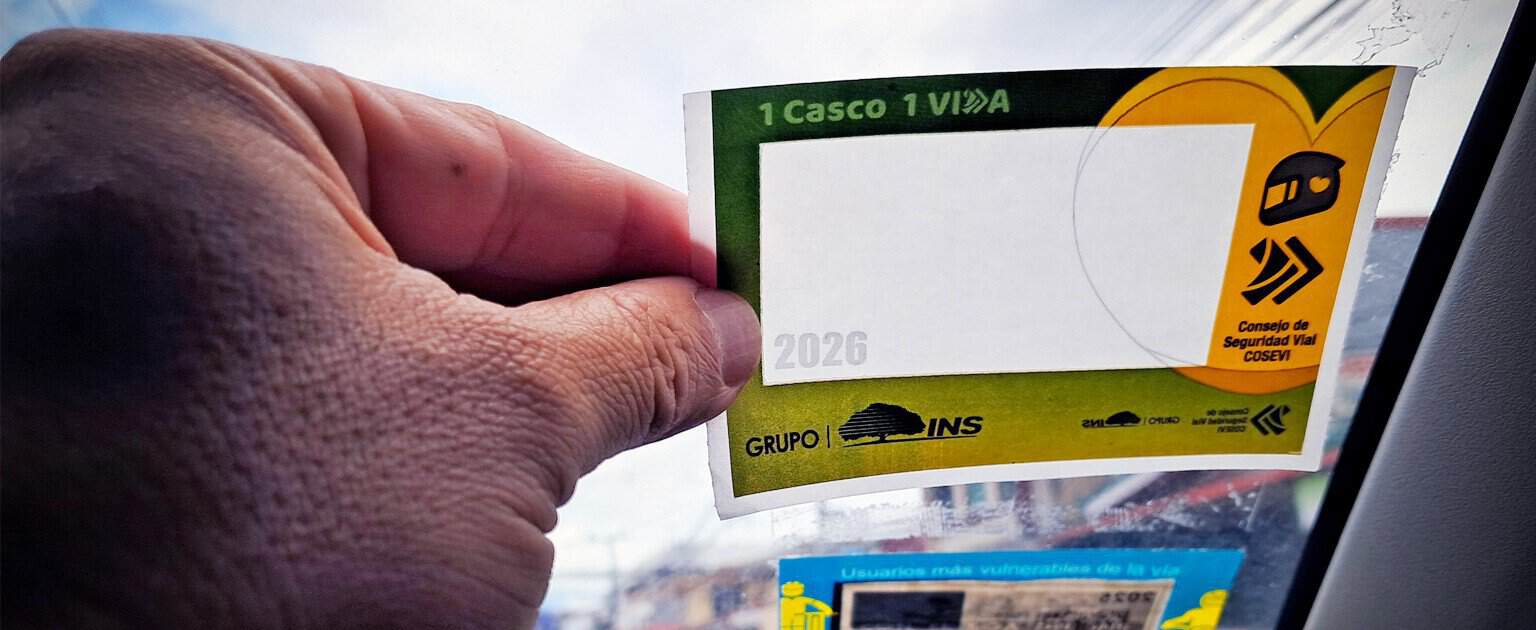
Costa Rica is preparing to move ahead with its long-delayed digital vehicle registration sticker system, known locally as the marchamo digital, beginning with the next renewal cycle for most motor vehicles. The National Insurance Institute, INS, plans to begin distributing the new electronic stickers in November 2026, when vehicle owners pay the road permit for 2027.
The first rollout will apply mainly to vehicles with windshields. Motorcycles will not be included in the initial phase and are expected to enter through a pilot program before wider distribution in 2027, for use with the 2028 marchamo. The change does not eliminate the annual marchamo payment. Vehicle owners will still have to pay the yearly circulation permit, which includes mandatory automobile insurance and other charges.
The difference is that the physical sticker will be replaced by a longer-lasting electronic tag, designed to remain on the vehicle for up to 10 years. The INS describes the project as a modernization of Costa Rica’s vehicle circulation permit system through passive RFID tags. The official project page lists the procurement as procedure 2024LY-000043-0001000001 for the purchase of passive RFID tags and services for the digital marchamo.
The winning bidder is the PC Central-HT-Neology consortium, with the official start order listed as December 11, 2025. INS Executive President Gabriela Chacón said the agency is now focused on implementation after years of failed attempts to award digital platform contracts. The project has faced procurement delays, objections, and review by the Comptroller General’s Office, but the current process has moved into the execution stage.
The digital marchamo was declared a matter of public interest in 2024. The government said at the time that the system was intended to modernize vehicle regulation, simplify citizen services, and allow authorities to read vehicle information through electronic equipment.
The rollout has not been simple. The Comptroller General’s Office previously annulled an earlier award to PC Central Neology in March 2024, forcing the INS to restart the process. A new tender opened in October 2024, followed by objections from interested companies. The Comptroller later approved the terms of reference on March 31, 2025.
Four groups submitted bids in the latest tender: Capris, Tönnjes, E-pass, and PC Central. The INS board awarded the contract on July 8, 2025, selecting PC Central-HT-Neology. Later appeals were rejected by the Comptroller, clearing the way for the INS to formalize the contract and proceed with execution.
For drivers, the main visible change will be the sticker itself. Instead of replacing the marchamo decal every year, owners of vehicles with windshields will receive an electronic tag fixed to the vehicle. The annual payment obligation remains, but the tag is meant to make verification easier and reduce dependence on the traditional yearly sticker system.
Motorcycles are being treated separately because the tag will be more exposed to rain, sun, heat, and other weather conditions. Chacón said the INS wants to test how the stickers perform under those conditions before applying the system broadly to motorcycles.
The INS has also addressed concerns about possible tracking. Chacón said the system uses passive RFID technology, meaning the tag does not continuously transmit a signal. It is read only under certain conditions. The INS also said its role remains limited to collecting the relevant vehicle tax and selling the Compulsory Automobile Insurance, known as SOA.
The project could later support other transport-related services. Earlier government explanations pointed to possible uses such as electronic identification by Traffic Police and future mobility tools, including systems tied to traffic monitoring or toll collection. Those uses, however, would depend on later implementation stages and coordination with other public institutions.
For now, Costa Rica is preparing to replace the familiar windshield marchamo sticker with an RFID-based tag for cars and other vehicles with windshields starting with the 2027 circulation permit. Motorcyclists will likely wait at least one more cycle before the system applies to them.





