

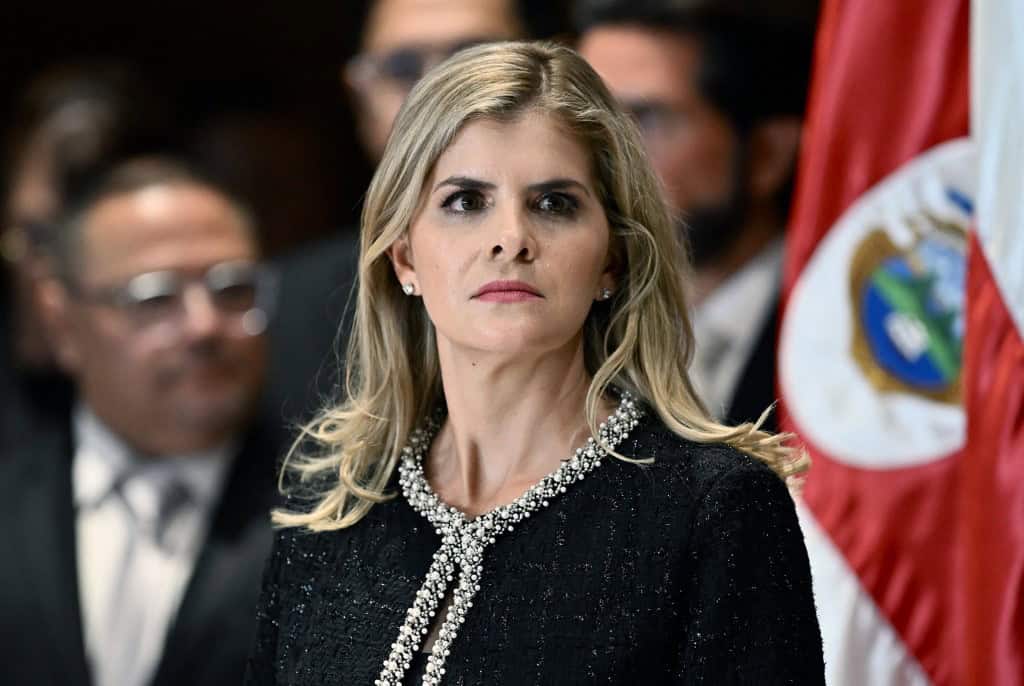
Political attention in Costa Rica turns today to the Teatro Popular Melico Salazar, where President-elect Laura Fernández is scheduled to present the cabinet that will launch her 2026–2030 administration. The announcement is set for 11 a.m. in downtown San José, just three days before Fernández takes office this Friday, May 8. Her team is expected to include ministers, vice-ministers and executive presidents of public institutions, the officials who will carry the first phase of a government built around continuity with outgoing President Rodrigo Chaves.
Fernández will become our 50th president and only the second woman to lead our country, following Laura Chinchilla, who governed from 2010 to 2014. Her inauguration will take place at the National Stadium, where she is also expected to swear in her top officials and hold the first Council of Government of her administration. That session is planned as a public event and will include the signing of her first decrees.
The cabinet announcement has drawn unusual attention because of one unanswered question: what role, if any, Chaves will have once he leaves the presidency. Fernández said after winning the election that the door was open for Chaves to join her government, and speculation has centered on the Ministry of the Presidency, the Finance Ministry or a possible diplomatic role. None of those options has been confirmed.
The Ministry of the Presidency is the most politically sensitive post in the new cabinet. The minister acts as the bridge between Casa Presidencial and the Legislative Assembly, a position that will matter immediately because Fernández begins her term with a strong legislative advantage. Her Partido Pueblo Soberano won 31 of the 57 seats in the Assembly, giving the ruling bloc an outright majority but not the votes needed for deeper constitutional changes.
Fernández has spent the final weeks of the transition reviewing profiles and deciding which officials from the Chaves administration will continue. She said last week that her cabinet was almost complete, with only one post still under review, and that she had evaluated current ministers based on plans, goals and budget execution.
Several current officials are expected to remain or move into new posts. Local reports have pointed to Gerald Campos, Manuel Tovar and Yorleny León as possible figures of continuity, while Arnoldo André has also been mentioned in connection with a possible move within the cabinet. Those names remain unofficial until Fernández makes the announcement.
The choice of cabinet will offer the first clear signal of how much independence Fernández plans to show from the Chaves administration. She campaigned as the political successor to Chaves and has promised to continue his security-focused agenda, his push for state reform and his confrontational approach toward traditional political forces.
The new ministers will take over at a time of pressure over crime, infrastructure delays, public finances, education, migration policy and tensions between branches of government. Fernández will also begin her term during extraordinary legislative sessions, a period in which the Executive Branch controls which bills lawmakers may discuss. That gives her government a fast opening to revive delayed proposals and set the tone of the first months in office.
Today’s announcement will not answer every question facing the incoming government. But it will show who Fernández trusts to carry her first decisions, how much of the Chaves team survives the transition, and whether the outgoing president remains close to power or formally steps aside.





