

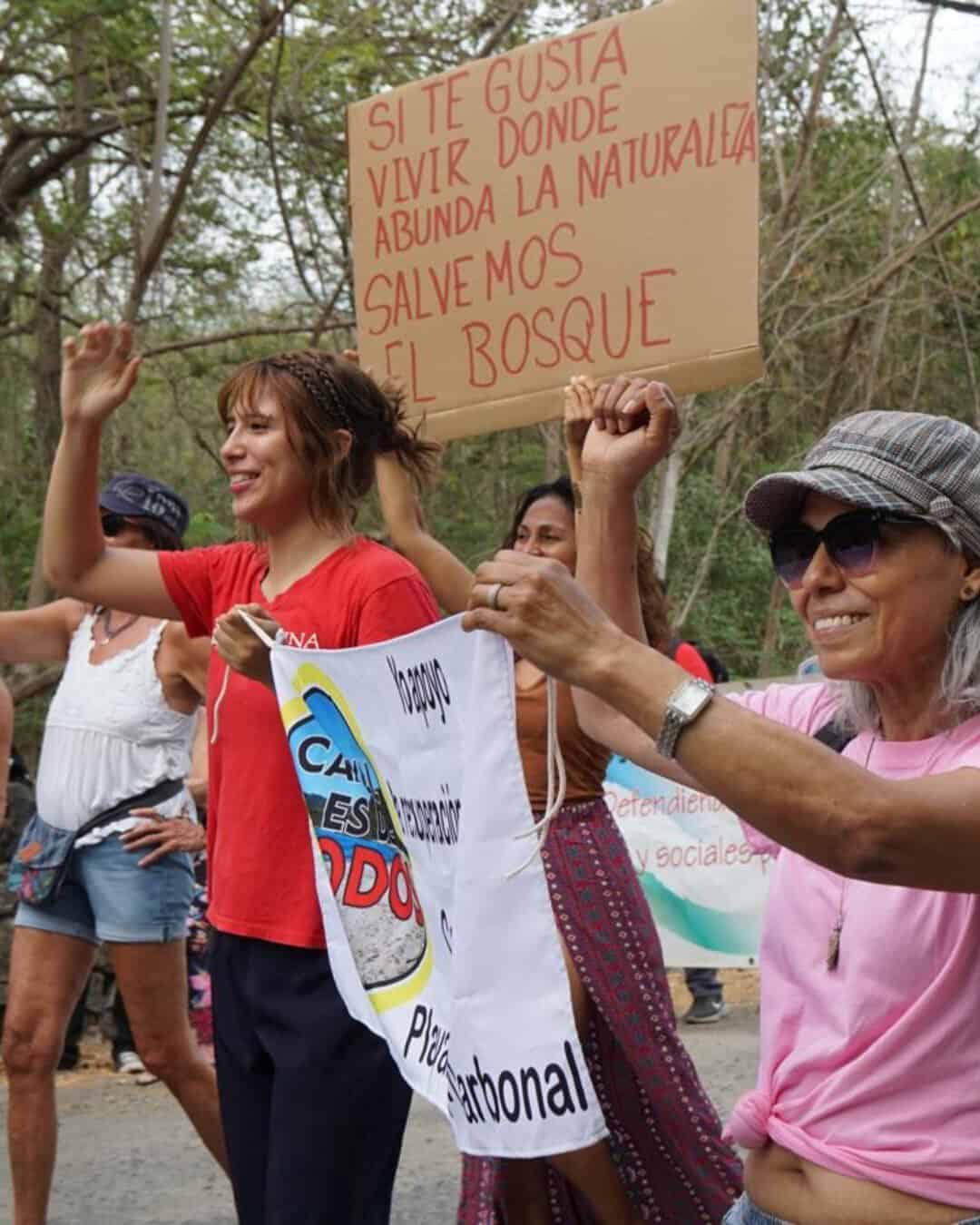
Environmental groups in Guanacaste are raising pressure against a real estate and tourism project in Playa Panamá, where the planned cutting of hundreds of trees has opened a wider fight over development in the Gulf of Papagayo.
The protest was held in Playa Panamá against the Bahía Papagayo project, which environmental groups say would affect a coastal ecosystem inside the Papagayo tourism zone. Local reports have cited the planned removal of roughly 700 trees, while Semanario Universidad reported that SINAC authorized the cutting of 748 trees through a resolution issued on April 9.
Groups including Salvemos Playa Panamá, Salvémonos, Antigentrificación Costa Rica and representatives of Savage Lands took part in the demonstration. They argue that the area provides habitat for local wildlife and helps capture water in a region where dry-season pressure and tourism growth have made water availability a more sensitive issue.
The organizations warned that removing the forest cover could worsen water stress in the area, especially as new tourism projects increase demand and require water to be drawn from more distant sources. Protesters also rejected the idea that reforestation can fully compensate for the loss of an established coastal forest, saying planted trees cannot immediately replace the ecological functions of the existing vegetation.
The dispute has put renewed attention on the Papagayo Gulf Tourism Project, one of Costa Rica’s most important state-backed tourism development zones. The area is administered by the Costa Rican Tourism Institute and governed by a specific legal framework, including Law 6758 and its regulations. The ICT lists the Papagayo legal and regulatory documents among its official tourism development files.
MINAE has defended the authorization, saying the permit was not issued for indiscriminate logging. The ministry, through SINAC, said the decision was based on a forest inventory that evaluates each tree by species, condition and location. It also said the project must comply with environmental requirements and will remain subject to monitoring and enforcement.
The ministry also argued that the land does not meet the legal definition of protected forestland under Costa Rican forestry rules. MINAE said the site is within the Papagayo tourism project, where concessionaires must preserve at least 70% of vegetation cover and may develop up to 30% of the land, as long as they comply with environmental regulations and have approved environmental feasibility.
The controversy has now moved beyond the tree-cutting permit. Constitutional Chamber Magistrate Fernando Cruz Castro issued precautionary measures connected to an action of unconstitutionality challenging regulations for development in the Papagayo tourism zone. The measures suspended activities tied to tree cutting and construction permits while the case is reviewed.
The ICT has asked the Constitutional Chamber to clarify the scope of the ruling. Tourism Minister William Rodríguez said the Papagayo project is declared of national interest and regulated by Law 6758, while arguing that the decision creates uncertainty for a project that generates employment in Guanacaste.
Concessionaires have also criticized the measure. Asopapagayo, the association representing concessionaires in the zone, called the suspension illegal, abusive and disproportionate, arguing that it threatens legal certainty and a development model backed by the state for decades. The association said the Papagayo tourism zone covers about 1,658 hectares of state-owned land granted through concessions by the ICT.
For environmental groups, the fight in Playa Panamá reflects a larger question facing Costa Rica’s Pacific coast: how far tourism development can expand before it begins to erode the natural systems that helped make the country attractive in the first place.
For developers and tourism officials, the case raises a different concern: whether projects operating under approved concessions and environmental permits can move forward without being halted by legal uncertainty. For now, the future of the Bahía Papagayo project remains tied to the Constitutional Chamber’s review, while the dispute continues to grow in one of Guanacaste’s most closely watched coastal development areas.





