
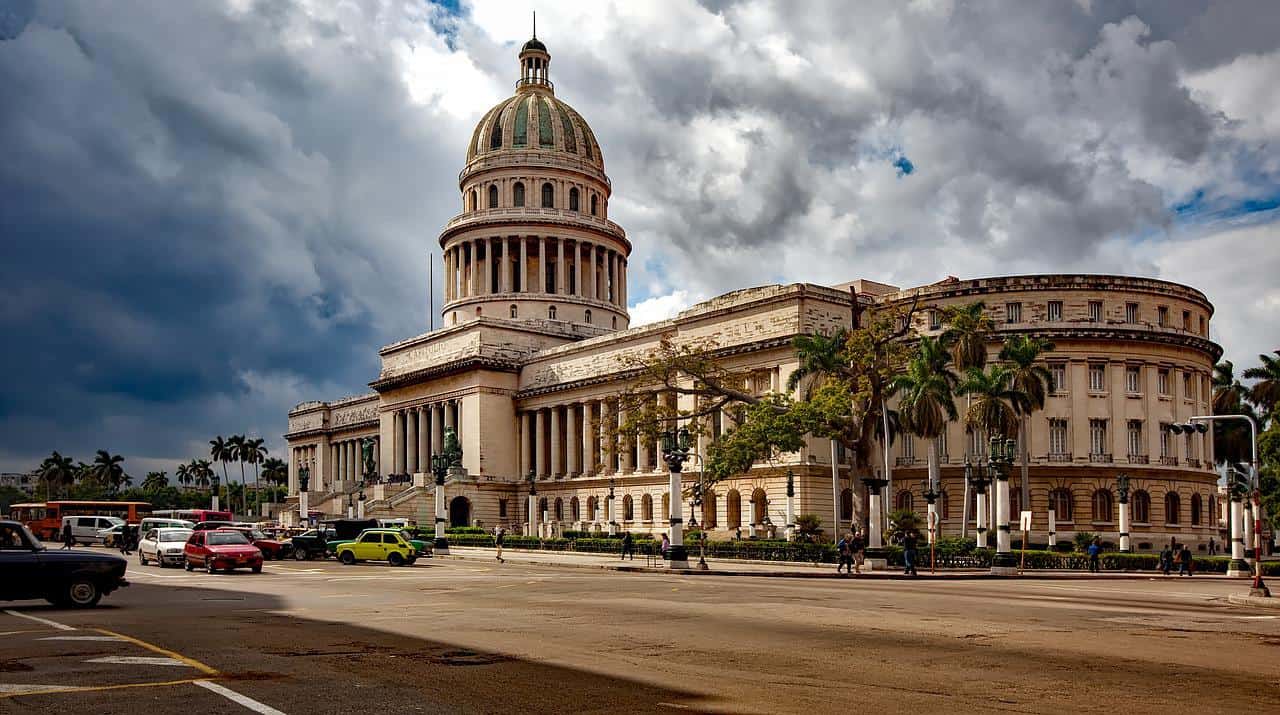
Despite ongoing tensions, Cuba and the United States are continuing their discussions and recently held high level diplomatic talks in Havana, a Cuban Foreign Ministry official confirmed.
Alejandro García, director of bilateral affairs for Cuba and the United States at the Foreign Ministry, told the official newspaper Granma that “a meeting between Cuban and U.S. delegations was recently held here in Cuba,” confirming reports previously published in the U.S. press.
García, who described the negotiations as “a sensitive matter” being handled with “discretion,” said the meeting took place at a high diplomatic level. “On the U.S. side, assistant secretaries from the State Department participated, and on the Cuban side, officials attended at the vice foreign minister level,” he said.
On Friday, U.S. outlet Axios reported that American officials had met on April 10 in Havana with Cuban officials, including Raúl Guillermo Rodríguez Castro, grandson of former leader Raúl Castro. Although he does not hold an official government position, Rodríguez has already been mentioned by U.S. media for maintaining secret contacts with the team of Secretary of State Marco Rubio.
On Thursday, Raúl Castro’s daughter, Mariela Castro, told reporters that her father was involved in “the analysis for decision making” in the context of these talks. Axios, citing a State Department official, said that during the recent meeting in Havana, U.S. diplomats raised several demands, including the release of political prisoners.
Cuba’s Foreign Ministry denied those claims in statements made Monday. “Within the framework of the meeting, neither side set deadlines or made coercive demands, as has been mentioned by U.S. press outlets. The entire exchange took place in a respectful and professional manner,” García said.
“The removal of the country’s energy blockade was a top priority for our delegation. This act of economic coercion is an unjustified punishment against the entire population,” he added. He also denounced what he described as Washington’s “blackmail” of countries seeking to export oil to Cuba.
The United States and Cuba have been holding talks for several weeks against a backdrop of worsening tensions between the two neighbors and ideological enemies. In addition to the U.S. embargo in place since 1962, Washington, which has made no secret of its desire to see regime change in Havana, has imposed harsh restrictions since January on Cuba’s oil imports. Even so, a Russian tanker arrived in Cuba in late March.
While President Donald Trump had said since mid January that talks with senior Cuban officials were underway, Cuban President Miguel Díaz-Canel did not confirm those contacts until two months later. On the eve of that confirmation, Havana announced the release of 51 prisoners as a gesture of “goodwill” toward the Vatican, a historic mediator between the two countries. Later, on April 4, it granted pardons to more than 2,000 prisoners as a “humanitarian and sovereign gesture” for Holy Week.
Human rights organizations criticized the lack of transparency in the release process. Cubalex, a Miami-based group, recently said that of the 51 announced releases, it had only been able to confirm the release of “24 political prisoners,” and that no detainees held for political reasons had been pardoned.
Amid the heightened tensions, Havana also announced in mid March that Cubans living abroad and their descendants, particularly the Cuban exile community in the United States, would be allowed to invest in the island and own businesses in many sectors, including agriculture and banking.
Secretary of State Marco Rubio, who is of Cuban descent and a firm opponent of the communist government in Havana, said those measures were far from “sufficient” and called for a “drastic” economic and political change on the island.