

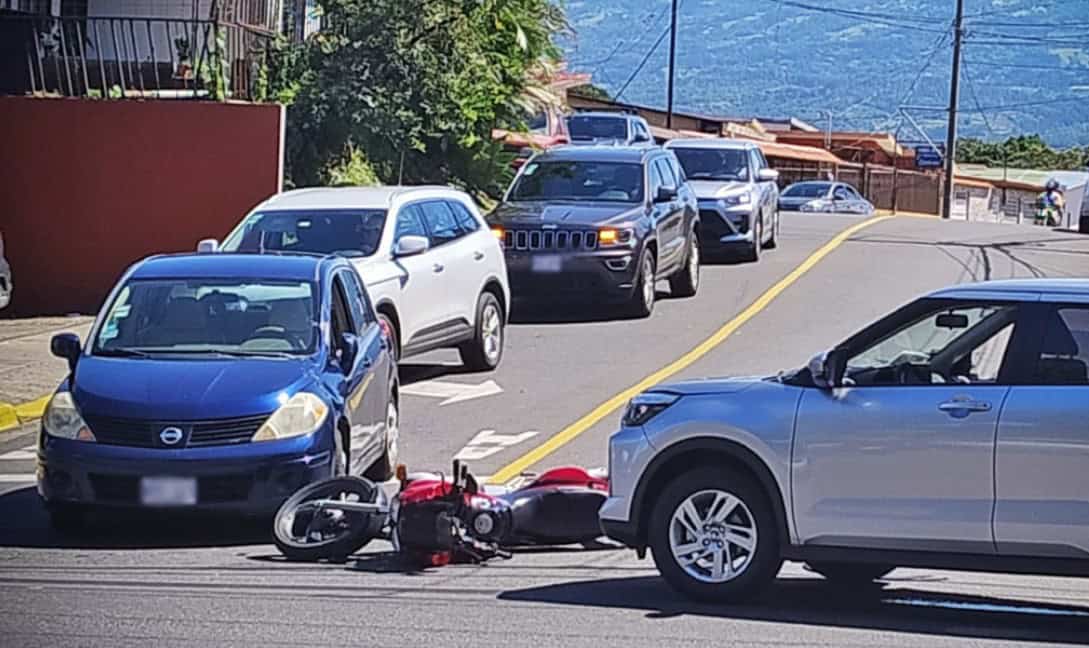
Costa Rican prosecutors are warning about a rise in reckless driving on some of our country’s busiest roads, saying the pattern is feeding more criminal cases tied to dangerous behavior behind the wheel. In Alajuela and Atenas, authorities say alcohol, extreme speed and illegal street racing continue to show up again and again in cases that move beyond traffic fines and into the criminal system.
The numbers point to a clear upward trend. In Atenas, which handles much of the Route 27 corridor between San José and Caldera, prosecutors recorded 37 reckless driving cases in 2024 and 48 in 2025. In Alajuela, the total climbed from 144 to 154 over the same period. Cases linked to the fallout from dangerous driving also moved higher. Negligent homicide cases rose from 18 to 23 in Atenas and from 73 to 100 in Alajuela, while negligent injury cases in Alajuela jumped from 489 to 642.
Under Costa Rican law, reckless driving can carry prison time of one to three years. Prosecutors describe it as an offense that does not depend on a crash, injury or death actually taking place. The legal standard focuses on conduct that creates serious danger on public roads. Separately, Costa Rica’s traffic law also bans the use of handheld phones and other distracting communications devices while driving, adding another layer of sanctions for behavior that puts other drivers, passengers and pedestrians at risk.
What most concerns prosecutors is how routine some of this conduct has become. Alcohol remains the leading factor in the most serious road offenses they handle, followed by excessive speed. Illegal races, or piques, also continue to surface as a recurring problem. The concern is not only the number of cases, but the aggressive driving culture reflected in them, especially on major routes that carry heavy daily traffic and large volumes of weekend travel.
Costa Rica has already begun tightening the legal framework. A reform published in March strengthens controls on alcohol- and drug-impaired driving, authorizes saliva testing for suspected drug use, and increases the tools available to police and prosecutors. The law was published and gives the government a 12-month window to complete the regulations and technical protocols needed for full implementation. Authorities have framed the reform as part of a broader push to reduce crashes and close enforcement gaps.
The message from prosecutors is that reckless driving is no longer being treated as a secondary road safety issue. The rise in cases in Alajuela and Atenas, along with the increase in negligent homicides and injuries tied to road incidents, suggests a problem that is growing more costly in human terms as well as legal ones.





