

Lauren Sánchez said her recent visit to Costa Rica’s Cocos Island with Jeff Bezos was tied to marine conservation work, offering the clearest explanation yet for the couple’s appearance near one of the country’s most protected natural areas. She said the trip was carried out with the Bezos Earth Fund to support efforts aimed at strengthening protection of the island and expanding marine protected areas.
In a social media, Sánchez said the visit focused on long-term preservation of the area and the protection of Cocos Island’s marine biodiversity. She said the work involved cooperation with Costa Rica’s National System of Conservation Areas, or SINAC, along with the Charles Darwin Foundation, Rewild, the Friends of Cocos Island Foundation and Costa Rica por Siempre.
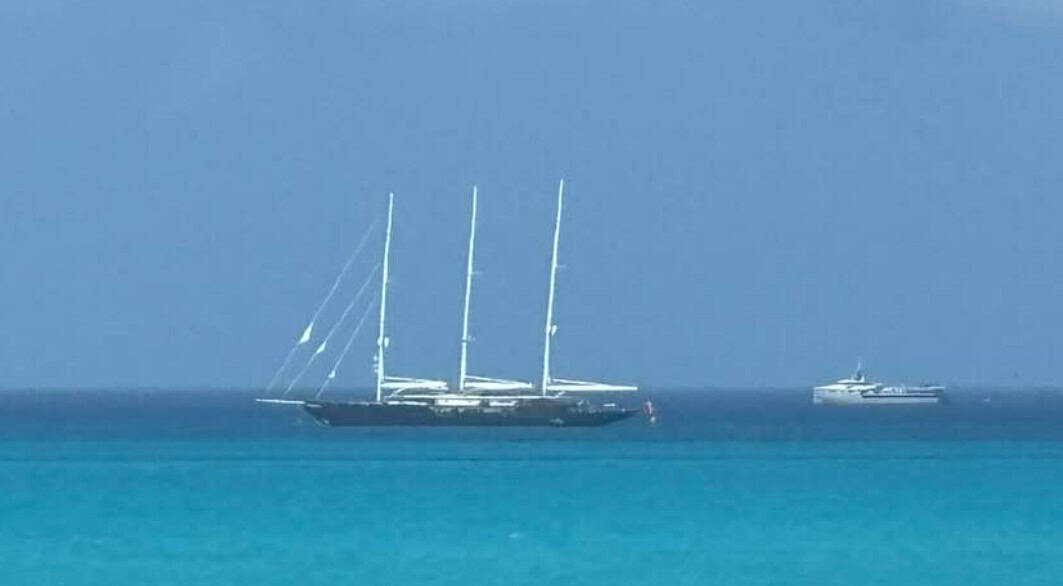
The visit drew attention after Bezos and Sánchez were seen arriving in Costa Rica during Holy Week. Costa Rican immigration authorities said that the couple entered our country on March 27 and left on April 4. Their vessels were later reported in waters near Cocos Island before continuing south through the Pacific.
The conservation angle fits with work the Bezos Earth Fund has already backed in and around Cocos Island. The organization says it provided funding to help implement the expansion of marine protected areas around the island, strengthen management tools, improve surveillance capacity and support restoration and adaptive management projects. It has also backed marine biosecurity work tied to research on non-native species and regional protection planning.
That support is part of a wider push across the Eastern Tropical Pacific Marine Corridor, which links protected waters around Cocos, Coiba, Galápagos, Gorgona and Malpelo. The Bezos Earth Fund said in late 2025 that it had committed another $24.5 million for conservation work across Costa Rica, Panama, Colombia and Ecuador, while Reuters reported the broader effort is aimed at building the world’s first cross-border marine biosphere reserve.
Cocos Island, located about 550 kilometers southwest of mainland Costa Rica, is a national park and UNESCO World Heritage site known for its marine life and strategic role in ocean conservation. The island has become central to Costa Rica’s effort to expand protected waters while improving enforcement, monitoring and long-term management in one of the most biologically important marine areas in the region.
Sánchez’s explanation shifts the story from celebrity tourism to environmental investment. For Costa Rica, it also puts fresh attention on Cocos Island at a time when our country is leaning harder on international alliances and private funding to protect its marine territory.





