

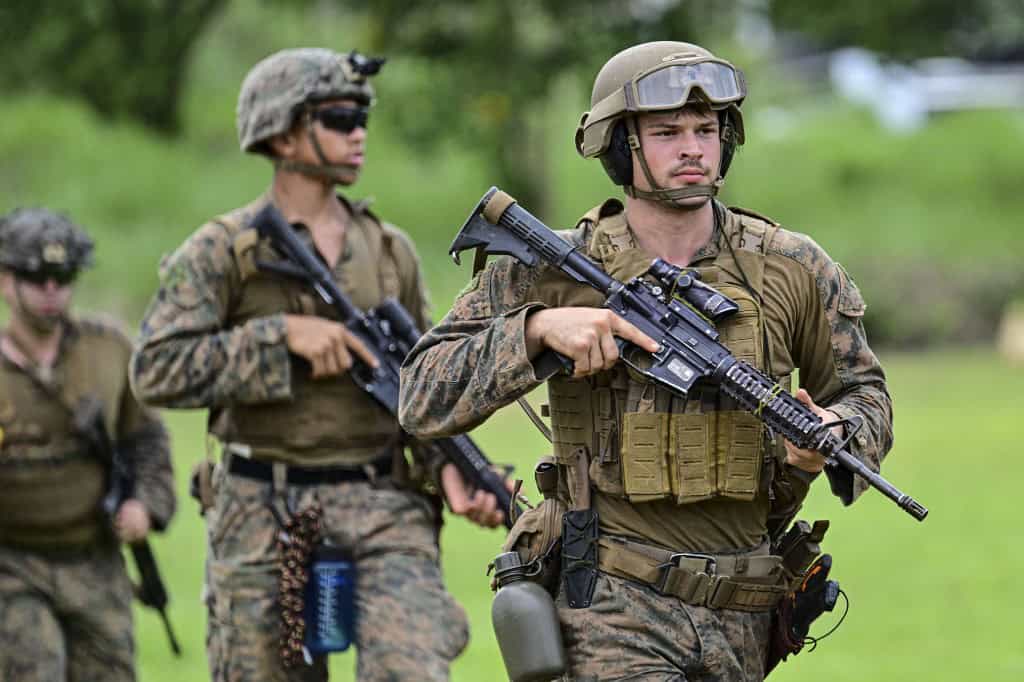
Panama and the United States will start joint military exercises on Monday to bolster defenses around the Panama Canal. This marks the first extended training session between the two nations in 2026.
The program will bring together 50 U.S. Marine Corps infantry troops and 61 specialized personnel from Panama’s National Air-Naval Service, National Police, and National Border Service. Panama’s Ministry of Security detailed the initiative in a statement on Sunday, highlighting its goal to sharpen response skills in practical scenarios.
The exercises, set to run from January 12 through February 26, will occur at two main sites: the Jungle Warfare School at the Admiral Cristóbal Colón Air and Naval Base and the Marine Infantry facilities at the Captain Noel Antonio Rodríguez Naval Base. These spots enable teams to train in settings that reflect possible risks to the canal, which carries roughly 5 percent of global sea trade.
Panamanian teams will direct the efforts, with U.S. forces sharing knowledge in infantry strategies and combined operations. The sessions build on three similar activities held in 2025, but this one stands as the initial multi-day event for the new year. Experts in security point out that these partnerships refine methods for quick mobilization and unified responses to interruptions.
This step comes after a stretch of friction between the countries. Late in 2025, U.S. President Donald Trump voiced worries about claimed Chinese sway over the canal’s management, going so far as to propose reclaiming the passage. On January 2, Panama’s President José Raúl Mulino tackled the matter head-on, stating the issue had concluded and restating Panama’s full authority.
Mulino’s government has made canal safety a top concern against rising international strains, including weaknesses in trade paths shown by recent worldwide incidents. The canal, passed to Panamanian oversight in 1999 via the Torrijos-Carter Treaties, serves as a sign of national self-rule and a key economic driver for the area.
In Central America, these drills carry wider effects. Nations like Costa Rica keep a close eye on such actions, given the canal’s part in easing trade that aids the whole region. Any breaks there could spread through supply lines, impacting shipments of items such as coffee, bananas, and tech from various spots.
Panamanian leaders frame the exercises as a move toward ongoing alliance, designed to ward off dangers from tampering to natural events. Teams will take part in drills that challenge coordination, scouting, and protective tactics, all adjusted to the canal’s distinct layout of gates, reservoirs, and thick forest areas.
Some groups in Panama have raised concerns about outside military involvement, pointing to past issues, yet the administration insists the training honors national control and centers only on defense steps. No fighting actions are part of it; the stress stays on developing abilities and working together. Over the next weeks, both sides plan to review results and outline more meetings.





