

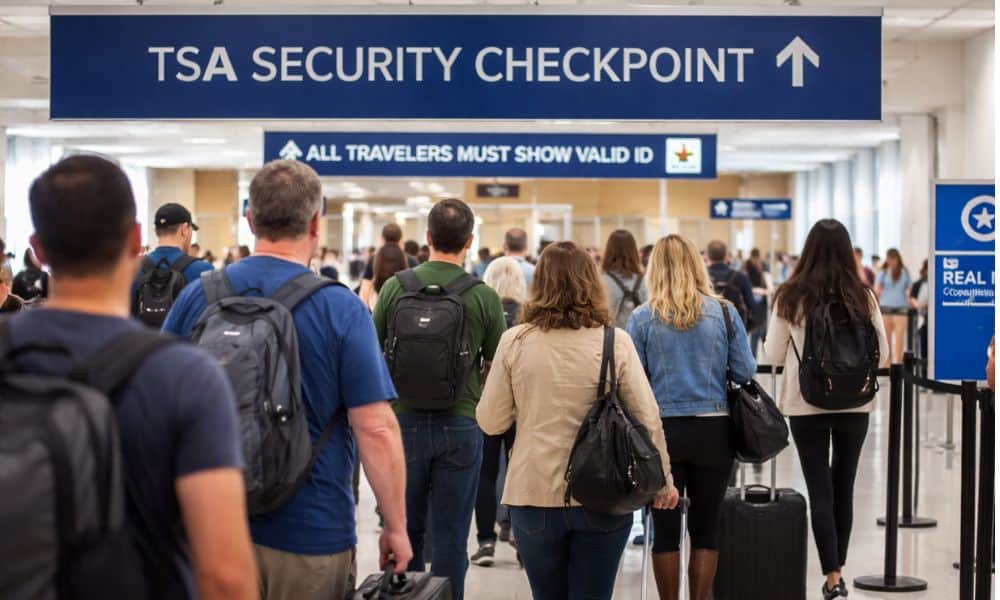
U.S. airport security checkpoints have required REAL ID compliant identification for domestic flights since May 7, 2025, a rule that still catches some Costa Rica based travelers off guard when their itinerary includes a connection inside the United States. Many trips to and from Costa Rica route through U.S. hubs such as Miami, Houston, and Atlanta, and passengers often need to board a domestic leg after an international arrival.
REAL ID is a federal standard for state issued driver’s licenses and identification cards. A compliant license usually carries a star marking, although the exact design varies by state and some travelers also qualify with “Enhanced” driver’s licenses in certain states. If a traveler’s state ID is not compliant, they can still fly domestically, but they must present another form of ID accepted at the TSA checkpoint.
This is especially relevant for Costa Rica routes with U.S. connections because TSA screening applies to the domestic segment even if the overall trip began outside the United States. Travelers who assume their international arrival paperwork covers everything can be surprised when they reach the checkpoint for the onward U.S. flight and are asked for compliant identification.
For U.S. citizens living in Costa Rica, older driver’s licenses can be a problem if they were issued before a state switched over to REAL ID compliant credentials or if the card is marked as not valid for federal purposes. The simplest workaround is to carry a valid U.S. passport for any trip that includes a U.S. domestic leg.
Non U.S. visitors can generally use a valid foreign passport at TSA checkpoints, including for domestic flights inside the United States. Other commonly accepted documents include a U.S. passport card, DHS trusted traveler cards such as Global Entry, NEXUS, SENTRI, or FAST, permanent resident cards, U.S. military IDs, and certain tribal nation issued photo IDs.
A new option is scheduled to begin February 1, 2026, for passengers who arrive at the checkpoint without acceptable ID and still want to fly. The program, branded as Confirm.ID, involves a non-refundable $45 fee paid online and an identity verification process that can add up to about 30 minutes. If verification is approved, the confirmation can cover a 10 day travel window, which may include a return flight inside that period. Paying the fee does not guarantee clearance, and travelers who cannot be verified may still be denied access to the checkpoint.
The practical takeaway for Costa Rica travelers is simple: if your itinerary includes any U.S. domestic segment, treat it as a separate compliance step. Confirm that your license is REAL ID compliant before you leave, or plan to rely on a passport or another TSA accepted document. Keeping the ID you intend to use in a pocket or carry on, not buried in a bag, can also prevent last minute scrambles at the checkpoint.





