

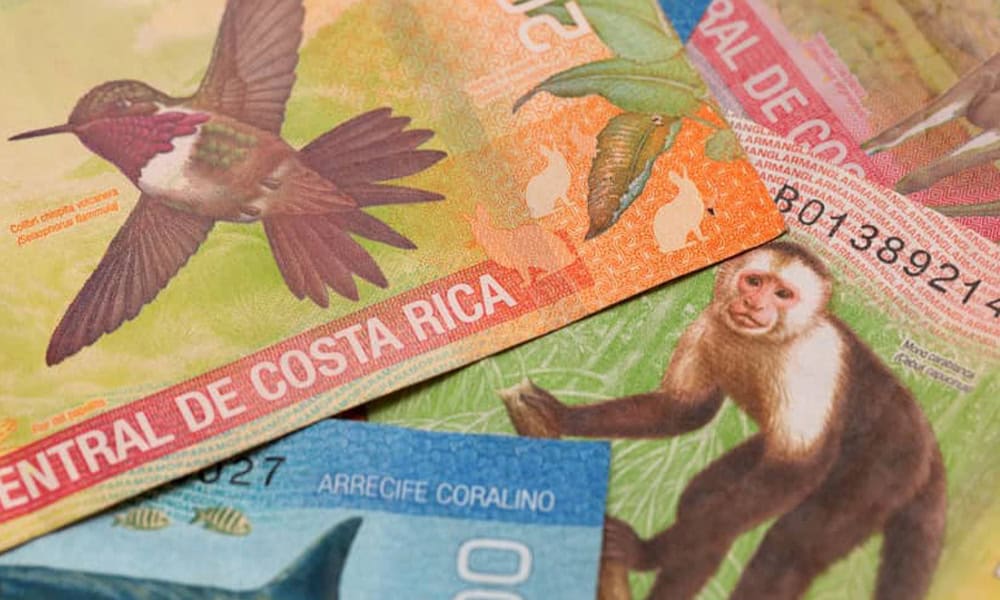
The Costa Rican colón has emerged as the strongest currency in Central America this year, posting gains that outpace its regional peers. Yet this rise now pressures the nation’s ability to compete abroad, as exporters and tourism operators grapple with higher costs in dollar terms.
Data from the Central Bank of Costa Rica shows the colón has appreciated by roughly 4% against the U.S. dollar in 2025. On December 30, the exchange rate stood at ₡496.49 per dollar, down from higher levels earlier in the year. This marks a continuation of a trend that began in prior years, with the rate dipping to lows not seen since 2005, including a brief touch at ₡488 in early December.
Economists point to several factors driving this shift. Strong export growth has flooded the market with dollars, reducing demand for the currency. Goods exports reached $20.97 billion from January to November, a 15% jump from the same period in 2024. Foreign direct investment has also played a role, bringing in more capital and bolstering reserves to a record $17 billion. At the same time, lower imports and end-of-year dollar inflows from salaries and bonuses have added to the surplus.
This appreciation benefits some sectors. Importers pay less for goods, which helps keep prices down for consumers on items like electronics, fuel, and food. Borrowers with dollar-denominated loans see their payments shrink in colón terms – for example, a $400 monthly installment that cost ₡277,504 at higher rates now requires fewer local funds. The government gains too, as the cost of servicing external debt falls, freeing up budget room for other needs.
But the flip side hits hard. Exporters receive fewer colones for each dollar earned, squeezing profits in industries like agriculture, manufacturing, and services. The tourism sector, a key economic driver, faces steeper prices for international visitors, who find trips to Costa Rica more expensive compared to neighbors. “The colón’s rise makes our products less attractive on the world stage,” noted a report from the State of the Nation Program, highlighting risks to jobs and growth in export-dependent areas.
Central Bank officials have stepped in multiple times this year to stabilize the market, buying dollars to curb excessive appreciation. Despite these moves, the rate has shown volatility, with a slight rebound in recent weeks after hitting record lows in November and December. Analysts expect some moderation in 2026, projecting an average around ₡500 per dollar, but warn that prolonged strength could slow overall economic expansion.
Regional comparisons underscore Costa Rica’s lead. While the colón gained ground, currencies like Guatemala’s quetzal and Nicaragua’s córdoba held steady or weakened slightly against the dollar. This positions Costa Rica as a standout, yet it raises questions about long-term balance. As the year closes, business leaders call for policies that support competitiveness without sacrificing stability.
The situation reflects broader economic health, with inflation under control and reserves at historic highs. Still, the colón’s performance serves as a reminder that currency strength cuts both ways in an open economy like Costa Rica’s.





