

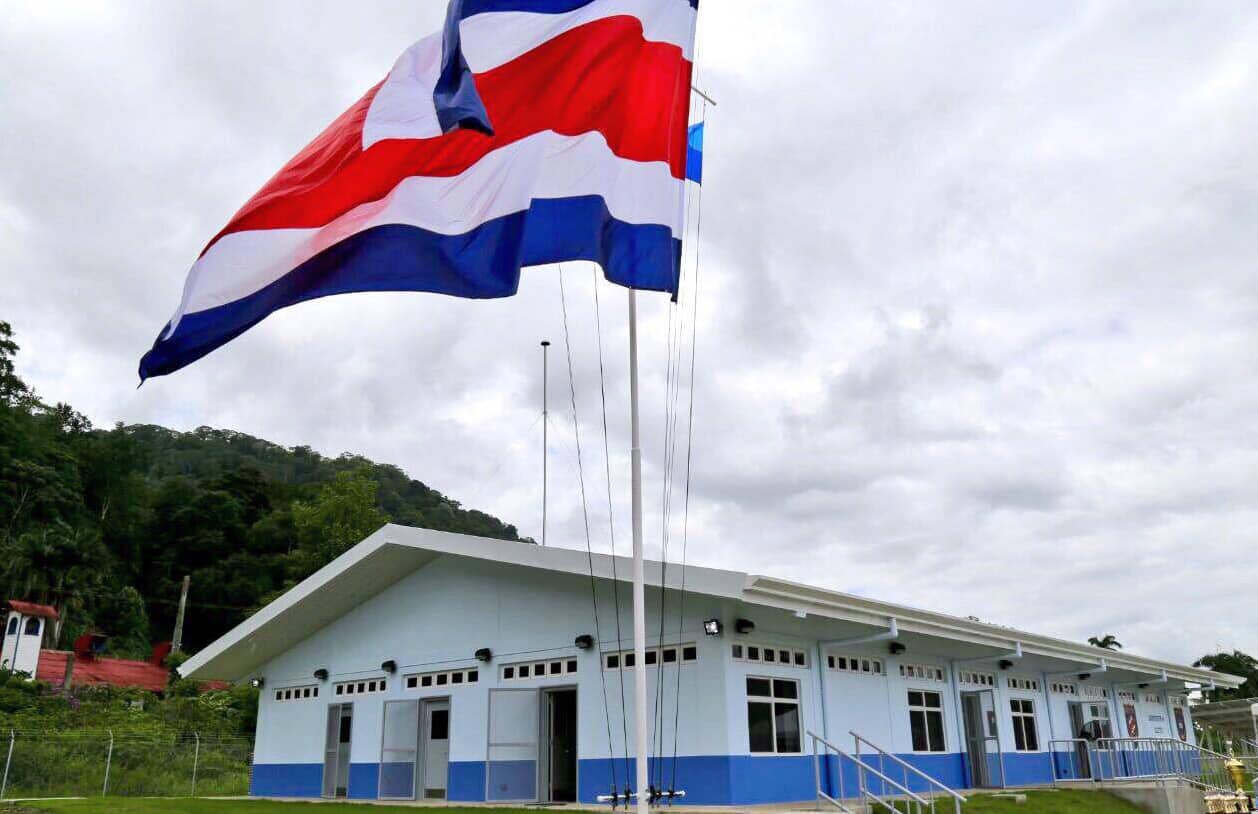
A significant corruption scandal has exposed how Costa Rican Coast Guard officers accepted substantial bribes to facilitate international drug trafficking operations, revealing the extent to which organized crime has penetrated national security institutions.
Former Golfito deputy mayor Jimmy Vindas Aguilar, who served under the National Liberation Party (PLN) from 2016 to 2020, faces extradition to the United States for drug trafficking charges. He was arrested in August 2025 alongside a Salvadoran associate known as “Turbo” while transporting 38 kilograms of cocaine. The Florida Middle District Court has requested his extradition for alleged drug trafficking crimes.
Vindas Aguilar was also implicated in the “Diamond” corruption case, a criminal investigation examining alleged favors granted to the construction company MECO in multiple municipalities. Wiretapped communications revealed he allegedly requested donations equivalent to 25% of contract awards in exchange for manipulating municipal tenders, including efforts to declare a competitor’s contract “ruinous” and redirect it to MECO.
The case takes on international dimensions through Jimmy Vindas’s cousin, Rolando Vindas Abarca, who was sentenced to 24 years and four months in a Texas federal court in November 2025. Rolando led a portion of a drug trafficking organization with operations spanning Colombia, Costa Rica, Ecuador, Panama, Guatemala, Honduras, and the United States.
Captured by Colombian National Police in Cúcuta in 2021 after six months on the run, Rolando was extradited to the United States in June 2023. He accepted charges and admitted guilt for conspiring to manufacture and distribute five kilograms or more of cocaine. His organization maintained direct connections with powerful criminal groups including Colombia’s Gulf Clan and Mexico’s Sinaloa Cartel.
The most alarming revelation from this case involves systematic corruption within Costa Rica’s National Coast Guard Service (SNG). According to evidence presented to the Texas court and confirmed by U.S. Prosecutor Jay R. Combs, Rolando Vindas Abarca bribed Coast Guard officers to allow drug shipments to pass without interception.
Wiretapped telephone conversations revealed the scope of this corruption: Vindas Abarca allegedly paid up to $80,000 to Coast Guard officers to facilitate the movement of cocaine cargo. These payments ensured that maritime shipments carrying more than 1,000 kilograms of cocaine could travel from Colombia through Costa Rican waters to the United States without law enforcement intervention.
The court documents detail that investigators tracked financial transfers totaling $450,000 used to finance these operations, with telephone interceptions confirming the illicit arrangements between traffickers and compromised Coast Guard personnel.
This case exposes critical vulnerabilities in Costa Rica’s maritime security apparatus. The Coast Guard, responsible for protecting the nation’s extensive coastline and territorial waters, has been compromised by transnational criminal organizations willing to pay substantial bribes for safe passage.
The $80,000 payments to Coast Guard officers represent a catastrophic breach of institutional integrity. These bribes enabled traffickers to coordinate sophisticated maritime operations using speedboats to transport cocaine from South America through Central American waters, treating Costa Rica’s Coast Guard as a purchasable obstacle rather than a legitimate law enforcement barrier.
The corruption has broader implications for regional security, as Costa Rica serves as a critical transit point between South American cocaine production and North American markets. When Coast Guard officers accept bribes, they transform Costa Rica from a transit route into a facilitated corridor for international drug trafficking.
The Vindas cases illustrate how deeply organized crime has infiltrated Costa Rican institutions, from municipal government to national maritime security forces. The willingness of Coast Guard officers to accept bribes undermines the country’s ability to combat drug trafficking and threatens Costa Rica’s reputation as Central America’s most stable democracy.
This scandal demands comprehensive institutional reform and accountability measures to restore public trust in the Coast Guard and prevent future corruption.





