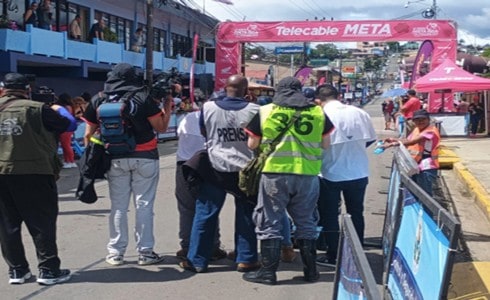
Every December Costa Rica celebrates its strong bicycling roots with La Vuelta, a 10-stage cycling race that challenges riders with its mix of hill climbs, sprints and endurance, under conditions ranging from cool and windy to stiflingly hot. This year, one of the stages concluded where I live. The downtown streets of San Isidro de el General were blocked off and hundreds of spectators lined the finishing area next to the main city park. The sporting press and various sponsors were well represented and took up all of the best spots at the finish line.
The first Vuelta de Costa Rica was held in 1965. There were seven teams, 4 from Costa Rica and one each from Guatemala, Panama and Nicaragua. A total of 28 riders finished the five stage race which was limited to the Central valley. The race was won by a Tico, Jose Luis Sanchez. This year’s race was made up of 90 riders from 15 teams representing Colombia, Mexico, Ecuador and Belgium, in addition to several Costa Rican teams. San Isidro was the finish line for the fourth stage.
Despite the daily radio and tv coverage, numerous locals seemed unaware of the race. Downtown was jammed as cars detoured onto side streets. The riders completed a grueling 137 kilometer (86 mile) route that began in the San Jose area, climbed over 2,000 meters (about 7,000 feet), and finished with a mad descent down over 40 kilometers of winding roads that plunge 2,300 meters (8,000 feet) in altitude before finishing in San Isidro. The riders arrive in San Isidro with 40 kilometers of downhill momentum behind them.
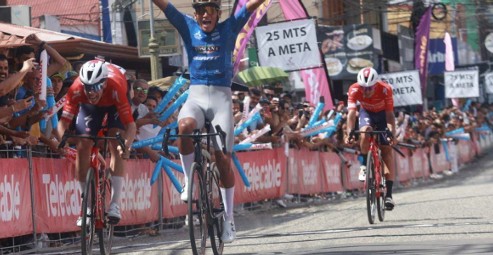
Ecuadorian Wilson Haro– seen finishing below– won the stage with a time of 3 hours, 22 seconds. This is an average speed of 42kph (26mph). As a longtime casual cyclist, the overall speed on this grueling ride astounded me. There is a 50km circuit nearby that I do sometimes on Sunday mornings, and it takes me around 3 hours to complete. In every corner of the country people use bicycles for short errands, long training runs, and everything in between, but only a select few possess the strength and stamina to compete at this level.
December is a festive month in Costa Rica, with the arrival of the sunny high season, the Christmas and New Year’s holiday celebrations, and the beginning of summer break for thousands of school kids. For the communities along the tour routes, La Vuelta is one more reason to gather together and cheer on the athletes competing in this annual Tico tradition.