

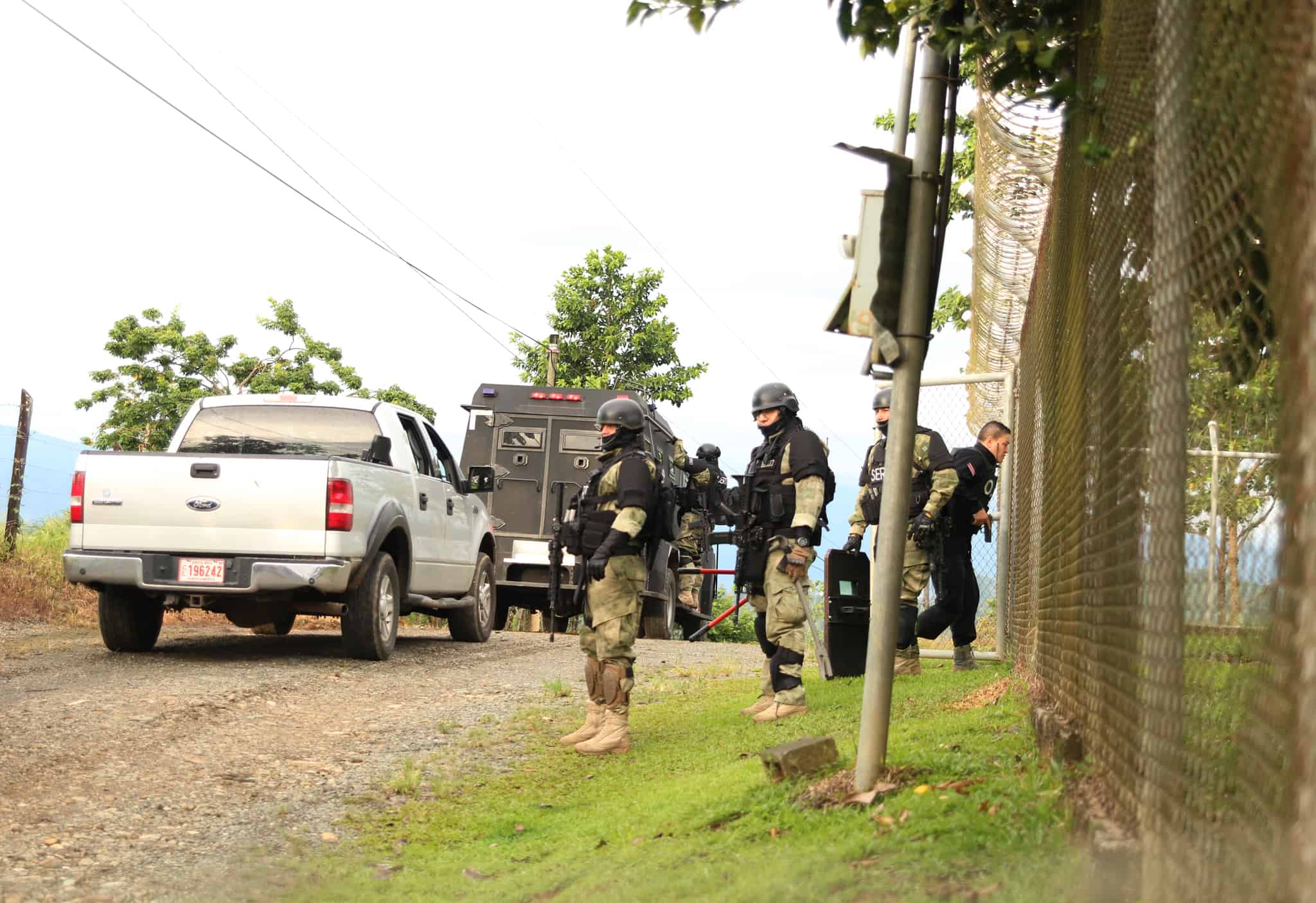
A new report paints a stark picture of organized crime tightening its hold on Costa Rica. The 2025 Global Organized Crime Index shows our country’s criminality score climbing to 5.90, placing it 58th out of 193 nations worldwide and 13th among 35 in the Americas. This marks a notable jump from prior assessments, driven by a sharp rise in criminal groups, deeper international connections, and persistent corruption.
Over the past decade, the number of criminal organizations active in Costa Rica has ballooned from 35 to 340. These groups now involve thousands of people and operate with increasing sophistication. Local outfits like Los Picudos in La Carpio and rival factions in Pavas battle for control of drug sales territories in San José’s urban districts. Such conflicts fuel street-level violence and disrupt daily life in affected communities.
One group stands out for its reach and power: the Diablo cartel, led by Alejandro Arias Monge, known as “Diablo.” Currently a fugitive, he carries a $500,000 reward from the U.S. Drug Enforcement Administration for tips leading to his capture.
Authorities link the cartel to dominating cocaine trafficking, extortion schemes, and hired killings across the nation. Its members maintain ties to corrupt police officers, allowing operations to evade crackdowns. Officials express growing alarm over the potential formation of a single mega-cartel as drug flows intensify.
Mexican influences add to the mix. The group Los Moreco, once a force in the region, has faced setbacks from arrests by Costa Rica’s Judicial Investigation Agency and Public Ministry. Yet remnants persist, operating under fresh leadership—even from behind bars—and continue to handle drug shipments and related crimes.
These domestic players do not act alone. Many forge alliances with major transnational syndicates, including Mexico’s Jalisco New Generation Cartel and Colombia’s Clan del Golfo. Such partnerships enable large-scale cocaine transport, with local groups supplying fuel, boats, and logistical aid. Weapons flow in from the Revolutionary Armed Forces of Colombia, bolstering arsenals for turf wars and enforcement.
Arms trafficking emerges as a core driver of violence. Costa Rica serves as both endpoint and passageway for illegal firearms from Honduras, Guatemala, Mexico, and the United States. Gangs stockpile AK-47s, AR-15s, and similar weapons to protect drug routes.
Firearms feature in most homicides here, with seizures running high but fewer than 5% of weapons used in killings traced to legal owners. This influx correlates directly with the nation’s climbing homicide rate, which hit 907 in 2023 before dipping slightly last year.
Foreign elements further complicate the landscape. Italy’s ’Ndrangheta mafia maintains a foothold, while El Salvador’s crackdown on MS-13 pushes members southward in search of new ground. Cells from Venezuela’s Tren de Aragua exploit migrant flows, engaging in human trafficking and extortion rackets that prey on vulnerable travelers crossing borders.
Corruption weaves through these networks, eroding public trust. State officials face accusations of financial misconduct and embezzlement, with cases spanning multiple institutions. The Deputy Prosecutor’s Office for Probity, Transparency, and Anti-Corruption has stepped up efforts, clearing backlogs and pursuing probes.
High-profile incidents include a 2024 allegation that President Rodrigo Chaves sought bribes tied to public contracts, sparking investigations. Other scandals involve millions vanishing from the national bank and irregular building permits granted to dubious projects.
The private sector plays a troubling role in sustaining these activities. Businesses in construction, real estate, and hospitality often serve as fronts for money laundering, funneling drug profits into legitimate operations.
Retail outlets in San José have come under scrutiny for tax evasion and illegal sales, while networks wash funds through tire shops, bars, and restaurants. This integration allows illicit money to circulate freely, undermining economic stability.
Beyond drugs and guns, other illicit markets thrive. Human trafficking draws in victims from neighboring countries for forced labor, sex work, and even organ extraction. Cybercrimes, including ransomware attacks on government systems, rack up multimillion-dollar losses through fraud and identity theft. Environmental crimes like illegal logging and wildlife smuggling threaten Costa Rica’s natural heritage, often abetted by lax oversight.
Despite these pressures, Costa Rica ranks first in Central America for resilience against organized crime, scoring 5.63 overall. Strong international ties—with the U.S., Mexico, Colombia, and bodies like the UN Office on Drugs and Crime—support joint operations and border tech. Domestic laws target trafficking and extortion, while police expansions aim to add thousands of officers. Yet gaps remain: overcrowded prisons, judicial delays, and the absence of asset forfeiture rules hamper long-term progress.
As cocaine transit routes solidify and violence spills into everyday life, the report calls for tighter scrutiny of businesses and officials. With homicides and extortion on the rise, Costa Ricans confront a reality far from the peaceful image long associated with their nation. Lawmakers and enforcers now face urgent demands to stem the tide before these threats entrench further.





