

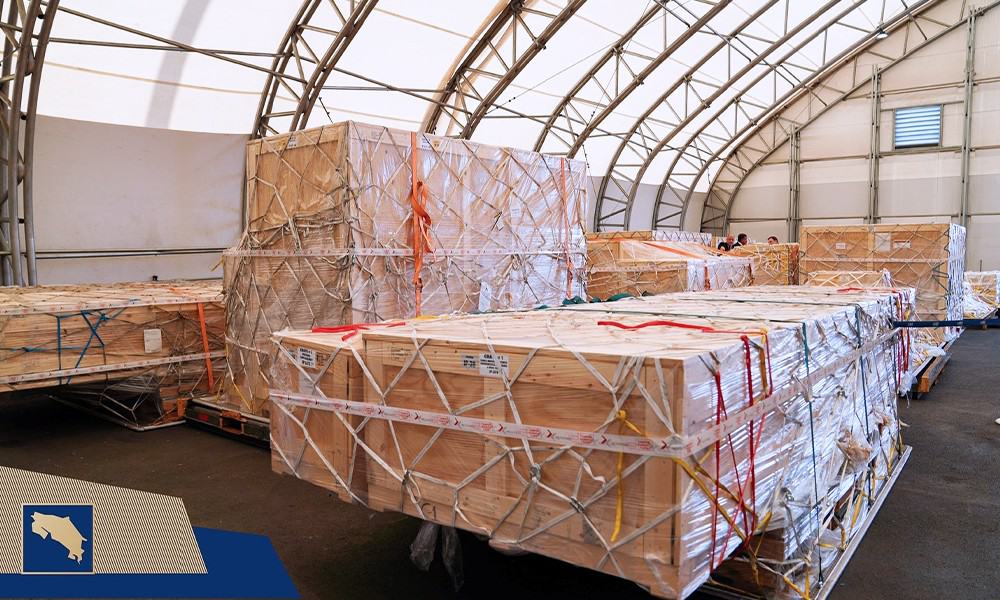
Costa Rica’s fight against drug trafficking hit a snag, and it’s raising eyebrows. Seven months ago, the United States donated two high-tech scanners to help detect drugs at the ports of Caldera in Puntarenas and Moín in Limón. These machines were supposed to be game-changers, catching illegal shipments and tightening security. But today, they’re still sitting in containers outside hangars at Juan Santamaría Airport, exposed to rain and heat, gathering dust instead of busting traffickers.
When the scanners arrived in November 2024, Security Minister Mario Zamora promised they’d be up and running by early 2025. “First quarter, no doubt,” he said at the time. Fast forward to June, and the timeline’s slipped to September 2025. Zamora now points to logistical hurdles: outdated port infrastructure, weak electrical systems, and the need to train officers to use the equipment properly. He’s also quick to note that this isn’t just about plugging in machines—it’s about overhauling how ports operate.
President Rodrigo Chaves, never one to shy away from a bold statement, admitted the delay but stirred controversy by blaming Comptroller General Marta Acosta, who has no role in the process, and even US advisors helping with the setup. It’s a head-scratcher, and critics aren’t buying it. The government’s pledge to scan 100% of shipments at ports and borders, a cornerstone of Chaves’ security plan, remains unfulfilled.
Zamora defends the administration by digging into history. A 2020 US report flagged Costa Rica as a top “re-exporter” of drugs to Europe, and he argues the country’s been playing catch-up for decades. “Since 2003, we should’ve had scanners,” he said. “We’re tackling a 22-year backlog.” Fair point, but it doesn’t explain why the new equipment’s still boxed up.
Despite the hiccup, Costa Rica’s not standing still. The government’s working with international partners, nabbing traffickers in operations like “Purge” and “Embassy,” which led to dozens of arrests across Europe and locally. Operation Sovereignty, launched in 2023, has ramped up port security, with scanners at Moín catching over three tons of cocaine in June alone. But the unused scanners are a missed opportunity. With drug-related violence climbing—Limón’s homicide rate hit 35.8 per 100,000 in 2022—these machines could make a real difference. Here’s hoping September brings action, not more excuses.





