
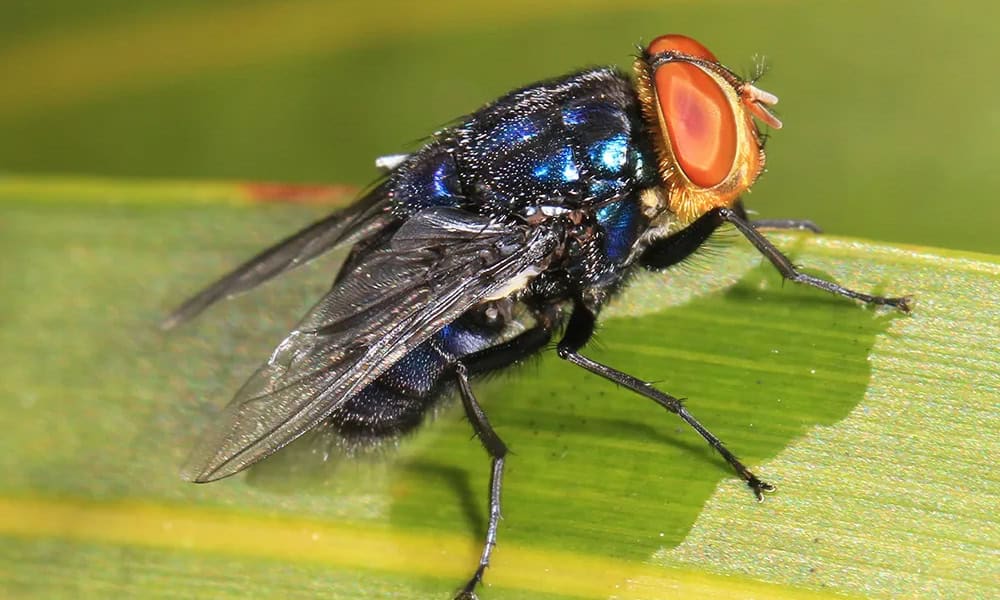
Screwworm cases in Costa Rica continue to rise sharply. According to data from the National Animal Health Service (SENASA), the country is nearing 3,000 cases in less than a year. In the past week alone, 361 new cases were reported. Pococí and San Carlos are the areas with the highest numbers, reporting 35 and 25 cases respectively. Additionally, 53 other cantons across the country have registered at least one infection.
“This is a significant increase in the number of cases, especially considering it has been less than a year since its return, and it has already spread across all seven provinces,” said Alexis Sandí from SENASA’s Epidemiology Department.
Since October 2000, Costa Rica had been declared free of the screwworm fly, but the first cases reappeared on July 14, 2023, and to date, the numbers continue to rise.
“We are dealing with a fly strain that is more aggressive and resistant. We have been in discussions with authorities in Colombia and Uruguay, where the disease is endemic, and they have reported much stronger outbreaks over the past two years,” he added.
Two people have died due to screwworm, and a total of 11 people have been treated for the disease. According to data from the Ministry of Health, five of the 11 cases reported this year are from the Brunca region. The most affected age group is people over 75 years old, with five cases.
Authorities note that people with disabilities and homeless individuals are much more vulnerable to this disease. In animals, bovines are the most affected, accounting for 77.4% of the cases, followed by canines at 14%.
“It is of utmost importance that an animal’s wound is healed so that the fly does not have a place to lay its eggs. People should also be very attentive to cover and take good care of any open wounds,” the expert recommended.
The screwworm is transmitted by a fly that seeks out open wounds to lay its eggs. Once the eggs hatch, maggots are formed. Each fly can lay up to 500 eggs, and it can do so up to four times in its lifetime.