

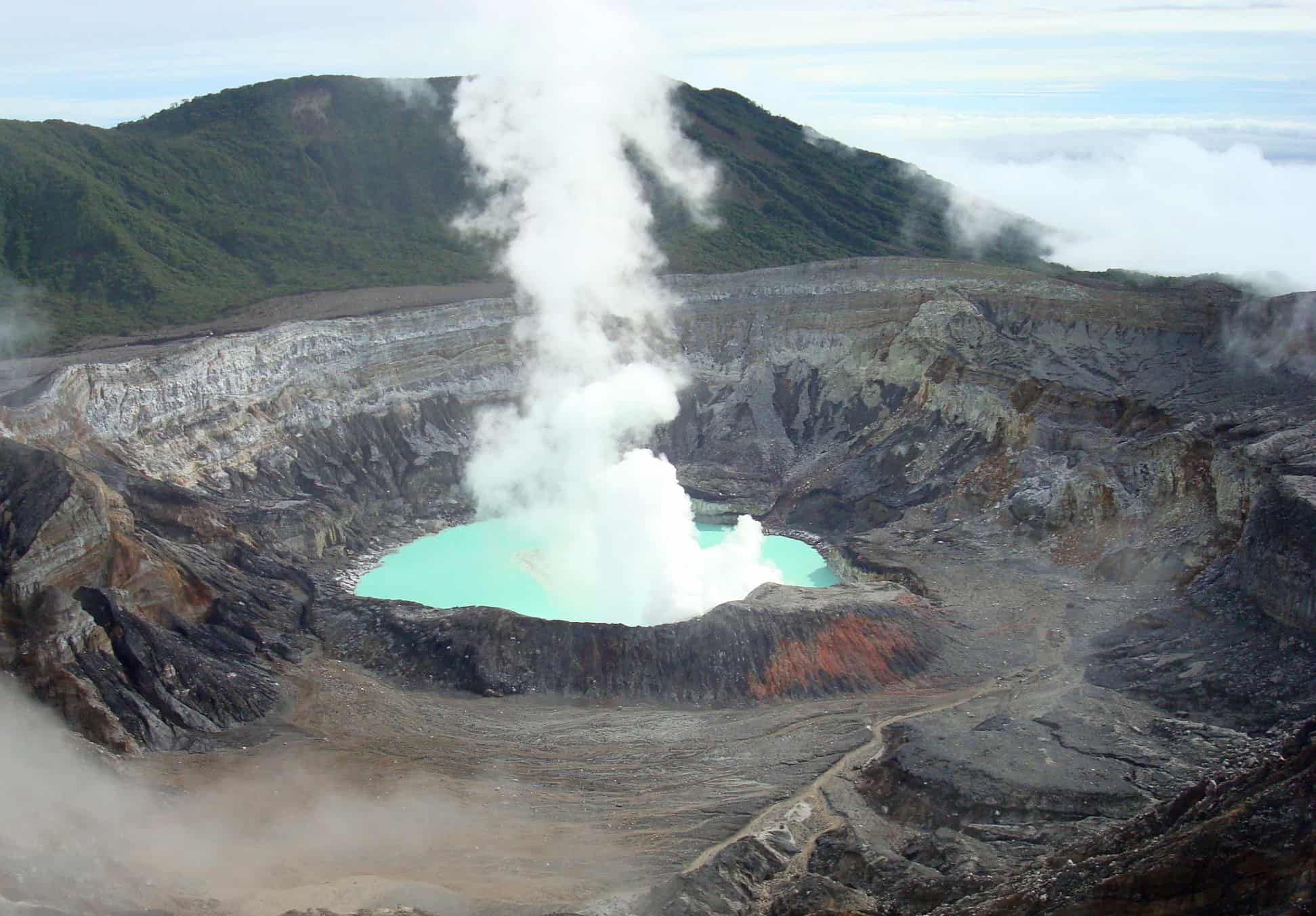
Poas Volcano National Park, among the country’s most frequented destinations, is currently under close watch by the National Emergency Commission and the Volcanological and Seismological Observatory of Costa Rica due to a surge in volcanic activity.
This heightened vigilance, initiated since December, is in response to an increase in eruptions and gas emissions, as disclosed in a recent communiqué by the CNE.
Authorities attribute this activity to a diminished water volume in the volcano’s acid lake, resulting in reduced pressure on the gases and, consequently, an escalation in eruptions that expel gases and mud.
In anticipation of the continuing eruptive activity, both agencies are set to expand their monitoring efforts. This decision stems from evidence indicating that what were initially minor eruptive events have grown larger and more persistent in recent weeks, with the most recent gas emanation recorded on January 15.
While Poás Volcano Park presently operates normally, authorities caution that sudden closures may occur due to heightened eruptive activity, or potentially temporary closures owing to the concentration of these volcanic phenomena.
Visitors are urged to follow posted signs, adhere to park ranger instructions, and avoid entering illegal or restricted areas, which are most affected by the emitted gases.
Acknowledging the potential risks, the CNE, in collaboration with the Poás Volcano administration, has initiated a process to update the park’s emergency management plans. Work sessions with park rangers aim to refresh procedures in preparation for any eventualities.
Critical measurements conducted by experts have confirmed that seismic signals have not shown significant variation or increase. Importantly, there is no evidence of internal fracture earthquakes or the opening of conduits indicating the ascent of fresh magma. Additionally, recorded expulsions from the volcano have not exceeded 200 meters in height, reflecting a superficial activity within the hydrothermal system of the Poás Volcano.
Since 1989, the volcano has significantly increased its gas emissions, causing acid rain phenomena that have damaged the flora in some sectors of the park and agricultural plantations near the area.





