

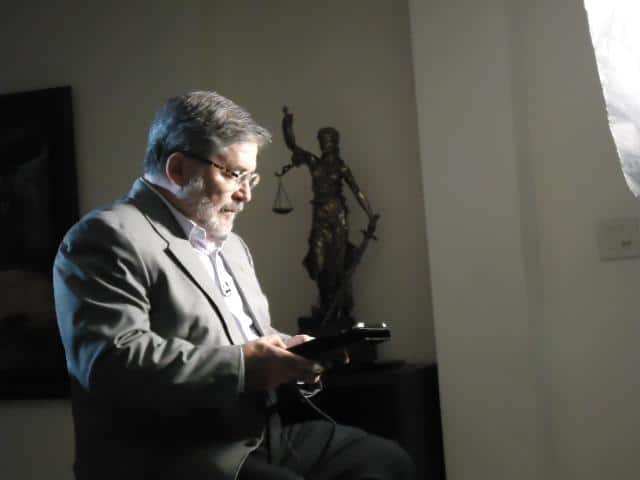
Until the year 2017, Juan Diego Castro Fernández was a 62-year-old lawyer from a wealthy, conservative family from Cartago, east of San José. But he wasn’t just any lawyer. During the past decade, he has been one of the most prolific voices in our media, above all on Channel 7, when it comes to security and crime – always with a popular mano dura, tough approach and always with his piquant, sometimes hurtful style. His target is usually the “establishment,” even though he served as a Cabinet minister as part of the long-standing National Liberation Party, and maintains relations with other groups with significant political, economic and media power.
In May 2017, this famous lawyer became a presidential candidate after negotiating his entry into an insignificant party called National Integration (PIN), which had 15 years under its belt without ever achieving a national political post. Its president, the conservative doctor Wálter Múñoz, was a legislator from 1998-2002, perhaps never imagining that 15 years later he would convert his party into a vehicle for a driver who needed a car. That driver is Juan Diego Castro, a short and energetic man with a mustache and glasses who put his own face into his campaign logo. He is the best single example of a trend experts have been warning us about: the increasing importance of a political persona, more than the party he or she represents.
But 2018 arrived and this presidential candidate, whom many people already compare to Donald Trump, is more than a significant competitor in February’s elections. As this new year begins, various polls show he is the candidate with the best chance of making it into a second, run-off round, which will take place if no one candidate reaches 40 percent of the vote. Voters, who are less and less friendly to political parties, seem tempted to support Castro, with his anti-political discourse and his strong character, as well as his theatrical abilities and an astute management of traditional and digital media.
Costa Rican media, politicians and other political actors, as well as thought leaders, have confronted a dilemma similar to the U.S. predicament in the 2016 campaign: should we ignore him, criticize him, contradict him or publicize him so that voters can learn more about him? Traditional actors did not know how to confront a player who is breaking all the rules of the game.
Juan Diego Castro breaks those rules through his profuse and stinging publications on social media. What’s more, he dared to question the referee – the Supreme Elections Tribunal, or TSE – one of the bastions of a democratic system that Costa Ricans value highly and that has served as an international model. He suggested that there is danger of fraud, just as Trump did in 2016. Later, he attempted to soften his criticisms by saying just the opposite, that he trusts the TSE and its impartiality, but it is impossible to know whether that will be enough to erase the initial questioning. He has contradicted himself at other times, too. On Nov. 22, he said that in his administration would have no Minister of the Presidency because it is unnecessary; on Jan. 10 he said he will name José Miguel Corrales to the post, a former legislator and PLN presidential candidate in 1998.
Castro’s favorite targets include former President Oscar Arias and the ex-president’s favored candidate, Antonio Alvarez Desanti (PLN), with whom Castro’s rivalry dates back more than 20 years. He also criticizes judges and journalists, often discussing their private lives. He seems to feed off of conflict and knows how to manage this well in the media. He also likes to play with the concept of the “separation of powers,” having made many comments suggesting he would override them. Later, he says that’s not the case, that he respects constitutional order.
He often blocks his critics on social media and is highly selective in granting interviews. He tends to seem to feel attacked and perhaps has more and more reasons to feel that way; in recent weeks, maybe because of the apparent success of his campaign, more public figures have set fear or excessive prudence aside and have publicly confronted him. “Maybe making invisible someone who has been in the media for years was an error. Or we underestimated him; I don’t know,” says an advisor from a rival campaign. They didn’t grasp popular discontent with politics and corruption, exacerbated by the “cementazo,” which fit Castro’s message perfectly.
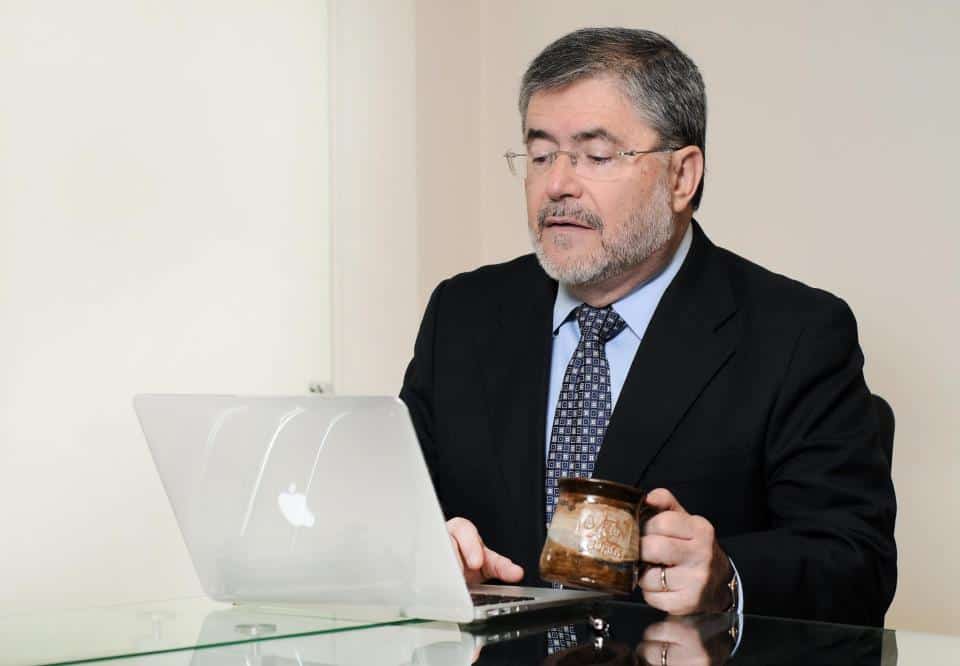
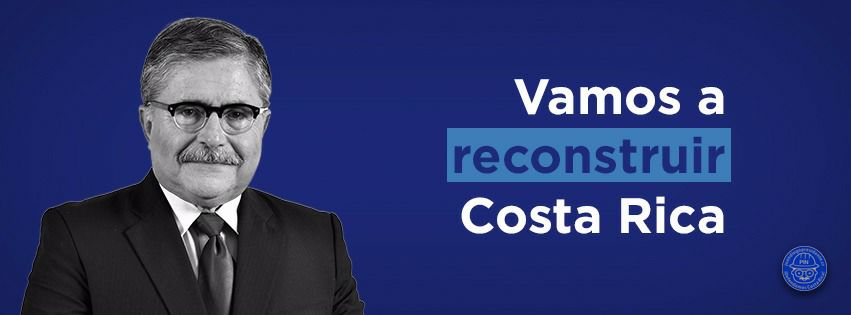
So January arrived, bringing with it confirmation of Castro’s front-runner status, a rally of debates and greater campaign intensity. Three weeks after an editorial that attacked Castro’s “populism” without mentioning him, the daily La Nación published three pages of clear criticism of Castro on Jan. 6. The flames are growing, and many people are pointing at the “danger” that Castro represents. The comparisons with Trump are relentless because of his media savvy, impulsive nature and anti-establishment message. His phrase “national reconstruction” suggests that the country is in ruins, that it must be rebuilt from scratch, that Costa Rica must be made great again – although he uses, not a red cap, but a blue helmet. Nor does he lack money to publicize his messages, which flow quickly anyway through the media and cheap digital platforms.
There are evident differences between Castro and Trump, of course. First off, Castro is wealthy and likes to put on a show, but he isn’t a magnate and has never passed through the entertainment industry, as some other Central American presidents have done. There’s no Steve Bannon that we know of, but neither do we know who the brains of his campaign might be; some say it’s Castro himself.
Some very favorable words have been published by former President José María Figueres in favor of his former Security Minister and against Alvarez Desanti, Figueres’ rival in the Liberation primary: “Juan Diego is an outspoken man who says what he thinks, and in today’s world, that’s a virtue.” It’s easy to understand why some figueristas are working for Castro’s party. Other politicians have drawn close to him as well, and other political leaders praise in him private. Some think that for now, he’s just putting on a show, but once he gets into office he might form a decent team.
Castro, however, has an electoral problem ahead of him. More and more voices are joining forces against him and could push out a message against him. Fear of his victory may well grow in the days ahead. It’s also entirely possible that he will show more weaknesses, in substance or style, in the upcoming debates, or that some sector will take advantage of his aversion to questions or critiques, especially in a national context where political power is spread across the board and it’s urgent to achieve agreement among various parties. As January begins a second round seems probable, but we’ll just have to wait.
January’s here and the gloves are off: Costa Rica’s true campaign begins





