

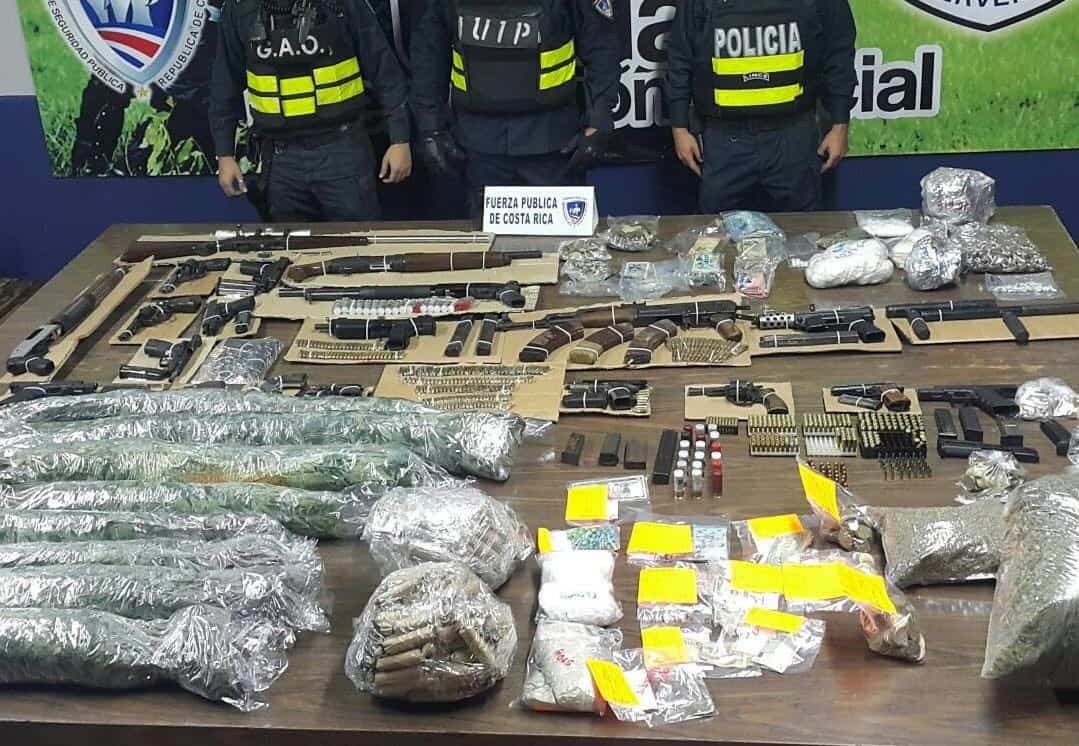
Costa Rican authorities seized more than 40 metric tons of cocaine during the first eight months of 2026, a nearly 50% increase over the same period last year, as it continues to battle international drug trafficking. Between January and August, police confiscated 40,643 kilograms of cocaine, compared with 27,187 kilograms during the same months in 2025.
That represents a 49.5% increase, or nearly 13.5 additional metric tons taken off the streets and out of the hands of drug trafficking organizations. The figures highlight the growing challenge Costa Rica faces as a major transit point for cocaine moving from South America toward the United States and Europe.
The increase has continued to draw attention in October, with three major police operations resulting in the seizure of more than four additional metric tons of cocaine. In the largest of those operations, police intercepted a boat carrying 3,077 packages of cocaine in the Térraba-Sierpe Wetlands along Costa Rica’s southern Pacific coast.
Days later, on October 15, Coast Guard officers intercepted a speedboat approximately 261 kilometers (162 miles) off Cabo Matapalo, near the Osa Peninsula. Three Colombian nationals were arrested aboard the vessel, which was carrying 1,175 packages of cocaine, each weighing approximately one kilogram.
The operation involved Costa Rican police working alongside U.S. drug enforcement authorities, with assistance from an American surveillance aircraft. A separate operation at the Moín Container Terminal in Limón uncovered another 52 kilograms of cocaine hidden inside wooden pallets carrying fruit destined for Belgium.
These October seizures are not included in the January-through-August figures, meaning the total amount confiscated during 2026 has continued to grow. March was the busiest month during the eight-month reporting period, with police confiscating 8,317 kilograms of cocaine.
Authorities have pointed to stronger inspections at ports, increased patrols along the coastlines and closer cooperation with international law enforcement agencies as reasons for the higher seizure totals. However, the increase does not necessarily mean that 50% more cocaine is passing through Costa Rica. It could also reflect improved police operations and a greater ability to detect shipments that previously went unnoticed.
Costa Rica’s location between cocaine-producing countries in South America and major consumer markets in North America and Europe has made it an attractive route for international trafficking organizations. The drug trade has also become a major security concern within Costa Rica, where criminal groups compete for control of trafficking routes, storage locations and local drug markets. Those disputes have contributed to the country’s high levels of violence in recent years.
The scale of the problem became particularly clear in late September, when a U.S. Air Force cargo plane transported 45 metric tons of cocaine seized during previous operations in Costa Rica to the United States for destruction. The shipment, valued by U.S. officials at approximately $1.25 billion, was arranged because Costa Rica lacked the budget to destroy such a large quantity of drugs domestically.
For Costa Rican authorities, the growing number of seizures represents progress in intercepting illegal shipments. At the same time, the sheer volume of cocaine being discovered shows how difficult it remains to stop the international drug trade.





