
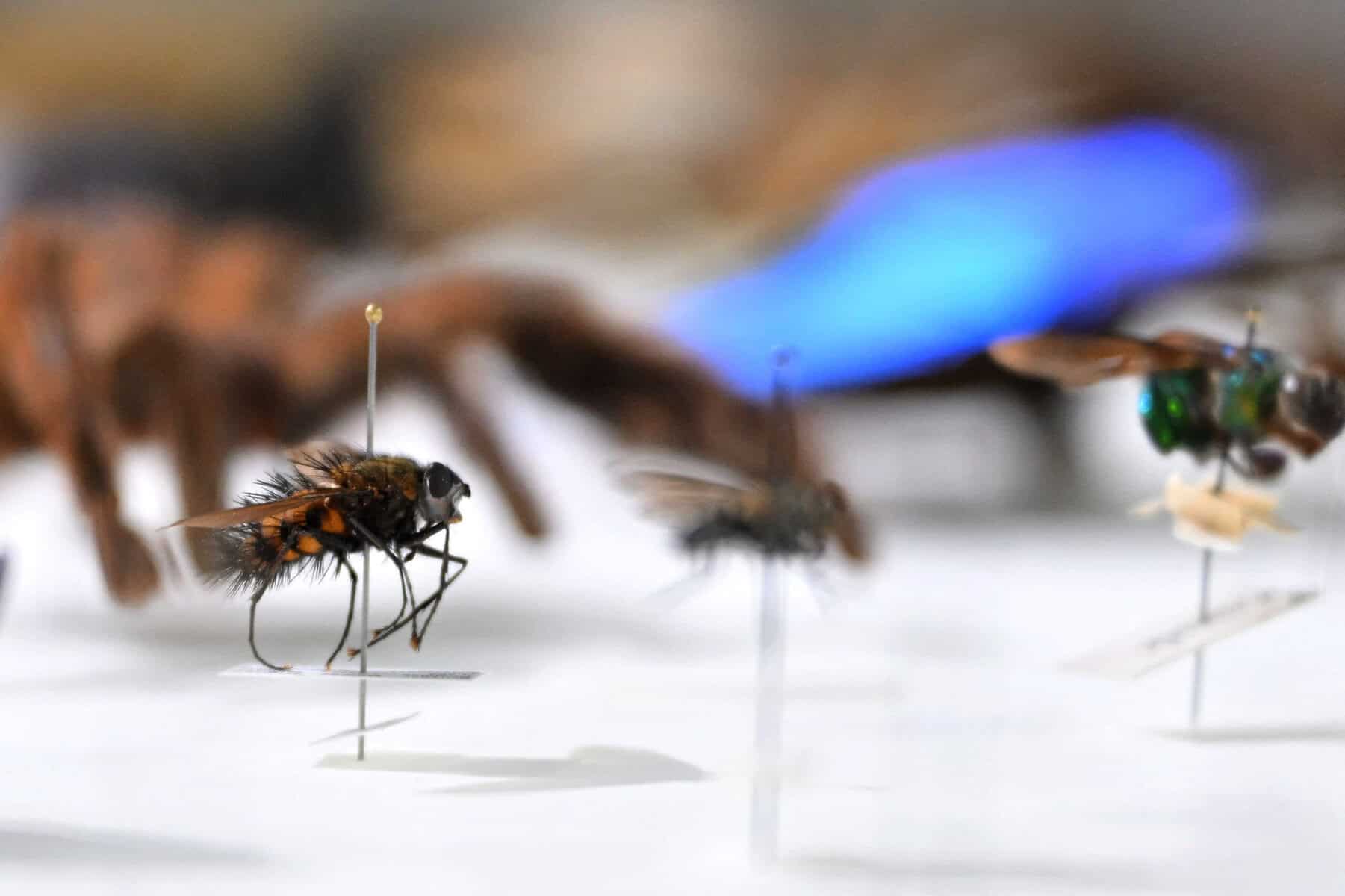
Scientists in Ecuador announced Thursday that they had genetically identified 8,000 new insect species in a protected forest in the Ecuadorian Chocó Andino, a region designated as a World Biosphere Reserve. Researchers used genetic material from specimens collected in the private Mashpi-Tayra reserve, located northwest of Quito, and compared it with genetic information from other insects listed in scientific databases around the world.
Through this process, they determined that the specimens represented “new species,” said Diego Inclán, director of Ecuador’s National Institute of Biodiversity, known as Inabio. Ecuador is a small but megadiverse country. The study was published in the British scientific journal Scientific Data.
Of the 8,000 varieties, “97% are unique. They do not exist anywhere else on the planet. It is unbelievable,” Inclán said. The insects will now have to be described in detail and formally named through the traditional scientific process, he explained. After six years of research, including one year devoted exclusively to collecting specimens, scientists found that most of the previously unrecorded species were flies, wasps and butterflies.
“We used a new technology to describe species through their genetic fingerprint,” Inclán said. “A distinct genetic profile is equivalent to a species. The only difference is that it does not have a name; it has a code.” The research is part of an initiative led by the University of Guelph’s Centre for Biodiversity Genomics in Canada. The program includes 50 countries and studies how arthropod communities change over time and in response to environmental changes.
“These are extremely unique and already verified data. Hopefully, they will also help shape conservation policies at the local and national levels,” said Mateo Roldán, Mashpi’s research director. The Mashpi-Tayra protected forest covers about 3,200 hectares and lies within the Ecuadorian Chocó Andino, an area designated as a biosphere reserve eight years ago. The region has also been the focus of environmental campaigns seeking to stop mining activities.
The Mashpi research represents only one part of the broader project being carried out by Inabio, which is collecting flying insect specimens in other parts of the country. Inclán estimates that as genetic studies continue on the remaining samples collected in Mashpi, the number of reported insect species could double.