

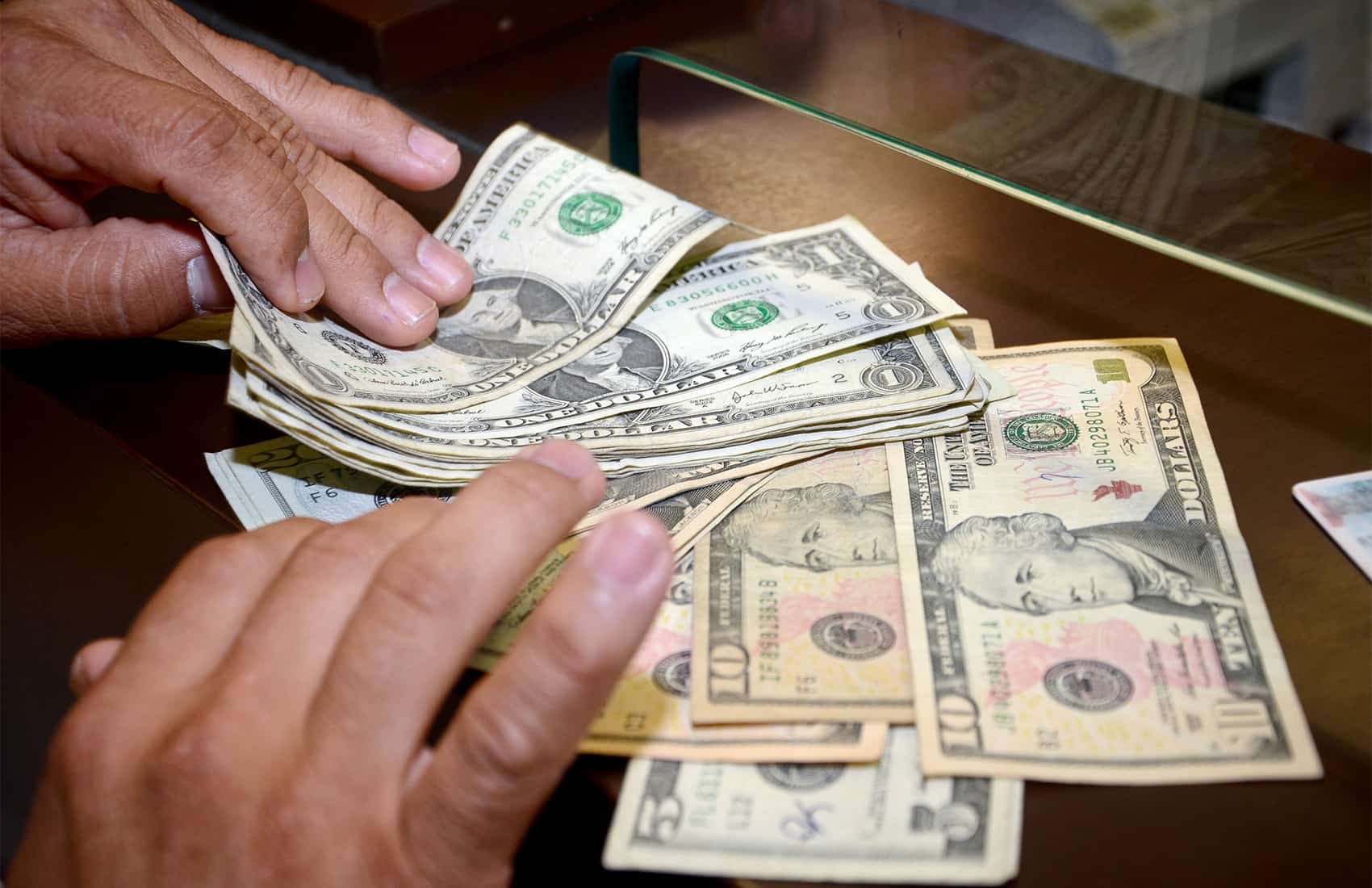
Costa Rica entered the first days of May with the dollar still hovering near historic lows, keeping pressure on tourists, foreign residents and retirees who depend on U.S. currency for day-to-day spending. The Central Bank’s reference exchange rate stood at ₡451.37 for buying and ₡457.78 for selling as of yesterday leaving the dollar near ₡458 as our country moves into the early stretch of rainy season.
For those paid in dollars, the math is simple. A $1,000 exchange at the Central Bank’s buy reference rate now equals about ₡451,370. At ₡500, that same amount would produce ₡500,000. That difference of nearly ₡49,000 can cover several meals, a domestic bus trip, groceries, or part of a hotel night outside the capital.
The strong colón has been one of Costa Rica’s most visible economic stories of the past year. The exchange rate has fallen sharply from early 2026 levels, with the dollar dropping from around ₡497 in January to about ₡455 in late April, despite Central Bank purchases meant to limit further appreciation.
The current rate is good news for people earning in colones and for importers paying in dollars. It can help contain the price of imported goods, electronics, vehicles and some business costs. But it continues to hurt dollar earners, exporters, tourism operators and foreign residents whose budgets were built around a stronger dollar.
The outlook remains mixed. Some earlier forecasts saw the dollar trading between ₡500 and ₡525 during 2026, but newer market analysis has turned more conservative. A recent projection placed the exchange rate between ₡480 and ₡490 for the rest of the year, with a downward bias, citing the large supply of dollars in the market and seasonal factors tied to demand for foreign currency.
The main wild card is oil. Costa Rica imports its fuel, so higher international crude prices can force the country to buy more dollars to pay the energy bill. Economists have warned that sustained oil pressure linked to Middle East conflict could push the exchange rate upward in May, though the Central Bank still has room to soften sudden movements.
The currency pressure arrives as Costa Rica’s rainy season begins unevenly across the country. The South Pacific was expected to enter the season between April 27 and May 2, the Central Valley between April 29 and May 8, the Central Pacific between May 2 and 10, and the North Pacific between May 6 and 13. The Northern Zone and Caribbean follow different rainfall patterns, with the Caribbean lacking a defined dry season.
For those coming here on vacation, the exchange rate adds another cost factor just as Costa Rica moves into the greener, wetter months. Hotel rates can fall in parts of the country during rainy season, and fewer crowds may help offset some costs. Still, those savings are not guaranteed, especially in high-demand destinations where prices are often listed in dollars.
For those expats living here, the bigger issue is monthly budgeting. Rent, private school fees, insurance, imported goods and many tourism-linked services can remain dollarized, while groceries, utilities, fuel and local services are mostly paid in colones. A strong colón means dollar income does not stretch as far across those local expenses.
For now, the dollar remains weak by recent Costa Rican standards. Unless oil prices or global uncertainty trigger a stronger move, travelers and foreign residents should plan around an exchange rate below ₡500 rather than expecting a quick return to the levels many became used to in previous years.





