

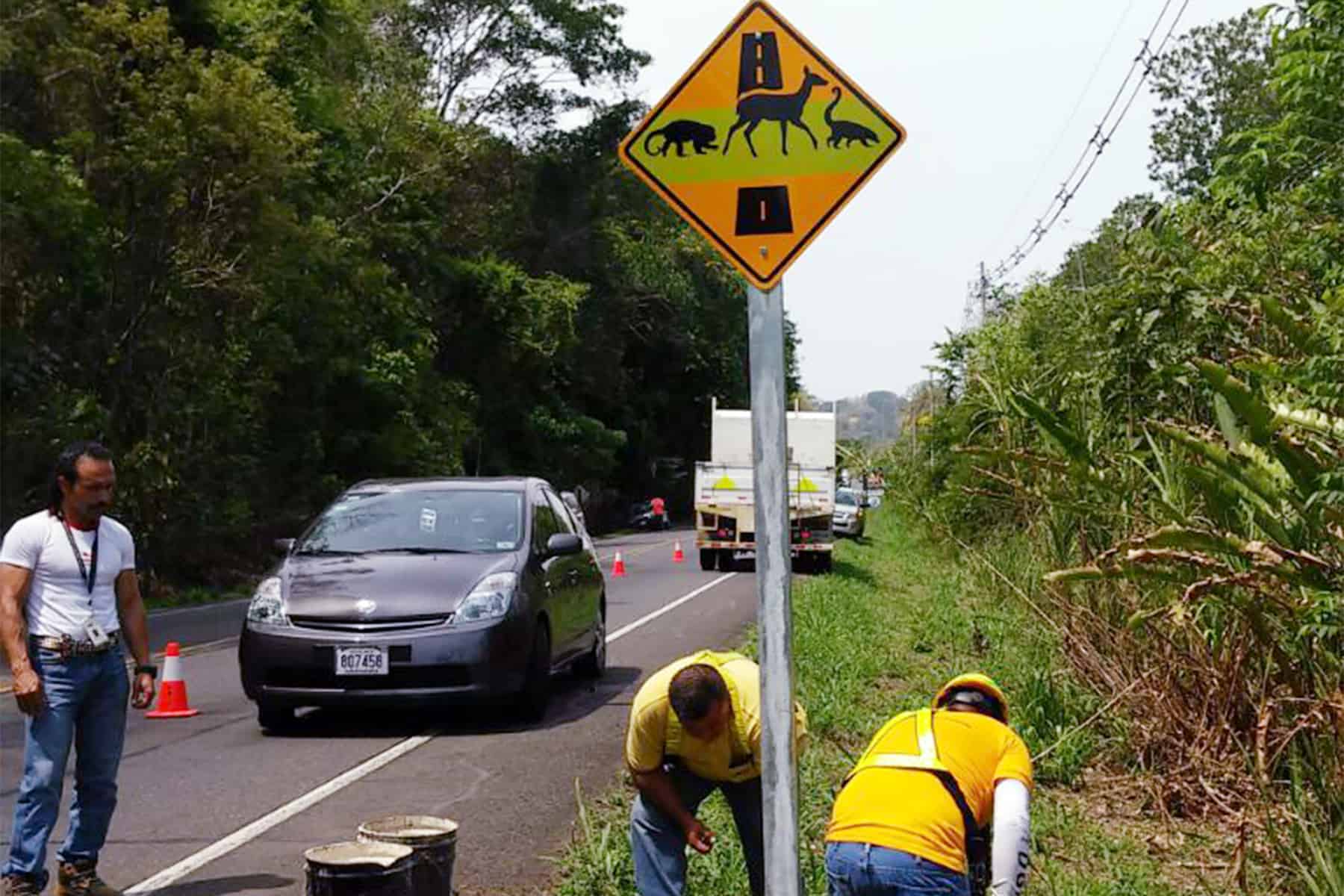
Costa Rica has built a global reputation as one of the planet’s great conservation success stories. A quarter of its territory is protected. It reforested aggressively when others were cutting down. It runs almost entirely on renewable energy. Millions of tourists fly in every year with one thing on their minds: the wildlife. The sloths, the monkeys, the jaguars, the poison dart frogs, the tapirs, the toucans.
Biodiversity is not just Costa Rica’s soul; it is its primary economic engine. And yet, on the roads connecting all of those beautiful places, that same wildlife is being killed at a rate that should alarm anyone who cares about the country’s future.
Researchers estimate that four animals die on Costa Rican highways every single hour. That is not a rounding error. That is a systematic, ongoing crisis happening in plain sight, on the same roads that tourists and locals share every day. Biologists who monitor these routes describe the normalization of it as one of the biggest obstacles to change.
We have grown so accustomed to seeing two or three dead animals on a single journey that it has simply become part of the landscape. But normalized does not mean acceptable, and the numbers behind the habit reveal the true scale of the problem.
A citizen science initiative tracking roadkill on Costa Rican highways has logged more than 3,400 observations of 306 distinct species since 2013, with possums, sloths, monkeys, snakes, and armadillos among the most frequently reported victims. Between 2012 and 2022 alone, more than 500 wild cats were struck by vehicles — jaguars, pumas, ocelots, jaguarundis, margays, and oncillas, the vast majority of which could not be saved. These are not common species that can easily absorb those losses. Every one of those animals represents a hole in an ecosystem that took thousands of years to build.
The painful irony is that solutions exist and have been proven to work. Countries across Europe, North America, and Asia have spent decades building wildlife tunnels beneath highways, rope bridges over them, and carefully fenced corridors that guide animals safely to crossing points. Research conducted in Costa Rica itself demonstrated that when underpasses and overpasses were installed along one of its major Pacific coast highways, the structures were eventually used by 21 mammalian species and produced a measurable, significant reduction in wildlife mortality.
The science is not in question. The will to act consistently and at scale is.
A Costa Rican court sanctioned a road official after the national road authority repeatedly failed to complete dozens of wildlife crossings that had been formally identified as essential intervention points in an approved environmental impact assessment, requesting extension after extension and citing budget constraints while animals continued to die along one of the country’s busiest corridors.
Meanwhile, that same government continues spending enormous sums on road surfaces that crack, flood, and deteriorate within months of being repaved, creating the familiar cycle of patch-and-repeat that consumes public funds without delivering lasting infrastructure. The money clearly exists. The priorities are simply misaligned.
There is something deeply contradictory about a country that sells the world on its biodiversity while failing to protect that biodiversity from its own roads. Costa Rica’s Legislative Assembly recently advanced a bill that would make wildlife crossings a formal legal requirement in road infrastructure projects, applying to both new and existing roads, with particular attention to areas near national parks, forests, and biological corridors. It is a promising step — but a bill is not yet a law, and a law is not yet action on the ground.
The rest of the world has shown that roads and wildlife can coexist. Smart infrastructure does not have to mean dead animals. Costa Rica, of all countries, has every reason to lead on this. The tourists who fill its hotels and zip-line through its canopy come because of the animals. Protecting them is not just an ethical obligation. It is, in every measurable sense, an economic one too.





