

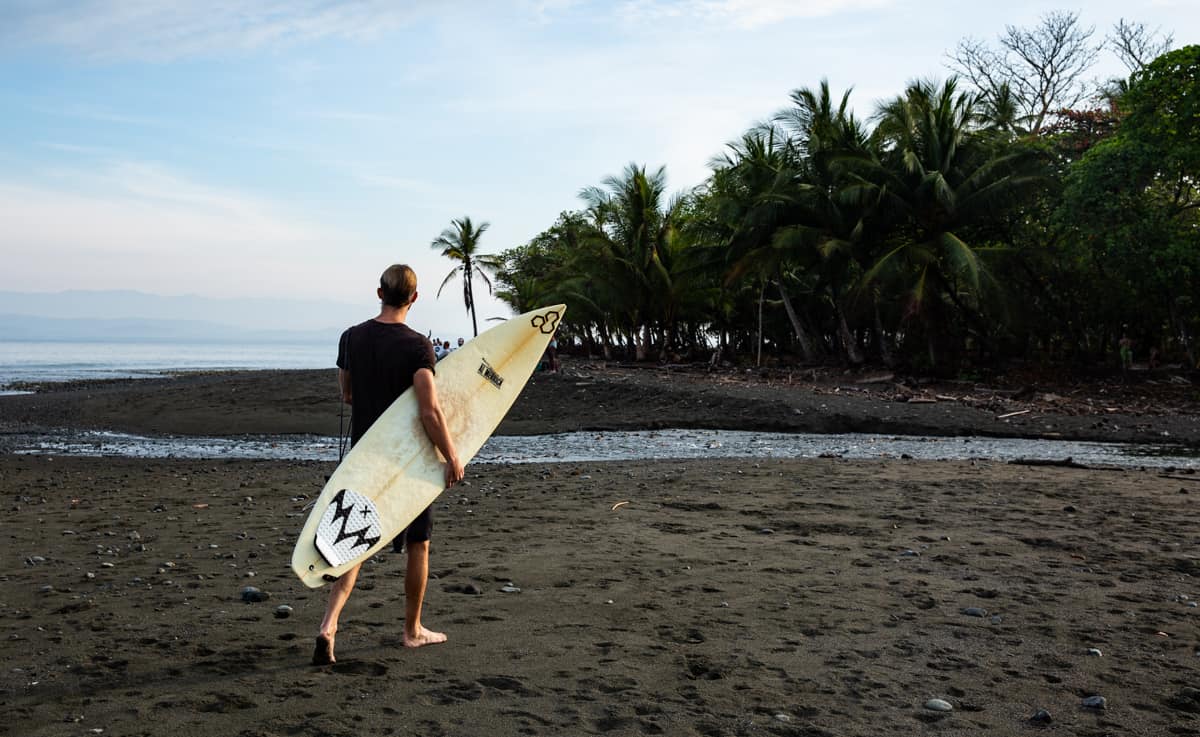
A dock project moving ahead in Pavones has set off growing concern among residents, surfers and environmental advocates who say the work could put one of Costa Rica’s most famous waves at risk. The project, known as the Embarcadero Vecinal de Pavones, received environmental clearance from SETENA in June 2024 and is being promoted by the Costa Rican Pacific Ports Institute, INCOP, as a public works project meant to improve access and support local economic activity.
Pavones is internationally known for its long left-hand wave, a surf break that has helped define the identity of the remote southern Pacific town and support businesses tied to tourism, surf instruction, lodging and food services. Costa Rica’s tourism authorities also promote Pavones as one of the country’s major surf destinations.
Opposition to the project centers on one question: what happens to the wave if construction changes the coastline or water movement near the break? Critics say the project advanced without the oceanographic, hydrological and broader coastal studies needed to show how pilings, fill and related works could affect currents, sediment transport and surf conditions.
That concern extends beyond surfing. Pavones sits on Golfo Dulce, an ecologically sensitive body of water often described as a rare tropical fjord. The gulf is known as important habitat for marine life, including hammerhead sharks, whales and dolphins, making any major coastal intervention especially controversial.
Legal pressure around the project is also building. Recent reporting says environmental lawyer Walter Brenes Soto has asked SETENA to void the environmental viability granted to the dock and has filed a constitutional complaint seeking an immediate halt to the works. The objections argue that the approval was based on incomplete analysis and that the site demands greater environmental scrutiny.
INCOP has defended the project as a long-awaited improvement for the area. In a statement last year, the institution said the dock would improve connectivity to Pavones, reducing travel time from Golfito from about an hour and a half by road to roughly 25 to 30 minutes by boat. The agency also said the project is intended to strengthen fishing and tourism in the region and is financed through the INCOP-ICT-BNCR trust.
For many in Pavones, though, the issue is not development itself. It is the fear that authorities are pushing ahead without first answering the most important question of all: what could be lost if the project alters a wave, a coastline and a marine ecosystem that cannot easily be replaced.





