

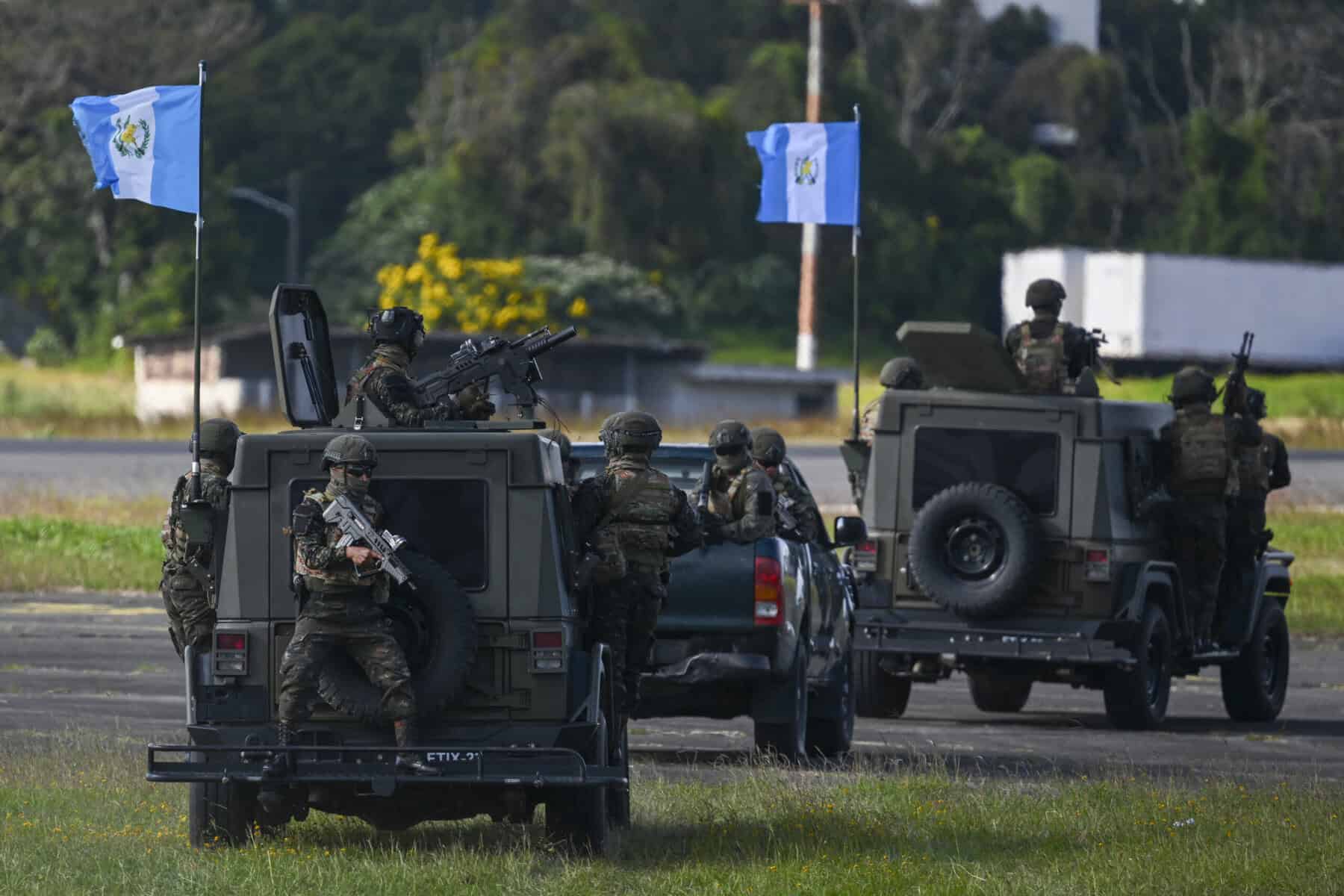
Guatemala’s government spent Thursday pushing back against reports that it had agreed to allow U.S. forces to carry out joint military strikes against drug-trafficking groups inside Guatemalan territory.
The clarification came after The New York Times reported that President Bernardo Arévalo had reached an agreement with U.S. Defense Secretary Pete Hegseth for joint operations against drug-trafficking organizations on Guatemalan soil. The report, if confirmed in those terms, would have marked a major expansion of Washington’s campaign against cartels in Latin America and a sharp shift in Guatemala’s security relationship with the United States.
Arévalo did not deny that Guatemala has asked Washington for more help. He said his government requested expanded U.S. cooperation in the fight against drug trafficking, including equipment, training, expert support, intelligence sharing and assistance in planning operations.
But he rejected the idea that the agreement authorizes U.S. military action inside Guatemala.
“There is no agreement,” Arévalo said, describing the request as part of cooperation already covered under existing bilateral agreements. He said Guatemala conducts maritime interdiction operations in which the United States has provided training, capacity building and equipment, but said any foreign military operation on Guatemalan soil would require approval from Congress.
Guatemala’s Defense Minister Henry Sáenz gave a similar explanation, saying the request is aimed at strengthening the Guatemalan Army’s ability to confront drug trafficking and transnational crime. He said the support being discussed includes technology, military equipment, training and intelligence tools, but not the deployment of U.S. troops to carry out armed operations.
Sáenz was direct in his denial. He said there will be no foreign soldiers conducting operations in Guatemala’s airspace, waters or territory. He also said Guatemalan officers would direct operations and Guatemalan soldiers would carry weapons.
The distinction matters. Guatemala is acknowledging a deeper security relationship with the United States at a time when Washington is pushing a more aggressive anti-cartel strategy across the region. But Arévalo’s government is trying to draw a clear line between U.S. support and U.S. participation in armed operations inside the country.
That line is politically sensitive in Guatemala, where sovereignty, military power and U.S. involvement carry deep historical weight. It also comes as regional governments face growing pressure to respond to cartels, gangs, drug labs and trafficking corridors that connect Central America, Mexico and the United States.
The dispute appears to center on how the cooperation is described. The New York Times report framed the talks as an agreement for joint military action. Guatemalan officials say the request is for support to operations led by Guatemala’s own forces.
The Guatemalan government also released information about a May 23 letter from Sáenz to Hegseth requesting U.S. assistance. The letter referred to support for active military operations against organizations designated by the United States, but the government said the request remains within Guatemala’s Constitution and existing security cooperation agreements.
Pentagon declined to discuss future operations or matters it considers operational security. A Pentagon spokesperson said the department would continue working with regional partners to address drug trafficking and other transnational threats.
The episode has also drawn attention because it follows a broader U.S. push to expand military pressure on drug-trafficking networks in Latin America. Washington has increasingly described cartels as national security threats and has urged regional governments to take a more forceful stance.
For Guatemala, the new message from the government is that cooperation with Washington is increasing, but U.S. troops will not be carrying out military strikes inside the country.
That leaves the situation in a gray area. Guatemala wants more U.S. equipment, intelligence and technical support. The United States wants stronger regional action against cartels. But after Thursday’s denials, Arévalo’s government is making clear that any operation inside Guatemala must remain under Guatemalan command.





