

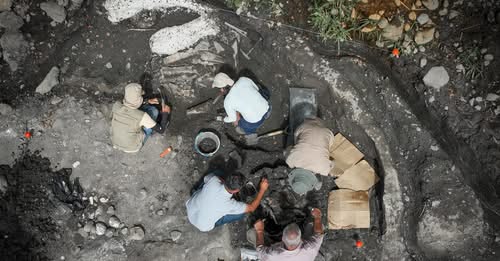
Researchers at the Museo Nacional de Costa Rica have confirmed a major paleontological find in the province of Cartago: fossil remains from a mastodon-like creature and a giant ground sloth. This discovery ranks among the country’s most notable in recent decades and sheds light on the megafauna that once roamed Central America.
The story started when a local resident spotted unusual bones on private land and contacted authorities. Experts from the museum’s Department of Natural History quickly responded, inspecting the site and identifying the remains as belonging to extinct animals from the late Pleistocene era.
Among the key specimens are bones from a Cuvieronius, a proboscidean related to mastodons, known for its large size and curved tusks. This animal could grow several meters long. The team also recovered parts of an Eremotherium, a giant ground sloth that stood on strong hind legs and reached heights similar to modern elephants when upright.
To date, specialists have extracted 49 pieces, including vertebrae, ribs, a femur, finger bones, and tusk fragments longer than a meter. Early geological assessments date these fossils to between 10,000 and 40,000 years ago, during the late Ice Age. At that time, changing climates and the arrival of early humans played roles in the extinction of many large mammals in the Americas.
Scientists point out the rarity of such well-preserved finds in Costa Rica’s tropical conditions, where heat and humidity often break down organic matter fast. The volume and condition of these bones offer fresh chances to examine the anatomy, eating habits, environments, and decline of these ancient species.
“This find builds our understanding of Central America’s prehistoric life,” said a museum spokesperson. It positions Costa Rica as a key player in regional studies of Ice Age animals.
The discovery goes beyond research. Museum officials plan to create a dedicated paleontology exhibit to house and display these artifacts. This could broaden the nation’s appeal to visitors, who often come for rainforests, volcanoes, and wildlife but rarely explore its ancient history.
Costa Rica brings in millions of tourists each year for its natural sites and eco-adventures. Adding a focus on prehistoric megafauna might encourage longer visits and attract new groups, like families interested in learning or academics seeking partnerships. Cartago, with its rich history including colonial sites and volcanic areas, stands to gain from this addition to its offerings.
The exhibit could pair with nearby attractions, such as national parks, to create combined trips that mix history with nature. As interest in educational travel rises globally, this development fits a trend where people seek meaningful experiences alongside relaxation. The find also highlights the value of community involvement in protecting heritage. The resident’s quick report allowed experts to act before weather or other factors damaged the site. It shows how everyday people and institutions can work together to safeguard the past.
As work continues, the museum collaborates with University of Costa Rica students on the project. The minister of culture has directed efforts to prepare the permanent display, ensuring these fossils contribute to both science and public knowledge. These bones from Cartago connect modern Costa Rica to a time of massive creatures and shifting worlds. They promise to add to our country’s identity and draw attention to its natural history.





