

Costa Rica has again been named one of the world’s best places for Americans to retire, appearing in the 2026 edition of the Forbes ranking of overseas retirement destinations published July 31. The list identifies 96 retirement locations across 24 countries on five continents, twelve of them in Europe.
Compilers weighed relative cost of living, taxes, healthcare quality and cost, ease of returning to the United States to see relatives, crime and political instability, and the risk of social isolation in places where English is not widely spoken. They also assessed how difficult each country makes it to obtain permission to stay long term, and factored in climate change and natural hazard exposure.
Costa Rica is described as a place with beaches on two oceans, extraordinary ecological diversity within its tropical forests and a relaxed pace of life that continues to appeal to American retirees, particularly those drawn to the outdoors. Living costs are rated significantly below the U.S. average, crime is characterized as low and the political system as stable. The entry also names a drawback that shapes daily life across much of the country during the green season: flooding.
Healthcare in the larger cities is rated excellent and inexpensive, with the ranking noting that foreign residents who retire here can enroll in the Caja Costarricense de Seguro Social for roughly $150 a month. In practice, CCSS calculates contributions for foreign residents as a percentage of declared income, so what an individual actually pays varies. Spanish is described as helpful but not essential.
As far as residency is concerned, the ranking points to the pensionado category, a two-year renewable status requiring proof of $12,000 in annual income, and notes that Americans can remain in the country as tourists for six months while working toward longer-term permission. That threshold corresponds to the $1,000 monthly lifetime pension required under Costa Rica’s General Law on Migration and Foreigners, Ley 8764, administered by the Dirección General de Migración y Extranjería. It is one of several residency routes open to foreign retirees and investors, and among the lowest income bars in the region.
The tax picture is also cited as an advantage. The United States and Costa Rica have no treaty preventing double taxation, but Costa Rica does not tax the foreign income of retirees — a function of the country’s territorial tax system rather than a benefit written specifically for pensioners.
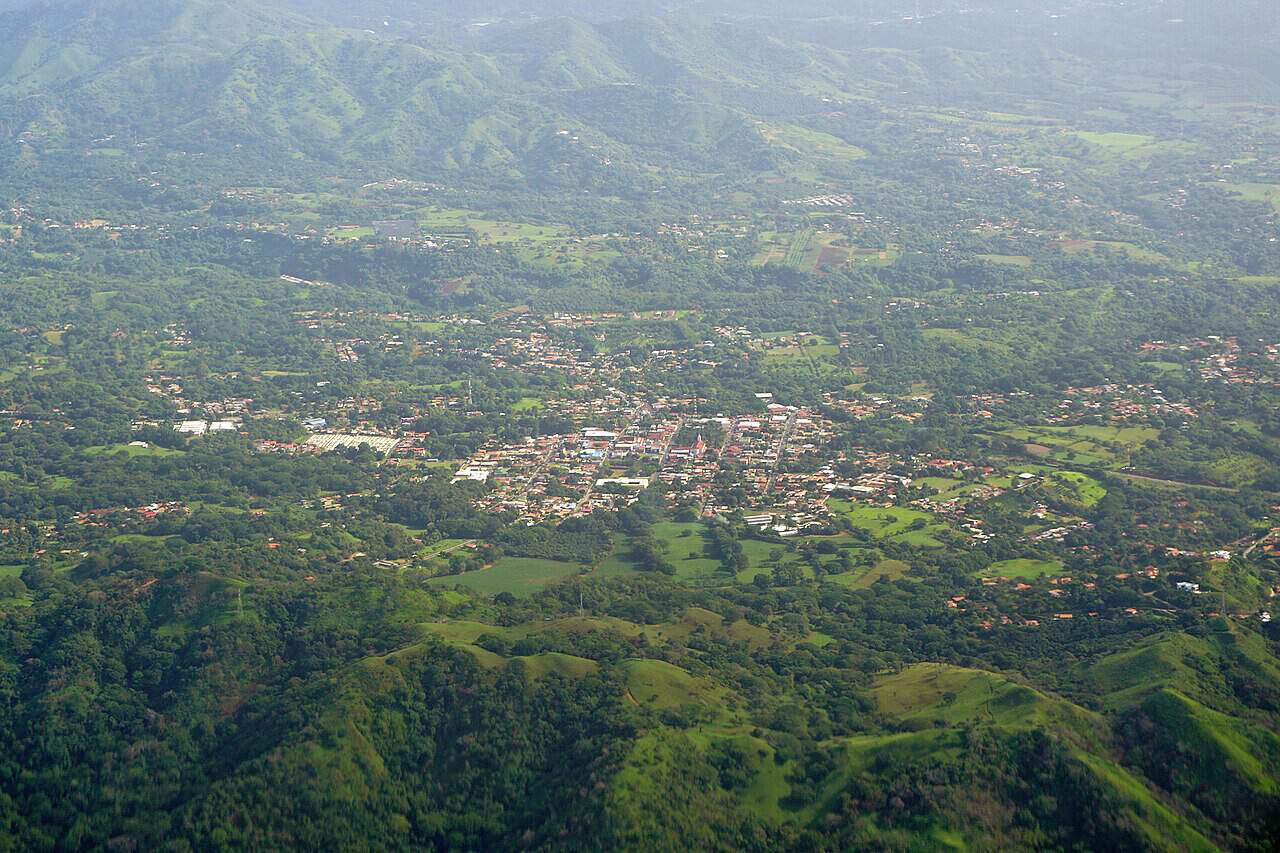
Four locations are singled out: our capital, San José; the mountain area in the Central Valley including Atenas, named for its year-round climate; and Santa Cruz in Guanacaste. Miami and Houston are each about three hours away by nonstop flight. The Central Valley towns have long anchored the country’s foreign retiree population, in part because rents and daily costs there run well below the beach markets while remaining close to San José’s hospitals and the airport.
The ranking arrives against a measurable shift in where Americans spend their later years. As of the last official count at the end of 2024, 712,000 Americans were receiving Social Security benefits abroad, a 20 percent increase over thirteen years. Countries on the list are described as generally regarding U.S. retirees with sufficient assets or retirement income as an economic asset rather than an immigration problem — a pattern Costa Rica has benefited from repeatedly in recent years.
Costa Rica shares the list with several countries competing for the same demographic. Panama, Mexico, Belize, Colombia and Uruguay all appear, as do Albania, Argentina, Austria, Canada, Cyprus, France, Greece, Ireland, Italy, Malaysia, Malta, Mauritius, Montenegro, Portugal, Slovenia, Spain, Thailand and Vietnam. Mauritius and Vietnam are first-time entries.
Climate risk reshaped parts of the list this year. Recommendations for Bordeaux, France, and several locations in Spain including the Costa del Sol were dropped over wildfire and heat exposure, though less than one percent of the land mass in each country had burned. The Philippines and Indonesia were excluded altogether after ranking first and second — the worst — among 193 countries on the latest World Risk Report compiled under United Nations auspices.
Costa Rica has appeared on comparable rankings for years, and the pensionado category that anchors its position has existed in national law since 2009. What changes between editions is the surrounding field: which countries are competing, what income thresholds they set, and how much weight compilers now assign to flood, fire and storm risk.





