
Here’s one of nature’s most magical plants: the night-blooming cereus cactus, or pitahaya in Spanish. If you like watching the splendor of the evening sky, night-blooming cereus makes a perfect companion.
These flowers bloom at night in spectacular, lotus-like blossoms that can be enormous, and their fragrance is unforgettable.
Hylocereus undatus, a native cactus of the tropical Americas, can be seen growing naturally in our wet and dry forests. It has also been distributed around the world in tropical zones as a world-class ornamental.
Night-blooming cereus can be easily identified by its triangular, climbing cactus stems, which branch and produce aerial roots that cling to walls, trees, palms, stumps or fence posts.
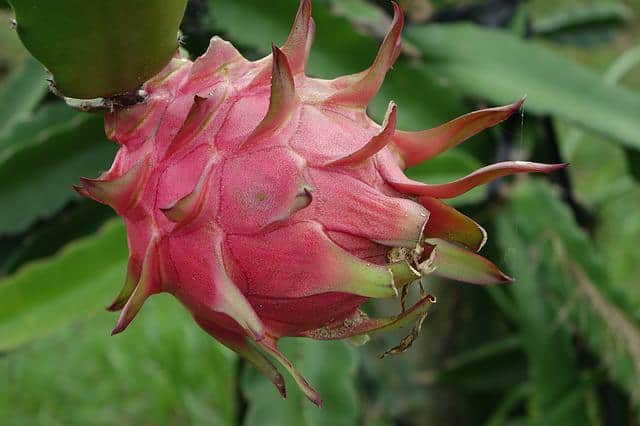
After the flowers bloom and fade, they produce red fruits up to 10 centimeters long that are both decorative and edible.
Here’s our favorite pitahaya ice cream recipe:
- Blend two or more pitahaya fruits with one glass of water and strain
- Add one cup milk and honey to taste
- Freeze in small cups
This plant also rates high on the ecofriendly list of ornamentals that require no watering or special care. It’s hardy to insects and plant diseases.
Night-blooming cereus is also hardy to salt breezes, making it ideal for beach lots. You’ll find it growing in most regions of the country.
Potted plants can be found in leading nurseries, or you can propagate plants from stem cuttings taken from a mother plant. I like to plant these 20-centimeter cuttings in a pot with pure sand.
I keep them in the greenhouse for six months before planting them outside in permanent spots; however, many folks here plant the cuttings directly in their permanent sites. If you choose the latter, be sure to keep the plants well weeded to prevent losses.
Night-blooming cereus needs something to climb on, so it’s important to situate the plant near a wall, post or tree so it can climb upwards. Many of my neighbors use old fence posts to show off their pitahayas.
This cactus likes full sun or shady areas around the home, and just about any soil is fine for these survival specialists. Watering them occasionally with compost tea is a good way to keep them growing vigorously and blooming a good part of the year in the rainy season.