

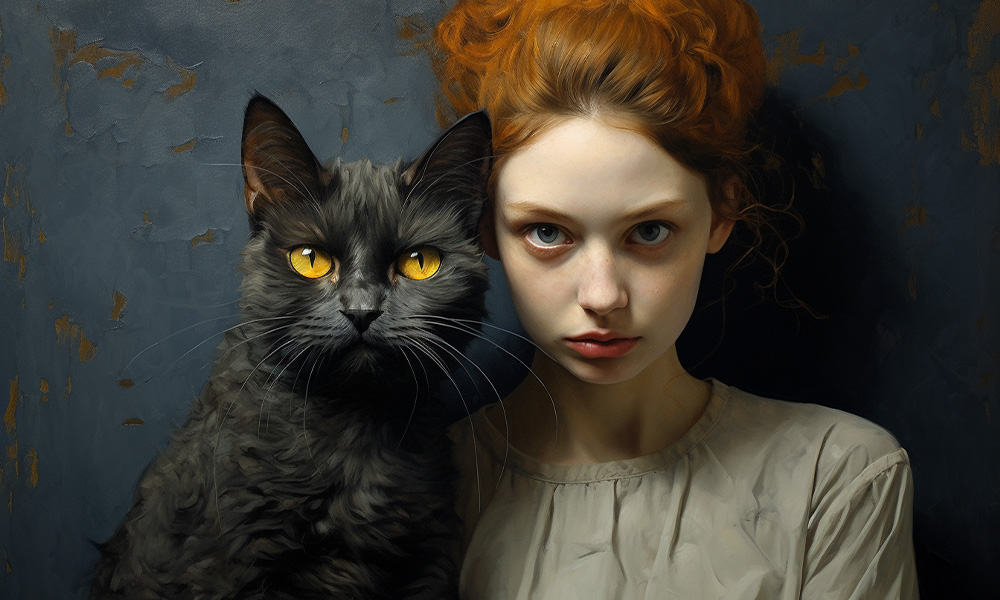
When I met Jim, he had been living at the Danish woman’s cabins in the jungle for eight months. This was a feat in itself because domestic cats didn’t survive very long there. In two years, the old woman had brought 23 cats from town to live on her “farm,” and there were four left. The snakes ate them.
The level of vigilance it takes for a domestic animal to survive in the wild is perhaps 20 times what it takes in a civilized setting. The struggle for space, particularly at night, is awesome in scope, spectacular in its setting.
The ground literally vibrates with creatures. Look through the tree branches and in every third tree you will see a pair of eyes looking down at you. In a single week I shared my cabin with scorpions, wasps, army ants, an anteater and various creatures I heard rattling the cellophane around my chocolate cookies. Before I could shine a light on the intruder, it was out the window and gone.
Just a few feet from my cabin on the Karen Mogenson reserve, near the southern tip of the Nicoya Peninsula, crawled 12-foot boa constrictors; coyotes, pumas, pacas and coatis strolled there. There were land crabs the color of bruises and iguanas the size of alligators that could shoot up a 30-foot tree in five seconds.
There were tarantulas the size of softballs that didn’t make a sound when they walked. Dozens of different kinds of mammals thought of the forest as theirs, and there were 700 species of insects that were not able to read a land title. In addition, a large tomcat from a neighboring farm pursued Jim at unexpected moments of the night and day.
From staying alert to so many threats to his existence, 10-month-old Jim was a nervous wreck. No wonder, then, he followed me everywhere I went. When I went to the beach, he crawled into a hollow of a log to stay cool; when I finished swimming he came prancing out. He hated waves and would cry when I took the beach route to my swimming cove; we had to walk the inland path.
Yet there was something of this unfettered meeting of jungle and sea that had gotten inside Jim. I couldn’t imagine him anywhere else. Town would have been too confining. What was truly his would not have blossomed. If constant vigilance had made him thin and reactionary, the profusion of life in the jungle had granted him a vitality and fullness I have never seen in a domestic animal.
For one thing, he didn’t walk; he pranced. Even in vigilance, his movements were never jerky, nor did they contain waste. When he was at rest on a shutter sill, he was totally at rest as if he were part of the house, had always been there, and would remain there until the earth convulsed and the sea washed over the land.
During walks he liked to show off his athletic ability by charging up trees, running along a branch and leaping to the next tree whence he would shinny down and stand with an arched back. There! What did I think of that?
The domestic came out in him then, a small desire to have his talents acknowledged, to win me over to his possibilities. Or maybe it was just a spurt of exuberance, a spontaneous celebration of the rites of man and half-beast in an alien landscape. Maybe he was happy to not be so alone, to have a little protection during his foraging for exciting odors.
Whatever, the wildness that knows real terror and real freedom had got into his eyes. One is not possible without the other.We pay a terrible price for a mattress and the assurance of a bowl of soup twice a day. We have lost the fullness of our voices and of living.
That’s why I would study this animal’s eyes whenever I got the chance and he wasn’t taking very much notice of me. He was a killer for sure. And at such moments studying him, I knew he killed the same way he would be killed, quickly and easily; bones and entrails, he would be a delicious dinner for some snake the width of a fire hose whose elegance I could not fathom.
But also in those eyes I saw everything else: his knowledge of his own aloneness and acceptance of it. That struck me as utterly heroic and a quality I seldom saw in humans. In his eyes I also saw his ferocity and generosity swinging on one hinge. I saw there his grace and cautiousness and fear, all self-contained without boxing him in. I could learn from him; there was little he could learn from me.
And his devotion and gallantry – for me, he redefined their limits.
He accompanied me once on my way into town to the edge of his territory. I thought he would return home; in any case, during a long day amidst many errands and too much conversation, I forgot about him. At midnight, 12 hours later, as I started down a rocky path, I heard his cry behind me. He had waited there for me and recognized my odor and footsteps. Though he hadn’t eaten or drunk water in that 12 hour, he thought to celebrate our reunion. He pranced in front of me, then curled his spine so that I could rub it.
He was the prince of half-domesticated cats, but he needed a human companion to occasionally remind him of this.What if the horse and the lion, the wasp and the trogon bird sense in us the intelligence and imagination of some higher being and, in their casual way, look to us for leadership? And if we continue to make the insane separation between what is man’s and what is nature’s, how can we respond to this role?
Author William Joyce





