

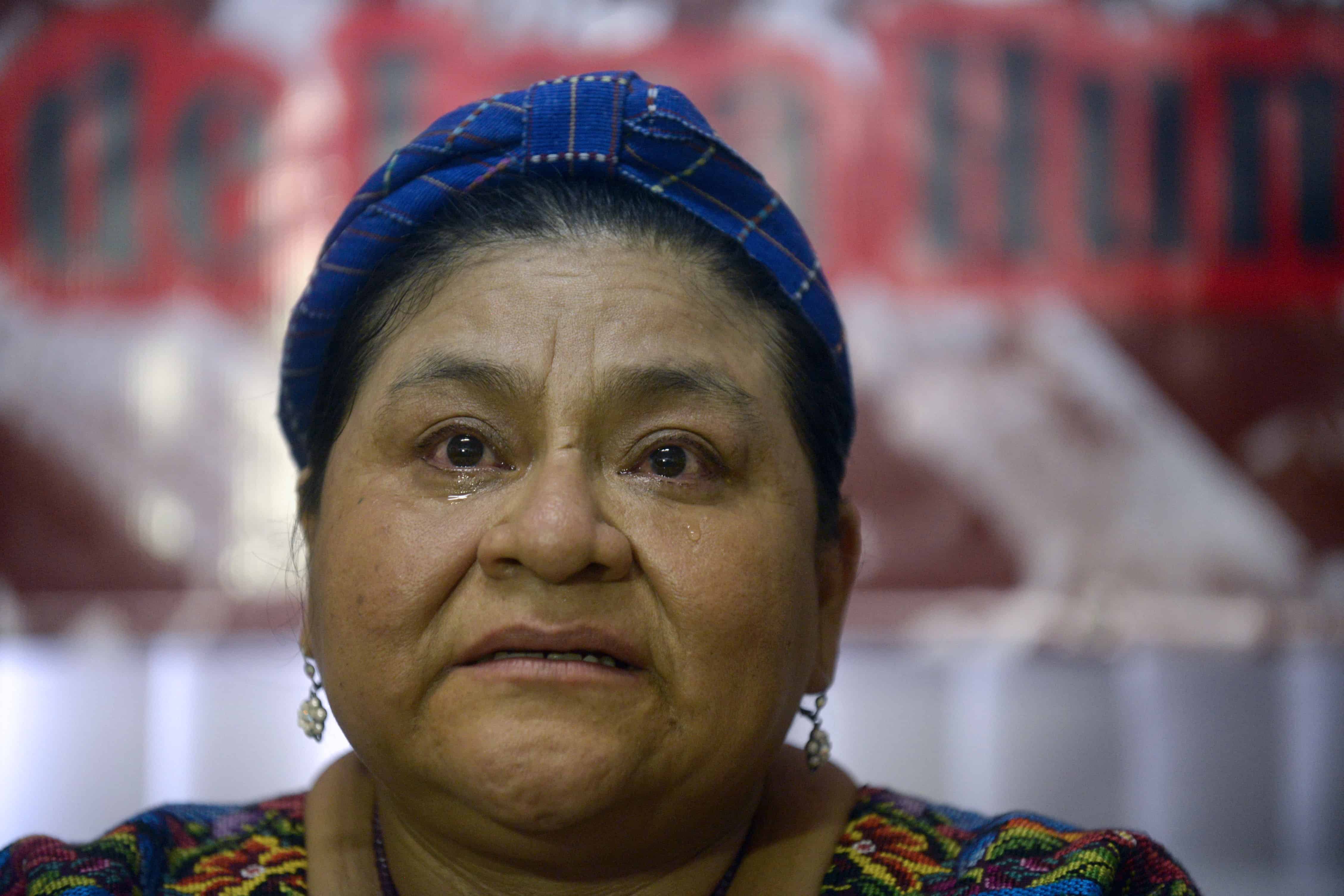
GUATEMALA CITY – The Nobel Peace Prize is no stranger to controversy. Since its inception more than 100 years ago, the $1.2 million accolade has sparked debate throughout the world. In 1973, Henry Kissinger was awarded the prize for his work to end the Vietnam War, but was later accused of war crimes and conducting a secret war in Cambodia.
When Yasser Arafat stepped forward to receive the award in 1994, his opponents called him an “unrepentant terrorist with a long legacy of promoting violence,” and the day before Wangari Maathai was due to collect the Nobel, a Kenyan newspaper claimed she said HIV/Aids was originally developed by the West to depopulate Africa.
When a former coffee-picking Mayan woman became the first Guatemalan to win the Nobel Peace Prize in 1992, a light was momentarily cast upon indigenous people throughout the world. However, shortly after, the decision once again became clouded in controversy.
Rigoberta Menchú Tum, 54, who was living in self-imposed exile at the time, was awarded the prize in recognition of her work to highlight the exploitation and persecution of her country’s indigenous Mayan people during Guatemala’s brutal 36-year civil war, in which more than 200,000 people lost their lives.
She had risen to fame a decade earlier for her ghostwritten autobiography, “I, Rigoberta Menchú,” but was criticized in 1999 when she was accused of fabricating and exaggerating parts of it.
Ever a controversial figure, Menchú has remained in the limelight for the past 20 years. But, despite what Guatemala’s non-indigenous population think of her, has she managed to improve the rights of the people she was fighting for?
With two unsuccessful presidential campaigns under her belt, where she failed on both occasions to garner more than 3 percent of the national vote, it may seem like her work has fallen short of bettering the lives of Guatemala’s indigenous people. But her success may be larger than the polls suggest.
“I’ve really enjoyed the last two elections,” Menchú told The Tico Times in a recent conversation. “I haven’t reached 30 percent of the vote, but I’ve reached 95 percent of the country.”
In 2007, the Mayan activist became the first indigenous person to run for Guatemala’s top political post, and four years later she founded the country’s first Mayan political party, WINAQ. “We were never interested in winning the elections. You can’t win without money, and no multimillionaire would support us,” she said.
Recounting an anecdote from her last campaign, she described addressing a rural town when an opposition party’s bus drove by announcing it was handing out packets of rice. Her audience disappeared. “Elections here are a carnival, they’re not democratic. Parties use poverty, giving the poor hope by handing them food.”
Despite the irony that the majority of the people she campaigns for do not vote for her, Menchú said her political career has been a success. “I’ve opened a door to Mayans and to women. Not only do we now have a party, but we also have one person in Congress,” she said, referring to Mayan lawyer Amílcar Pop. But it’s not all politics.
In the same year she won the Nobel Peace Prize, the indigenous activist founded the Rigoberta Menchú Tum Foundation, dedicated to the pursuit of peace and the promotion of indigenous people’s rights.
In the past two decades the organization has campaigned for justice for the victims of the war: exhuming mass graves, legislating new crimes, fighting for usurped ancestral lands to be returned to Mayan communities and legally documenting some 36,000 women. Menchú even travelled to Spain to bring genocide cases against Guatemala’s war criminals.
The foundation recently implemented a multicultural education program at one of the country’s universities aimed at training students from rural communities to become teachers.
While she continues with her original cause, the plight of the people she represented in Oslo 20 years ago – indigenous people – remain on the bottom rung of Guatemala’s socioeconomic ladder. They account for the majority of the country’s population, but are poorly educated and poorly provided for, and their plight is unlikely to change through Menchú’s work alone.





