

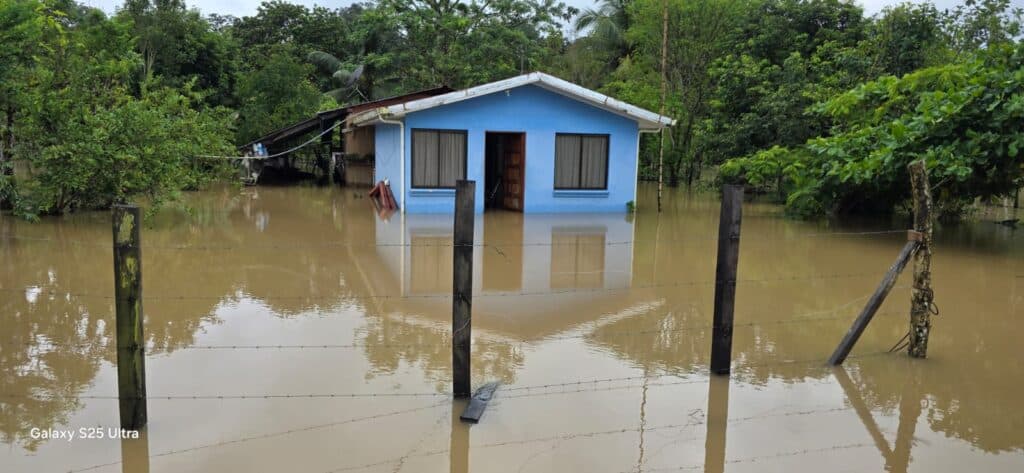
More than 400 homes were flooded across Costa Rica over the weekend as Tropical Wave 47 brought heavy rain to several parts of the country, forcing some residents into temporary shelters and leaving authorities concerned about saturated ground and the possibility of additional flooding and landslides.
Some of the most significant impacts were reported in Fraijanes, Sarapiquí, Pococí, Guatuso and Liberia, according to the National Emergency Commission (CNE). Two temporary shelters were opened following the flooding. Four people from the community of Palenque del Sol were staying at a shelter in Guatuso, while two people from Buenos Aires in Liberia were moved to another shelter after the Liberia River overflowed.
Emergency crews and local authorities spent yesterday clearing drainage systems and inspecting homes, bridges and roads for damage. Humanitarian assistance was also being distributed to affected families in Guatuso and Fraijanes. The flooding followed particularly heavy rainfall on Saturday as Tropical Wave 47 crossed Costa Rica.
The National Meteorological Institute (IMN) recorded rainfall totals generally ranging between 30 and 60 millimeters, or about 1.2 to 2.4 inches, in several areas. Laguna de Fraijanes recorded 125 millimeters, nearly 5 inches, during the event. The tropical wave moved west into the Pacific Ocean Saturday night, ending its direct influence on Costa Rica, but unstable atmospheric conditions remained behind it.
Of particular concern is the amount of water already in the ground following the weekend storms. The CNE said soil saturation reached as high as 100% across broad sections of the Central Valley and exceeded 80% in other areas. That means additional heavy rain could quickly produce new flooding, overflowing streams or landslides even though Tropical Wave 47 itself has already moved away.
Residents living near rivers, streams and steep slopes have been urged to remain alert to changing conditions and follow instructions from local emergency officials. The CNE has also advised people who need to travel by road during periods of heavy rain to make their trips during daylight hours when possible and avoid nighttime travel.
The strength of the weekend flooding was visible in several communities. In Río Piedras de Tilarán, floodwater turned a roadway into a fast-moving stream strong enough to carry away an unoccupied car. Flooding was also reported in San Juan de Dios de Desamparados after drainage systems were overwhelmed.
For anyone driving, the weekend’s weather does not mean roads throughout Costa Rica are closed. However, conditions can change quickly during the rainy season, particularly on mountain routes and in areas susceptible to landslides or river flooding. Anyone going through affected areas should check current road conditions and weather information before leaving rather than relying on conditions reported earlier in the day.
September and October are typically among the wettest months of Costa Rica’s Pacific and Central Valley rainy season, when already saturated soil can make successive rounds of heavy rainfall more disruptive. Authorities continue assessing damage to homes, roads and bridges in the areas affected by the weekend storms.





