

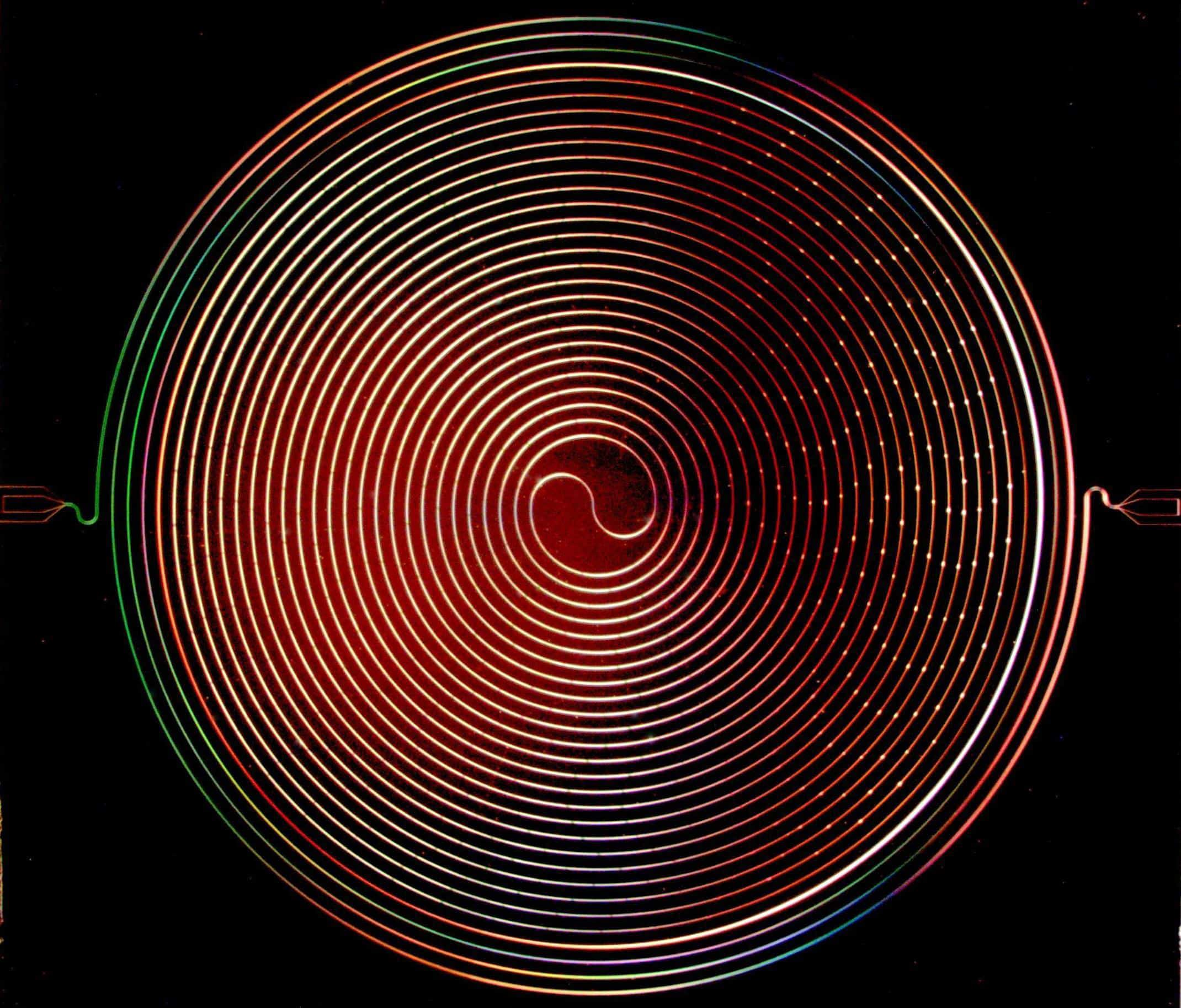
Ever since the 1980s, researchers have been working on the development of a quantum computer that would be exponentially more powerful than any of the digital computers that exist today. And now Google, in collaboration with NASA, says it has a quantum computer – the D-Wave 2X – that works.
Google claims the D-Wave 2X is 100 million times as fast as any of today’s machines. As a result, this quantum computer could theoretically complete calculations within seconds to a problem that might take a digital computer 10,000 years to calculate. That’s particularly important, given the difficult tasks that today’s computers are called upon to complete and the staggering amount of data they are called upon to process.
On the surface, the D-Wave 2X represents a quantum leap not just for computing but also for the field of artificial intelligence. In fact, Google refers to its work being carried out at NASA’s Ames Research Center as “quantum artificial intelligence.” That’s because problems that are too hard or too complex for today’s machines could be solved almost instantaneously in the future.
Because of the specifics of how Google’s quantum computer works – a process known as quantum annealing – the immediate applications for Google’s quantum computer are a class of A.I. problems generally referred to as optimization problems. Imagine NASA being able to use quantum computers to optimize the flight trajectories of interstellar space missions, FedEx being able to optimize its delivery fleet of trucks and planes, an airport being able to optimize its air-traffic control grid, the military being able to crack any encryption code, or a Big Pharma company being able to optimize its search for a breakthrough new drug.
You get the idea – the new Google quantum computer could potentially be worth millions, if not billions, to certain types of companies or government agencies.
Moreover, consumers might also benefit from the development of quantum artificial intelligence. In a promotional video for its Quantum Artificial Intelligence Lab, Google suggests that travel might be one type of consumer optimization problem worth pursuing. Imagine planning a trip to Europe, selecting which cities you’d like to visit, telling a computer how much you’d like to pay, and then having Google optimize the perfect trip itinerary for you.
There’s just one little problem with all this: Quantum computers are notoriously difficult beasts to tame. With quantum computers, you’re dealing with quantum bits (“qubits”), not digital bits. Unlike digital bits, which are binary (either 1 or 0), a qubit could be either – or both at the same time. That means you have to deal with all the quirky properties of particles predicted by quantum mechanics in order to program quantum computers correctly.
Oh, and each 10-foot-high D-Wave computer also needs to be super-chilled to a temperature that’s 150 times as cold as that of deep space, making them pretty much inaccessible to anyone who hasn’t been stockpiling liquid helium.
And that’s where the A.I. contest comes into play. IBM, for instance, has a digital supercomputer – IBM Watson – that also wants to play the A.I. optimization game. IBM Watson also wants to optimize the research and development process for pharmaceutical researchers to find new cures. And IBM Watson wants to play in the consumer realm, where it’s already at work optimizing the training regimens of top-flight athletes.
The other competitors
And it’s not just Google D-Wave vs. IBM Watson in some ultimate cage match to see which is better and faster at optimizing solutions to hard problems; it’s all the other classes of unconventional computers out there. Consider, for example, the new memcomputer, which mimics the way the human brain works, storing and processing information simultaneously. There are plenty of other unconventional computers, too, including some that are biological. And other research labs and universities –such as at the University of Maryland or Yale University, which recently launched the Yale Quantum Institute – are working on their own quantum computers.
What all this points to is that traditional digital computing (what Google refers to as “classical computing”) is on the way out. We’re now looking for a new heir apparent, and Google hopes to anoint D-Wave as the rightful heir. With its big announcement that quantum computing can work, Google hopes to show that they’ve figured out how to make practical quantum computers for the commercial market.
Anytime you claim to have created something that’s 100 million times as fast as anything else that’s ever existed, though, you’re bound to run up against skeptics. Indeed, there are plenty of skeptics for the D-Wave. One big quibble about the quantum qubits, for example, is that the test results were not nearly as impressive as Google claims they were. That’s because the digital computer trying to defeat the quantum computer was forced to compete under Google’s house rules, which meant that it had to use the same algorithm that the quantum computer used – and that algorithm had already been carefully sculpted to the peculiarities of the quantum world. Imagine running a race against a competitor in shoes that are too big, pants that keep falling down, and on a course where your competitor can run across and through the track – not just around it.
The way forward
Going forward, it’s possible to think of two vastly different scenarios for quantum computing. The first scenario is that Google uses these D-Wave quantum computers to corner the market in artificial intelligence. Just as once nobody could have predicted that everyone would own his own personal computer one day, maybe people will all own their own quantum computer one day.
The other scenario is that the world moves on to other forms of computing, perhaps using components that are easier to program than qubits. Maybe quantum computers are just too quirky, too hard to program, to solve the types of problems most people want to solve. Quantum computers may be able to optimize an entire nation’s air-traffic control grid or fly a spacecraft to Mars, but what if you just want to check your phone to know what to wear to work tomorrow?
Either way, the future of artificial intelligence will never be the same. Thanks to exponential gains in computing power on the horizon, it’s becoming increasingly clear that today’s digital computers have the potential to become obsolete. Let’s just hope that tomorrow’s super-powerful quantum computers don’t become transcendent and try to take over the world.
© 2015, The Washington Post





