

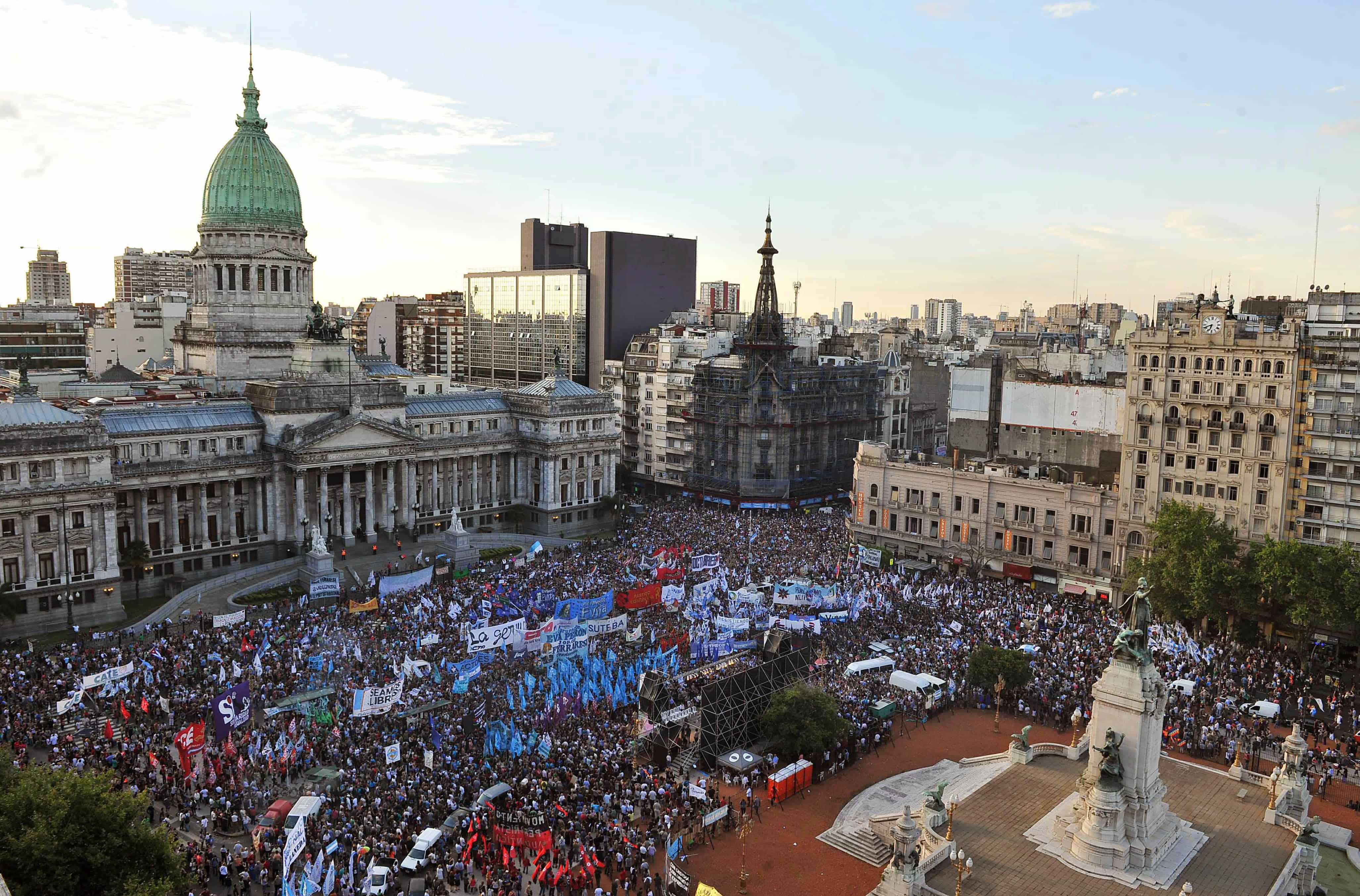
MEXICO CITY – Demagogues and populists like U.S. presidential candidate Donald Trump and French National Front leader Marine Le Pen are setting Western politics alight. But in Latin America, populist leaders are losing support: Argentina’s Cristina Kirchner has just been voted out of office; in Venezuela, President Nicolás Maduro’s Socialists suffered a resounding defeat in midterm elections; and Brazilian President Dilma Rousseff now faces the prospect of impeachment. Many are speculating that the “pink tide” of populism, which has pushed the region to the left over the last 15 years, now is turning. But is it really populism that these countries are rejecting?
In fact, citizens seem to be driven less by ideology than by their frustration with burgeoning economic challenges, which have been caused largely by a situation over which their leaders have little control: the end of the commodity boom that began early this century. When that boom, which was sustained by China’s seemingly insatiable appetite for raw minerals and food, came to an end in 2012, sharply falling prices devastated Latin America’s exporters.
Brazil, despite its large domestic market and strong industrial sector, took a serious hit. The situation was even worse for Argentina and Venezuela, both of which depend heavily on commodity exports – mainly soybeans and oil – not only to finance imports, but also as their main source of government revenue. Considering the enormous social programs to which these countries’ governments were committed, it did not take long for the price collapse to take its toll. Venezuela kept spending until the money simply ran out. Argentina’s growing deficits led to inflation, devaluation and recession.
Of course, regimes with different ideological inclinations might have had different spending habits, potentially cushioning the blow from the commodity-price collapse. In Brazil, in particular, spending was out of control, even if Rousseff’s government managed to disguise it for a while. (It is, incidentally, the methods used to disguise it that now have Rousseff in trouble.)
Under Rousseff, inflation mounted and the real’s exchange rate plunged; large “white elephant” infrastructure projects were launched and then abandoned; and the effort to reduce interest rates artificially led to a consumer credit bubble. By contrast, Rousseff’s predecessor, Luiz Inácio “Lula” da Silva – a leftist icon from her same Workers’ Party – did largely adhere to macroeconomic orthodoxy, even as he expanded social-support programs.
In any case, the bottom line is that, as a hostile global environment brings to the fore their leaders’ economic mismanagement, Latin American voters are becoming increasingly disenchanted. They are not necessarily rejecting left-wing leaders; rather, they are rejecting incumbents of all stripes. The majority just happen to be of the left.
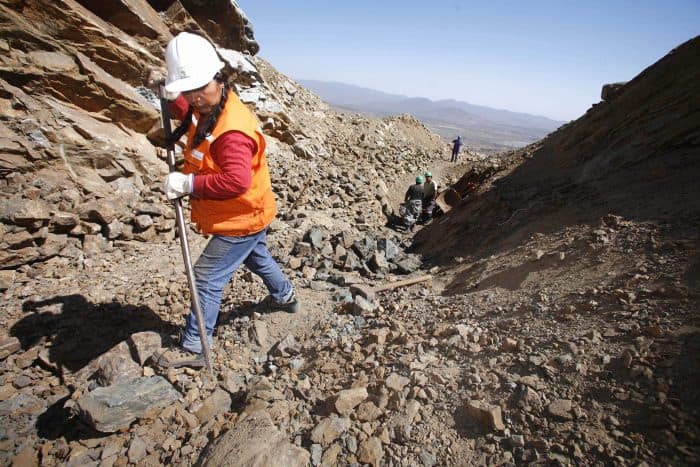
Consider Chile and Peru, both of which depend heavily on copper exports. With the price of copper having dropped precipitously, both countries’ leaders are likely to suffer electorally. The fact that Peru’s president, Ollanta Humala, is more moderate than Chile’s Michelle Bachelet will not really matter. Likewise, falling banana and oil prices will create the same political challenges for the leftist firebrand Rafael Correa in Ecuador, as will falling coffee, oil and coal prices for Colombia’s centrist president, Juan Manuel Santos.
That said, there is a certain sense of the chickens coming home to roost for Latin America’s left-wing leaders, who have had a good run since Venezuela’s late president, Hugo Chávez, took office in 1999. Some of them – including Lula in Brazil, as well as successive leaders in Chile and Uruguay – governed sensibly and responsibly. Others were too focused on ideological rhetoric to do much good. But, regardless of their performance, these parties continued to win elections (some fairer than others), based on the view that they were leading the way toward economic progress. As has lately become clear, that progress stemmed not from “realistic” governance, but from favorable international economic conditions.
Now that the backlash against incumbent governments has begun, however, ideological debates are certain to intensify. Leftist governments like those in Argentina and Venezuela have long adopted polarizing policies, especially on issues such as violence, solidarity with pariah countries (Cuba for Venezuela; Iran for Argentina), and corruption – policies that may now be challenged or reversed by new leaders.
The Venezuelan case is especially intriguing. The opposition, despite holding a majority in the National Assembly, knows that it must negotiate with the executive branch, which is still led by Maduro. But it cannot compromise across the board.
One of the key challenges the opposition faces is what to do about the massive transfers of wealth to Cuba that began in 2004. Through opaque mechanisms like subsidized oil prices and overpayment of Cuban doctors, security personnel, and teachers, Venezuela has been bailing out Cuba’s decrepit economy for more than a decade. Although the opposition has long vowed to cut off aid, the last thing that the United States wants to see today is a Cuban collapse, as immigration from the island has already doubled in the last year.
In this context, it seems possible that the U.S. will end up pushing Venezuela’s opposition not to cut off oil to Cuba, even as it pressures the government to free political prisoners and pursue fairer and more transparent governance. Meanwhile, Maduro’s allies in Latin America will begin losing or leaving power, as the left relives the region’s centuries-old drama: commodity prices rise and fall, bringing governments with them.
Jorge G. Castañeda, former Foreign Minister of Mexico (2000-2003), is Professor of Politics and Latin American and Caribbean Studies at New York University.
© 2015, Project Syndicate, www.project-syndicate.org





