

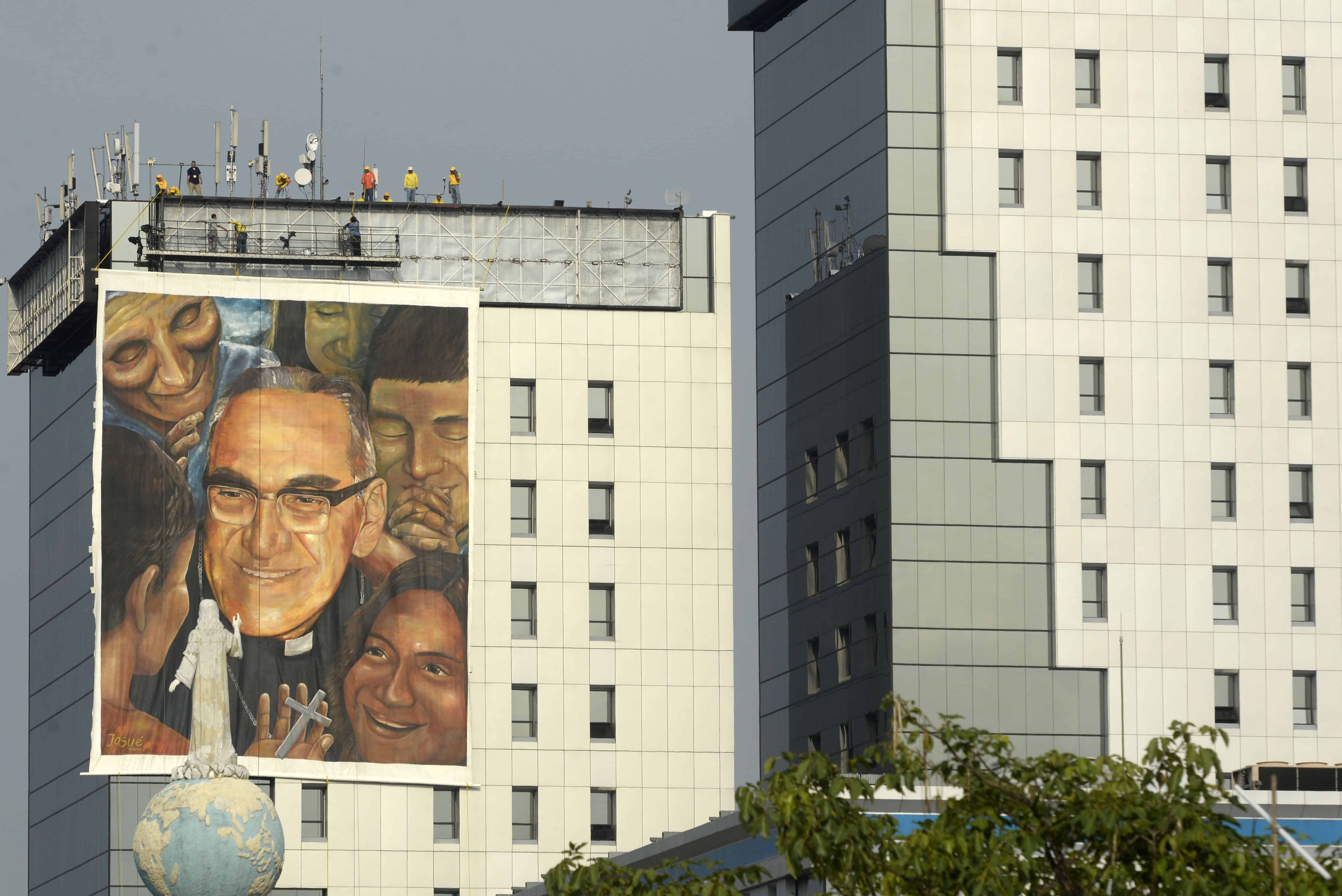
The murder of San Salvador Bishop Óscar Arnulfo Romero, devoted to a church with a preferential option for the poor, will be beatified Saturday during a public ceremony in his country.
The following chronology marks the most significant moments in Romero’s life:
August 15, 1917: Óscar Arnulfo Romero is born in Ciudad Barrios, department of San Miguel, 156 kilometers northwest of San Salvador.
April 4, 1942: Romero is ordained in Rome
January 11, 1944: Romero celebrates his first mass in his native Ciudad Barrios. He begins his more than 20-year pastoral activity, in the department of San Miguel.
June 8, 1967: The El Salvador Bishops’ Conference appoints Romero as its Secretary. He held the post until 1974.
April 21, 1970: Romero is notified by the Apostolic Nunciature he has been appointed as Auxiliary Bishop of San Salvador.
October 15, 1974: Romero is appointed Bishop of Santiago de María, department of Usulután, 112 kilometers east of San Salvador. He takes office in December.
February 3, 1977: He is appointed Archbishop of San Salvador. He takes office February 22.
March 12, 1977: Romero’s colleague and friend, Jesuit priest Rutilio Grande, is murdered.
February 14, 1978: Georgetown University awards Romero the degree of doctor honoris causa.
November 23, 1978: The British Parliament nominates him for the Nobel Peace Prize, but Mother Teresa of Calcutta wins that year.
January 30, 1980: Romero visits John Paul II in the Vatican.
February 2, 1980: Belgium’s University of Leuven awards him the degree of doctor honoris causa for defending human rights.
February 17, 1980: Archbishop Romero admits having sent United States President Jimmy Carter a letter asking him to stop military aid to El Salvador.
February 18, 1980: With the aim of silencing Romero, a powerful bomb destroys the Catholic radio station YSAX.
March 23, 1980: In his last Sunday homily, Romero issues an impassioned call to policemen and members of the military: “Any order to kill given by man must be subordinate to God’s law, which says ‘don’t kill’ (…) no soldier is obliged to obey an order that goes against God’s law (…) so, in God’s name, and in the name of this suffering community, whose laments rise up to heaven, each day more tumultuous, I plead with you, I beg of you, I order you in the name of God: stop the repression.”
March 24, 1980: Archbishop Romero is murdered by a sniper while celebrating mass in a chapel at the cancer hospital La Divina Providencia. His death helped spark a civil war that lasted 12 years (1980-1992) and left 75,000 dead.
March 30, 1980: Romero is hurriedly buried during a ceremony presided over by Mexican Cardinal Ernesto Corripio Ahumada, who could not finish the mass because military forces opened fire against the mourners.
March 24, 1990: San Salvador Archbishop Arturo Rivera begins the diocesan procedure to canonize Romero. Rafael Urrutia is appointed as the local postulator.
March 15, 1993: A UN Truth Commission concludes that army major and rightwing leader Roberto D’Aubuisson, who died of cancer in 1992, gave the order to murder the archbishop.
November 1, 1996: The diocesan procedure for canonization ends and the material on Romero’s life is sent to the Holy Congregation for the Causes of Saints in Rome. Italy’s Monsignor Vincenzo Paglia is appointed as postulator.
July 4, 1997: Rome decrees Romero’s cause as valid.
April 9, 2006: Cardinal José Saravia Martins, the prefect of the Congregation for the Doctrine of the Faith, states the need to determine whether the motive for Romero’s murder was religious or political.
March 24, 2010: El Salvador’s leftist President Mauricio Funes asks for forgiveness in the name of the government for the assassination, and declares Romero “the nation’s spiritual guide.”
April 21, 2013: The postulator of Romero’s cause, Vincenzo Paglia, announces that Pope Francis unblocked the beatification process.
February 3, 2015: Pope Francis signs the beatification decree recognizing Romero as a martyr of the church who was murdered “for hatred of the faith.”
May 23, 2015: The date set for Romero’s beatification in San Salvador.





