CARTAGO – The effects of drier rainy seasons in Costa Rica have been evident mostly in coastal areas in Guanacaste and Puntarenas, or in the higher altitude regions of Heredia. But the province of Cartago, east of the Central Valley, also is suffering the consequences of drier-than-normal weather patterns.
Farms and tourist areas near the country’s colonial capital, located 22 kilometers east of San José, have been hit hard by water scarcity, including diminished reserves that traditionally supply enough water for the entire province and more than half a million residents in eastern San José.
Currently 554,000 residents living east of the capital face daily water rationing for up to 12 hours a day. Water reserves in Cartago are 20 percent below normal levels, mostly due to a lack of rainfall during the past rainy season from May to December 2013.
This decrease in rainfall has dried up rivers and prevented storage tanks in the canton of La Unión from fully replenishing, the Costa Rican Water and Sewer Institute reported. Rationing in the affected communities likely will continue through May, the AyA said last month.
Records from the National Meteorological Institute (IMN) show that annual rainfall levels in Cartago have severely decreased since 2010, from 1,822 millimeters that year to 780 mm in 2013.
The effects of an irregular rainy season this year in Cartago could have dire consequences for a significant number of Costa Rican residents.
Farming
Agriculture is one of Cartago’s main productive activities, and farmers in the north of the province are the country’s top potato producers, supplying 80 percent of all potatoes consumed in Costa Rica, according to the Agriculture and Livestock Ministry (MAG).
The region also is the largest producer of onions in Costa Rica, covering some 1,400 hectares, while hundreds of other farmers also grow carrots, beets, yucca, flowers and other crops.
Following the IMN’s forecast that the upcoming rainy season could be affected by an El Niño weather phenomenon, Agriculture Vice Minister Xinia Chaves last month met with Gerardo Aparicio, president of the Horticultural Association of Irazú, which groups almost 1,000 producers whose farmlands north of Cartago account for 2,800 hectares of potato crops, and a local group of farmers.
At the meeting, farmers said they are struggling due to the ongoing lack of rainfall in the region, and MAG officials agreed to study the option of declaring a state of emergency in the area to qualify farmers for government assistance.
“Depending on the possible effects of [El Niño], the emergency declaration could be issued in December, to allow us to assist farmers as they face the next dry season in 2015,” MAG’s Director of National Programs and Agricultural Planning Erick Quirós told The Tico Times.
Tourism and habitats
While the southeastern region of Cartago also relies on agricultural, in addition it is home to the area’s main tourist attractions including recreational parks, national parks and biological reserves.
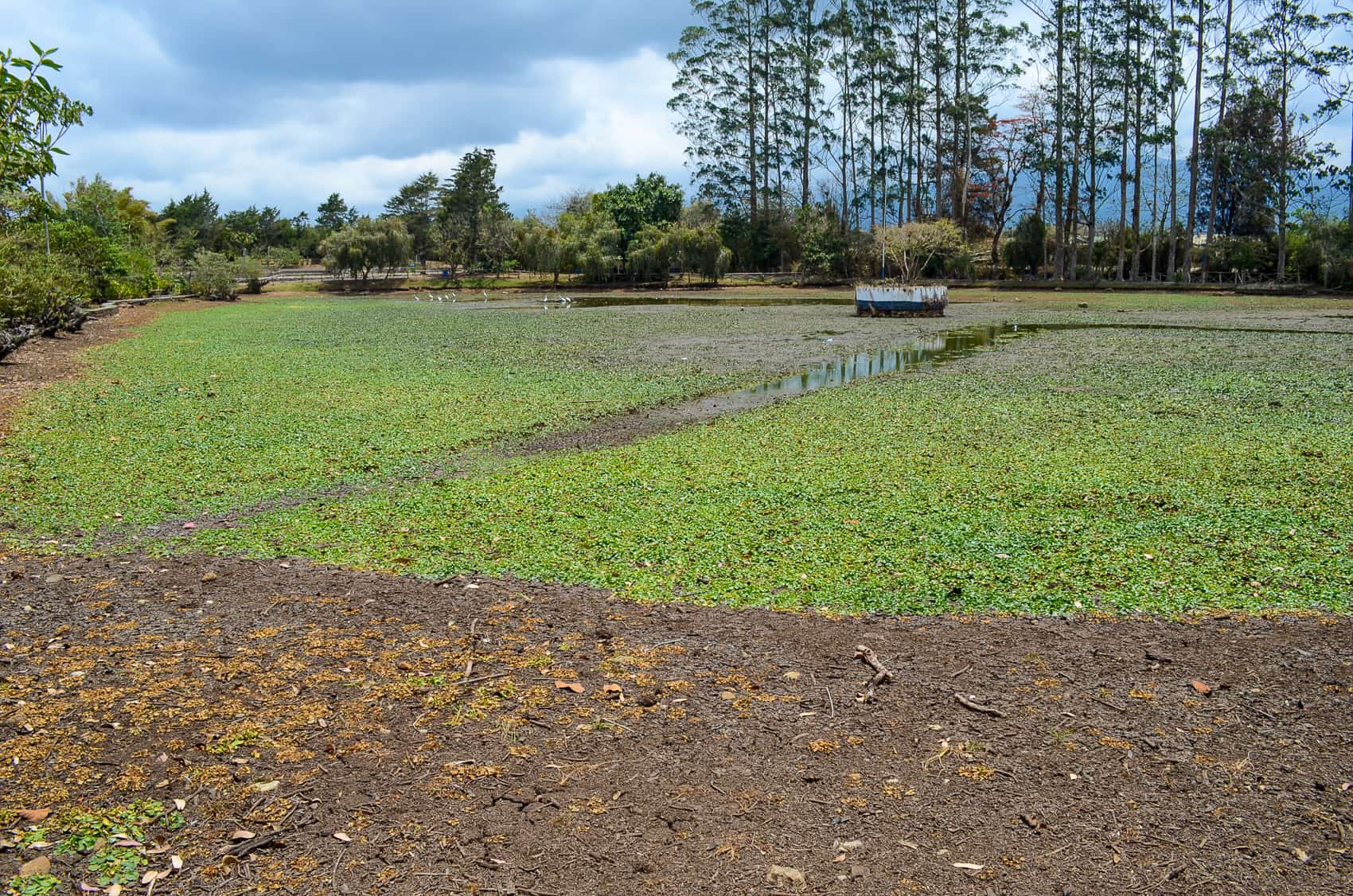
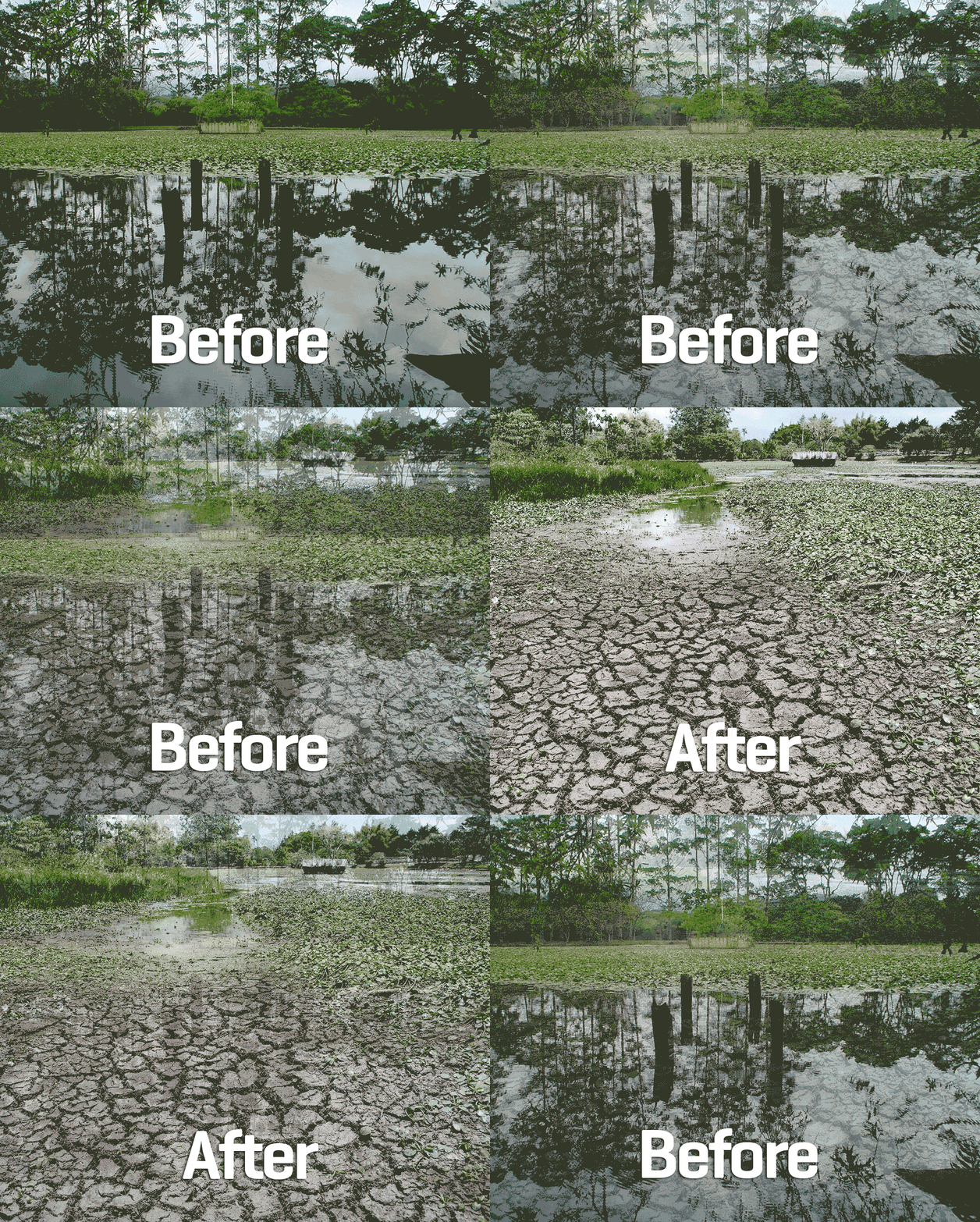
La Laguna de Doña Ana, a local lake, is the main attraction of La Expresión Park, which covers eight hectares a few kilometers southeast of downtown Cartago, in the canton of Paraíso.
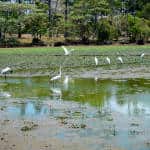
The park also is as a refuge for wildlife, and the lake, a common destination for migratory birds, began drying up in 2013.
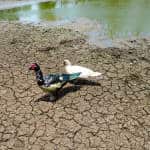
Only a small pond exists today due to an increase in temperatures and a lack of rainfall. Another cause, park administrator José Brenes said, is “a proliferation of housing projects around the park that compete for the area’s water resources.”
Recommended: Climate change, coral reefs, deforestation and dengue
The lake’s main water supply are aquifers that no longer produce enough to replenish it.
According to Brenes, several hectares of housing projects are now located in former pastures and forested areas that once surrounded an entrance road to the park only a couple decades ago.
City Sewer Chief Jaime Astúa denied that the growth of residential areas near the park is affecting the water supply.
“We have drilled several wells to provide water for residential projects, but the well that feeds the lake was not affected. The problem is that the pump they use to draw water to the lake is broken,” he said.
Brenes disagreed, saying the pump is in good condition and the well is simply empty.
“We turn the pump on every day, but nothing comes up from that well. It’s dry,” Brenes said.
Last year, the lake dried up completely, killing all the fish, crabs, crayfish and other lake species, Brenes said.
The last rainy season helped replenish the lake slightly, but by February any gains were lost as it turned dry once more.
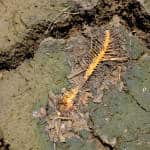
A few birds can still be spotted at what is now a pond, but muddy skeletons of fish and other species are the only visible signs of the life that previously existed here.
“We’re awaiting the start of the next rainy season, and it remains to be seen if this year’s rains will replenish the lake or not,” Brenes said.
IMN forecasts for this year show a 10-15 percent drop in average rainfall across Costa Rica, and the same is expected in Cartago, IMN Forecasts Director Werner Stoltz said.
Precipitation during the next rainy season will depend on El Niño. “If El Niño hits the country, its first effects will happen in July and continue through the end of the year,” Stoltz said.
Securing the water supply
Responding to the crisis, a new joint public-private initiative to secure the water supply in the Greater Metropolitan Area is currently under discussion.
The plan was presented on April 2 by officials from the Environment Ministry (MINAE) and members of the Foundation for the Development of the Central Volcanic Range. It also will have the support of the Costa Rica-U.S.A. Foundation for Cooperation.
The project, called AGUA TICA, outlines a number of protective regulations for watersheds that supply the Greater Metropolitan Area, or GAM, MINAE’s Vice Minister of Waters José Lino Chaves said last week.
The initiative is still in its planning stage, but among its proposals are a series of fundraising strategies by organizations and businesses that would supplement public funds to finance water conservation projects in the GAM.