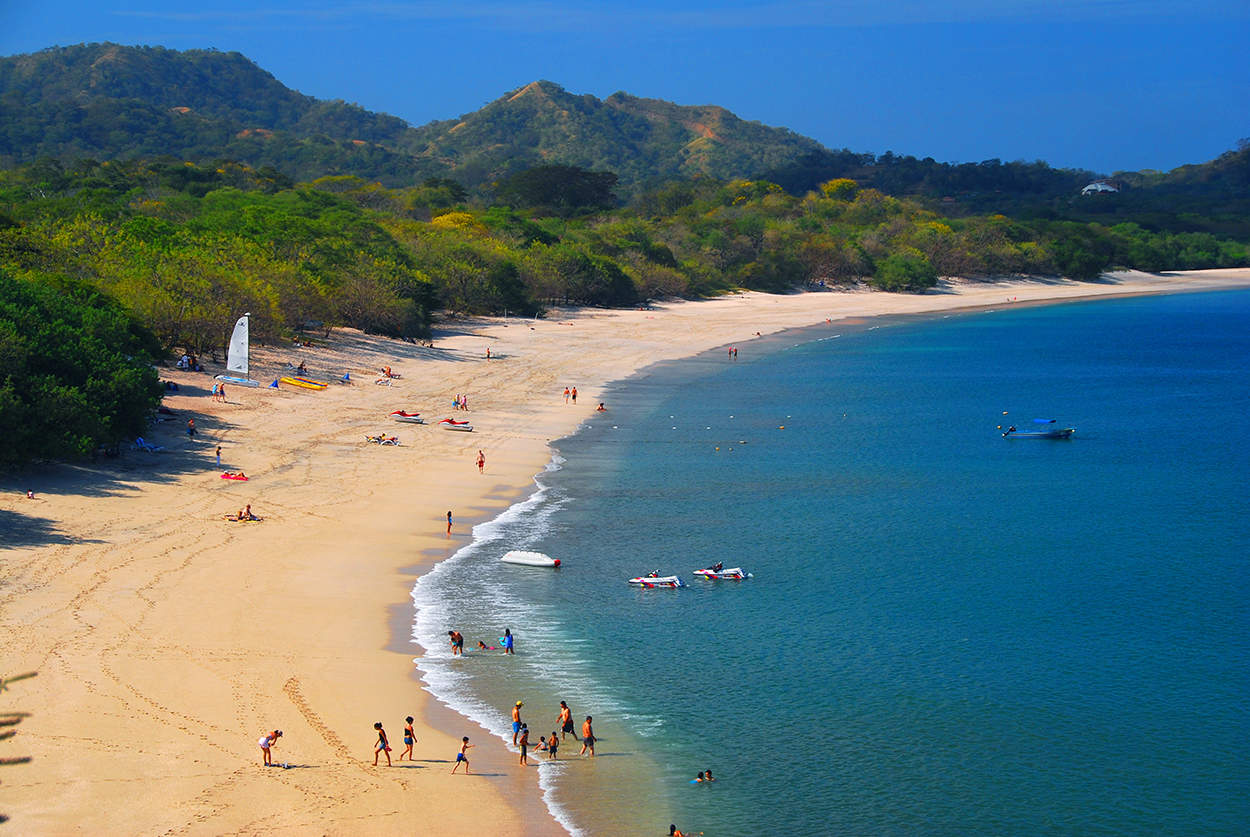
Guanacaste’s wealth goes beyond its beautiful beaches and booming development. The northwestern province is one of Costa Rica’s biggest cultural storehouses in food, traditions and fiestas. Food is a big part of the area’s traditions. Guanacastecos are distinguished for their arroz de maíz (corn rice), rosquillas (small, ring-shaped bread), tamal asado (a type of corn bread), cajetas (a type of sweet), pozole (a drink made of purple corn), huge tortillas and other dishes, some of which are cooked in clay ovens.
Among Guanacaste’s oral traditions are the bomba and retahila. Bombas are fourline poems similar to limericks, often earthy and always amusing. Every Tico knows at least one.When playing the well-known folk song “Punto Guanacasteco” at festivals, someone might stop the music by shouting “¡Bomba!” and then proceed to recite one. At civic events, bombas may be made up to honor a person.
Aurelia Trejos, singer of Cantares folk group, explains that retahilas are a succession of couplets, and are also known as ensalada (salad). Some have meaning and others don’t. If they are meaningless, it is said they are “sin ton ni son” (without reason or sound).
In some areas, retahilas and bombas can be improvised, according to Trejos, but those from Guanacaste are already set and written.
Guanacaste’s dances are joyful expressions of folk tradition. Couples dance to marimba tunes and songs that tell a story. The steps are like little jumps. Women resemble butterflies with the movement of their long skirts.
Traditional Costa Rican dress for women consists of long multicolored skirts and white blouses with oval collars. Men usually wear white hats, long-sleeve-white-shirts and white pants, set off by colorful sashes.
Guanacaste folk-tradition expert Nago Torres explains that the weepeepia shout commonly uttered by cowboys at bullfights, rodeos and similar events has become a spontaneous expression of joy that is uniquely Guanacasteco.
“It’s a genuine expression from the heart that says ‘Here I am! I have arrived!’” he explains, adding that the shout’s origins stem from folk dancers that during performances used to cry “¡Agua de pipa!” (“Coconut water!”), which eventually evolved to “¡Weepeepia!”
Patron saint’s days in Guanacaste are celebrated with masses and processions with the saint of the district, as well as cattle exhibits, topes (horse parades) and bull riding. One of the biggest fiestas is that of San Jorge (Saint George), the patron saint of Abangares, on April 23. People from approximately 15 towns in the district bring their saints to Abangares, where a procession is held with the invited saints, led by the archbishop and the figure of Saint George.
July 25 is a national holiday that recognizes the day in 1824 when the inhabitants of Nicoya voted to become part of Costa Rica instead of Nicaragua. The annexation of Nicoya is also known as the annexation of Guanacaste, because the NicoyaPeninsula was placed in the province of Guanacaste after it was annexed. Guanacaste Annexation Day is celebrated most in the Nicoya and Liberia districts, with concerts, bull riding, cultural events, rides, cattle and horse shows and cowboys demonstrating their skills.
Another interesting tradition in the province is La Lagarteada, a crocodile hunt that takes place on Good Friday in the small town of Ortega, in Santa Bárbara de Santa Cruz. Residents of the town go to the river and force a crocodile to leave the water by making a lot of noise. They then capture the croc and take it to the soccer field, where everyone can see it, and release it the next day.
Author Sonia Cordero