

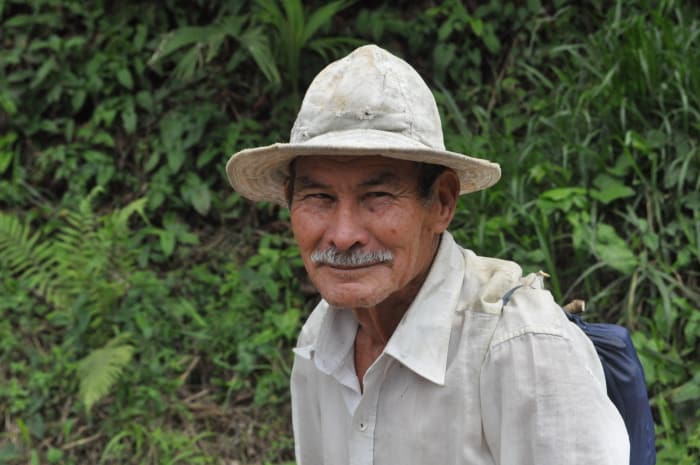
IT could be months before the 120 campesinos living in the Metropolitan Cathedral in downtown San José trade their bedrolls and protest signs for work gloves and machetes. The campesinos, including families, had high hopes of returning to their farming community last Saturday, when they had planned to kiss goodbye the statue of the Virgin Mary that has watched over them for more than two months (TT, July 2). But instead of finding respite from the land dispute that brought them to the nation’s capital, their situation appears to have become even bleaker. Some have even threatened to go on a hunger strike.
EFFORTS by the Ministry of the Presidency and the Catholic Church this week to find a home outside the cathedral for the campesinos have been dismissed as “a charade.” The campesinos say they have been treated unfairly by the judicial system and the government regarding their land dispute with Standard Fruit Company, a subsidiary of Dole.
The parties are fighting over rights to the El Bambuzal farm in Río Frío de Sarapiquí de Heredia, northeast of San José near the border of Limón province.
STANDARD Fruit officials say they have owned and used the property since 1968 (TT, May 21) for composting and growing bamboo – hence the name Bambuzal. The campesinos insist they have property rights since occupying the farm off and on for more than three years. The court battles between the two have been going on nearly that long.
The campesinos championed a recent decision by an Heredia court to lift an order prohibiting them from going within 10 kilometers of the Bambuzal farm. Their legal representative Héctor Monestel said last week that the decision allowed them to return to the disputed 800 hectares (3 square miles). But while they can get near, the campesinos are still prohibited from entering the Bambuzal farm, according to Standard Fruit manager of external and legal affairs, Juan Rojas.
“WE feel really sorry that a group of leaders is lying to a large group of campesinos and giving them hope,” he said. “For ideological motives, they are against a multinational company that has invested a lot of money in this country. But the truth is, they have no reason for hope. Without a doubt, we own this land.”
Rojas said that last Friday a judge clarified a decision from July 2003 that prohibited the campesinos from squatting the land. Monestel called the clarification a 24-hour decision made at the request of Standard. “It is not normal for things to happen so fast in Costa Rica’s judicial system,” he said. “They have left us with no defense.” Monestel’s hope now lies in an agrarian trail to settle the dispute. The trial is still in its initial stages, however.
VICE-MINISTER of the Presidency Randall Quirós, Ombudsman José Miguel Echandi and officials from the Catholic Church met with campesino leaders Tuesday at the Casa Presidencial to offer alternatives to their refuge in the cathedral. Outside the Casa Presidencial, more than 70 children and adults sang songs and waved green flags marked with red drops – representing the green of the earth and the blood of fellow campesinos spilled in violent confrontations provoked by the land dispute.
In July 2003, when police attempted to follow the court order to expel the squatters, violence broke out. One squatter was killed by officers, who said they acted in self-defense (TT, July 18, 2003).
On Tuesday, after meeting for more than two hours, the campesinos were offered help finding temporary shelter closer to their Río Frío home and financial assistance from the Mixed Institute for Social Aid (IMAS) for the next two to three months, according to Quirós. Campesino leader Iliana Sánchez called the meeting “a mockery,” particularly since no representatives from the judicial branch or Standard participated. Monestel called the offer of ¢50,000 ($115) a month per family “an offense.” This help comes only if the campesinos agree to leave the cathedral, where they have lived since April 25.
WITH red eyes and tear-stained cheeks, some of the men, women and children slumped over in church pews Saturday looked as if they didn’t have much fight in them for the indefinite stay they have now committed themselves to at the church. Only 12 hours earlier they thought they would be heading home.
“It has been very hard for us to go from living in the country, farming the land, to living in a church,” said 26-year-old Kenneth Guerrero. “I come from a poor campesina family. On the farm I was living from my parcel … I had papaya, yuca, pineapple, cilantro, avocado. I had enough to eat and sell.”
In the church, the campesinos are nourished with rice, beans and other foods donated by local unions, University of Costa Rica (UCR) students and others, according to Sánchez. Six UCR students have filmed a documentary on the campesinos’ plight (TT, June 25).
“People have been very good to us. And it is nice in the church. We go to mass and we pray for justice. But it is very different from the country. The children can’t play. One doesn’t have any freedom. We have to pay ¢150 ($0.34) to bathe, which is a lot for us,” said Gloria Guzmán, who has been staying in the church with her three children. An unsaid number have committed to a hunger strike. “They are waiting to see what happens this week. But they still stand by their decision and are just waiting for the opportunity,” Monestel said.
SOME of the campesinos have in the past been offered government assistance and relocation to other parcels of land, according to the Agricultural Development Institute (IDA). In 2003, 66 families were awarded land, but half rejected the help. Other families were denied IDA benefits because they did not qualify as farmers or had previously been given land but for various reasons sold or abandoned the property.
More than 250 families began living and working the land at Bambuzal in 2001. Late that year, police attempted to expel the squatters but were unsuccessful. Several court battles followed. Judicial authorities first ruled the campesinos could stay, because they had resided on the land unchallenged for more than a year. Later, that ruling was overturned when a judge ruled it had not been a consecutive year. After being expelled in July 2003, the campesinos attempted to retake the land April 22, but were quickly arrested. Three days later they arrived at the San José cathedral (TT, April 30).





