

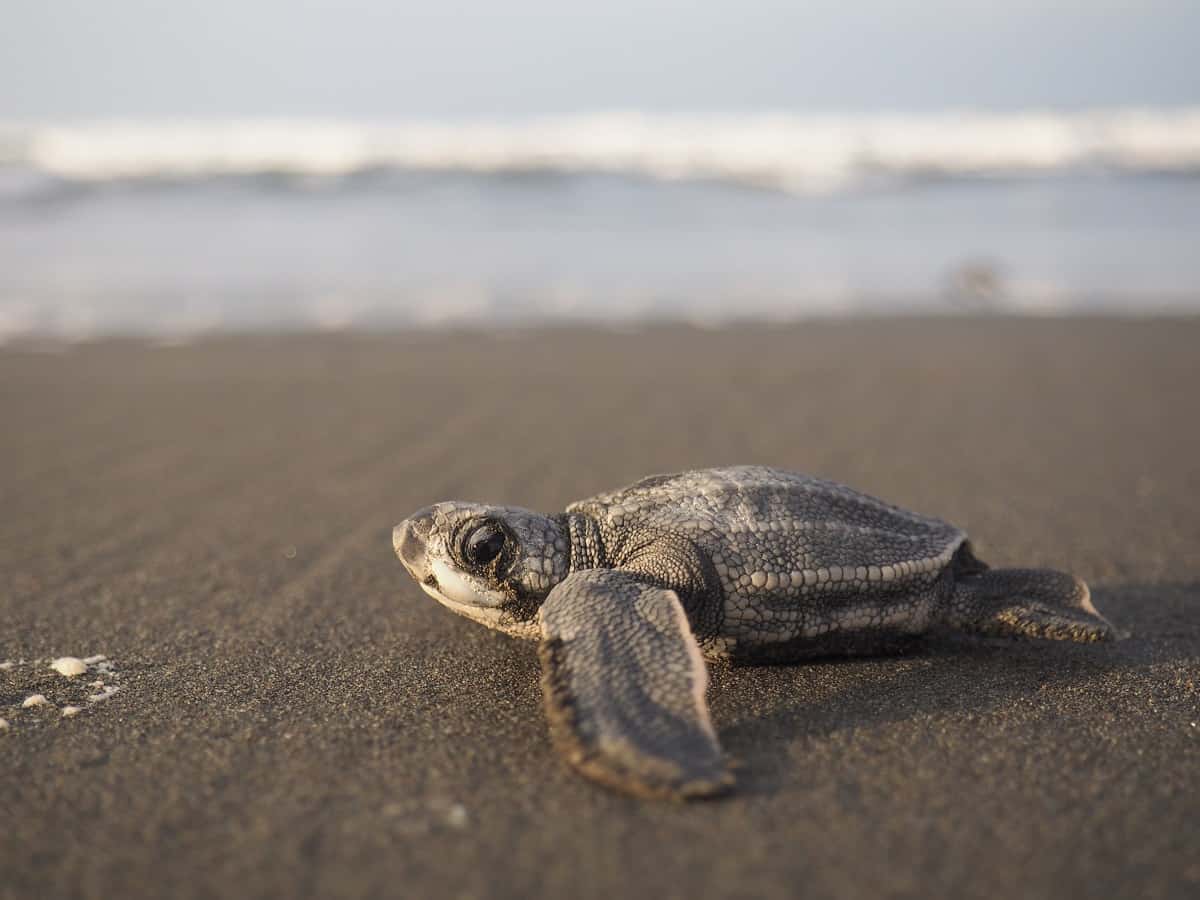
If you are heading to Playa Grande before March, plan to be off the sand by 5 p.m. Leatherback nesting season is under way at Las Baulas National Marine Park, and the beach closes an hour earlier than usual so the turtles can come ashore undisturbed. The season runs from October through February, according to the National System of Conservation Areas (SINAC). The park was created to protect leatherbacks on three nesting beaches near Tamarindo: Playa Grande, Ventanas and Langosta.
Leatherbacks are critically endangered worldwide. They nest at night, which is the reason for the early closing. Lights, noise and people on the sand can send a female back to the water before she lays her eggs. Do not expect to find one on your own, and do not walk the beach after dark to look. Few leatherbacks reach these beaches now. Ask the park office whether guided night visits are operating this season before you pay anyone for a tour.
Farther south, Ostional National Wildlife Refuge offers a different sight. Olive ridley turtles nest there in mass arrivals known as arribadas, when thousands come ashore at once along 7 kilometers (4.3 miles) of beach. SINAC says the arrivals happen throughout the year. Arribadas tend to cluster around the moon’s last quarter. Tuesday’s moon is full, which puts the next last quarter around Dec. 1. Treat that as a window and not a date, because the turtles keep their own schedule.
One of this year’s largest arrivals came in early September. SINAC specialists warned at the time that the heat brought by El Niño could affect nesting. Hatchlings normally emerge about 50 days after the eggs are laid. If you go, get a certified local guide, keep your distance and leave flash and white lights off. The eggs are protected by law. In September, authorities detained two people carrying 125 olive ridley eggs taken illegally from the refuge.
Both sites are part of the public protected area system and the rules apply to everyone on the beach during nesting season.





